Armenian opposition again blames Pashinyan for Karabakh defeat
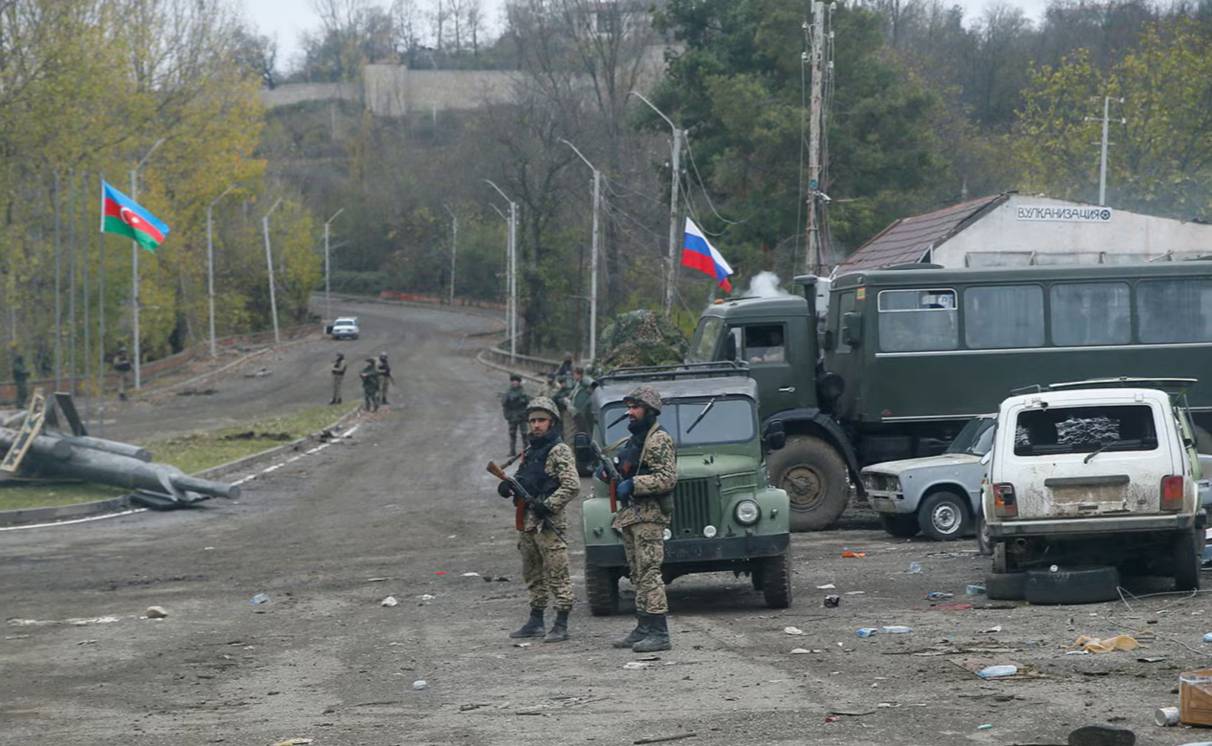
Today, September 27, marks six years since the start of the 44-day war in Nagorno-Karabakh. On November 10, 2020, the leaders of Armenia, Azerbaijan, and Russia signed a trilateral statement, bringing hostilities to an end.
According to Yerevan, more than 3,800 Armenian military personnel and civilians died as a result of the war. Another 200 people remain missing. Regarding casualties on the Azerbaijani side, an official statement from the country's Ministry of Defense in December 2020 reported 2,783 military fatalities, over 100 missing persons, and 1,245 military personnel undergoing treatment. Azerbaijani authorities later updated these figures; for instance, *Azatutyun* noted in September 2026 that official reports cited more than 2,900 military deaths. In the autumn of 2020, President Ilham Aliyev stated that, according to Baku's data, Armenian losses significantly exceeded Azerbaijani ones, though he did not provide a specific figure.
The events of 2020 remain a subject of intense political debate in Armenia. Opposition forces are once again calling for the circumstances that led to the war to be established and are offering their own assessments of the country's leadership's decisions.
Anna Grigoryan, head of the parliamentary faction of the "Armenia" bloc, stated that six years later, key questions regarding the causes and course of the war remain unanswered. According to her, particular attention must be paid to the actions of the authorities both prior to the outbreak of hostilities and during the war itself. "I think the number one question is why he [Pashinyan] failed—and why he didn't take actions that could have prevented the war from starting, but instead took actions that brought the war closer and effectively gave Aliyev a free hand to commit war crimes," the MP stated.
Pashinyan, for his part, while explaining the military leadership's decisions at a 2023 parliamentary inquiry commission meeting, said that several attempts had been made prior to November 9 to halt hostilities. According to him, the situation became critical after the fall of Shushi: around 25,000 Armenian troops faced the threat of encirclement, and Khankendi (known to Armenians as Stepanakert) was at risk of a direct attack.
"The statement of November 9, 2020, was actually our fifth attempt to stop the war," Pashinyan said.
He added that the alternative to the agreement at that time involved terms he considered unacceptable.
"I could not agree to such terms, no matter how well I understood the gravity of the situation. Looking back now, I still could not agree to such terms. If anyone says they would have agreed, let them say so out loud," the Prime Minister said.
Grigoryan, however, believes that a full investigation into the events is hindered as long as the current leaders remain in power.
"In reality, those answers simply cannot exist, given that the people who are the co-authors and architects of these tragedies—that is, the current authorities—continue to hold their positions," Grigoryan told reporters at the Yerablur military pantheon. At the same time, accusations against Pashinyan of "surrendering Karabakh" rely on an interpretation of events disputed by both the Prime Minister himself and members of his political team. Pashinyan has repeatedly stated that the return of the seven districts surrounding Nagorno-Karabakh was part of the negotiating agenda long before 2018. According to him, previous administrations had also agreed to discuss the handover of territories—hoping to link it to a subsequent determination of Karabakh’s status—but the negotiation process had reached an impasse by the time he came to power.
Pashinyan also maintained that in 2020, there was an opportunity to halt the war earlier, albeit at the cost of ceding territories without a guaranteed determination of Nagorno-Karabakh’s status. Testifying before a parliamentary inquiry commission in 2023, he stated that he agreed to the cessation of hostilities on November 9 only after it became clear that Armenian forces could not retake Shusha and that Khankendi was under threat. He described the signed agreement as the result of a military defeat and an attempt to halt the further advance of Azerbaijani forces, rather than a pre-planned decision to "surrender" the region.
This position was publicly defended by Alen Simonyan, who served as Speaker of Parliament in 2021 and has held the post of Secretary of the Security Council of Armenia since August 2026. In 2021, when asked whether Armenia had "surrendered" Karabakh, Simonyan questioned the very phrasing of the question. He pointed out that if there had been a pre-existing decision to simply hand over the region, there would have been no need for a war that claimed the lives of thousands of Armenian servicemen. Simonyan also referred to settlement options that existed prior to the war, which, in his assessment, would have made it possible to avoid such massive losses.
Armen Grigoryan, who served as Secretary of the Security Council until August 2026, held a similar position. In 2023, he stated that Yerevan had not discussed integrating Nagorno-Karabakh into Azerbaijan but had instead insisted on the need for an international mechanism to address the rights and security of the region's Armenian population.
Anna Grigoryan also referred to a yet-unpublished report by the parliamentary commission investigating the circumstances of the 44-day war. According to her, the report contains details regarding the diplomatic resolution of the conflict.
"Looking back, it becomes obvious that Nikol Pashinyan did everything to ensure the war broke out," she said.
Opposition representatives also criticize the authorities for how the war's aftermath and subsequent agreements with Azerbaijan are currently being interpreted.
"We are living in an absurd reality where attempts are made to portray war as peace and numerous concessions as achievements; meanwhile, photographs of fallen heroes are being removed from our walls, as if to erase our memory as well," Grigoryan concluded.
A statement was also issued by the "Strong Armenia" party. In a message marking the war's anniversary, the party opposed an approach where peace is achieved—in its view—through territorial and political concessions. The party declared its support for peace "without concessions or imposed preconditions."
"We have transformed from a victorious nation into a defeated one. Of the phrase 'Artsakh is Armenia—period,' only the period remains," the party's statement read.
It is worth recalling that in June 2025, while addressing parliament, Pashinyan stated:
"We did not lose Nagorno-Karabakh; we gained the Republic of Armenia." He described the past seven years as a "success story rather than a failure," explaining that, in his view, the Karabakh issue had been used as an obstacle to the formation of an independent and sovereign Armenian state.
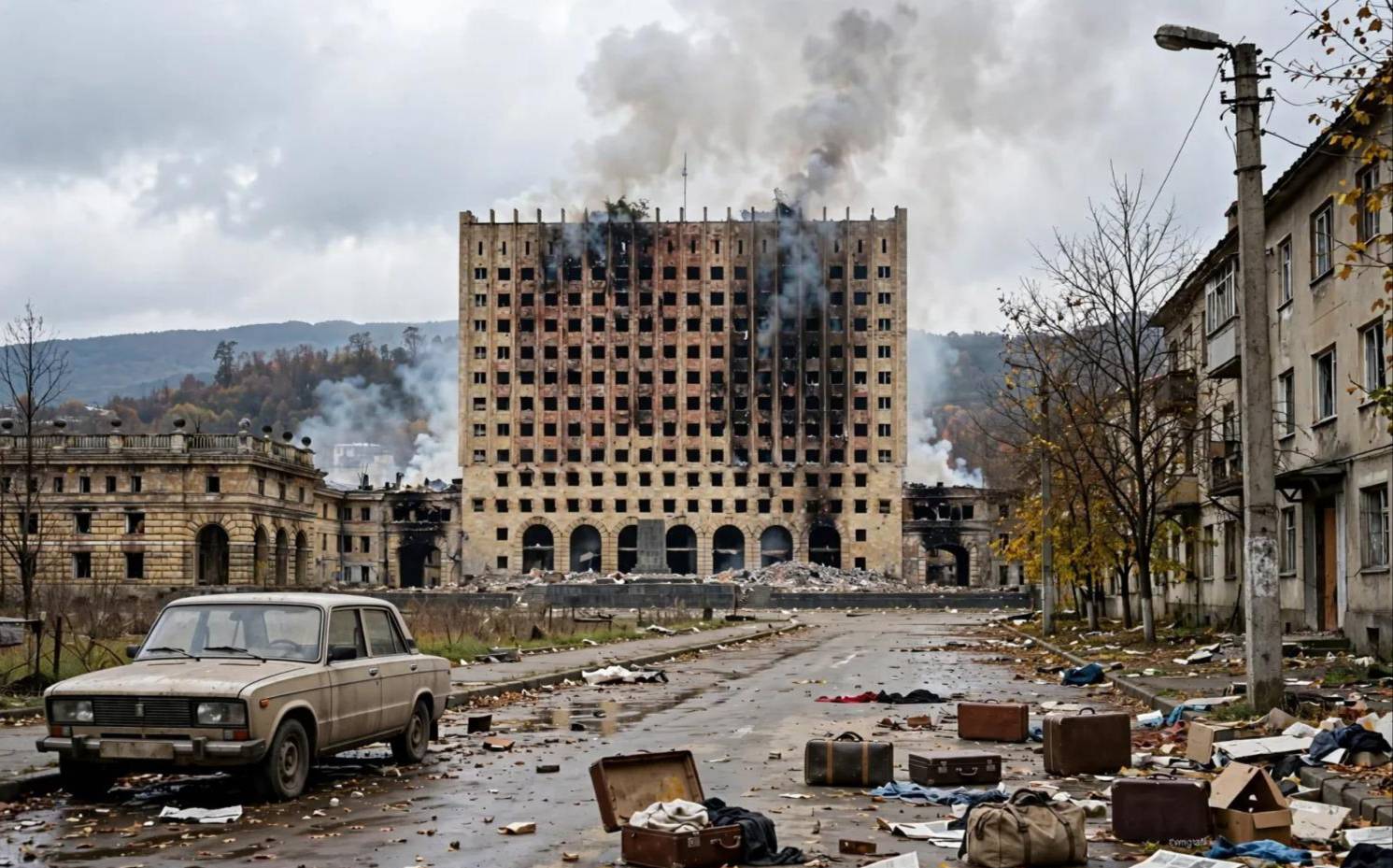
The aftermath of the 2020 war extended beyond the ceasefire agreement. On September 19, 2023, Azerbaijan conducted a military operation in Nagorno-Karabakh. Following the cessation of hostilities, the vast majority of the region's Armenian population fled their homes and relocated to Armenia; according to the Armenian government, more than 100,000 people arrived in the country.
On September 28, 2023, Samvel Shahramanyan—then the leader of Nagorno-Karabakh—signed a decree dissolving state institutions and terminating the existence of the unrecognized republic, effective January 1, 2024.
Today, marking the sixth anniversary of the war's outbreak, representatives of parliamentary opposition forces, the "Hayakve" civic initiative, and the leadership of Nagorno-Karabakh visited the Yerablur military pantheon to pay tribute to the fallen. The Armenian Church is holding memorial services for the military personnel and civilians who lost their lives.