Head of European Diplomacy in Baku: Energy, Peace Process, and "Structured Partnership"
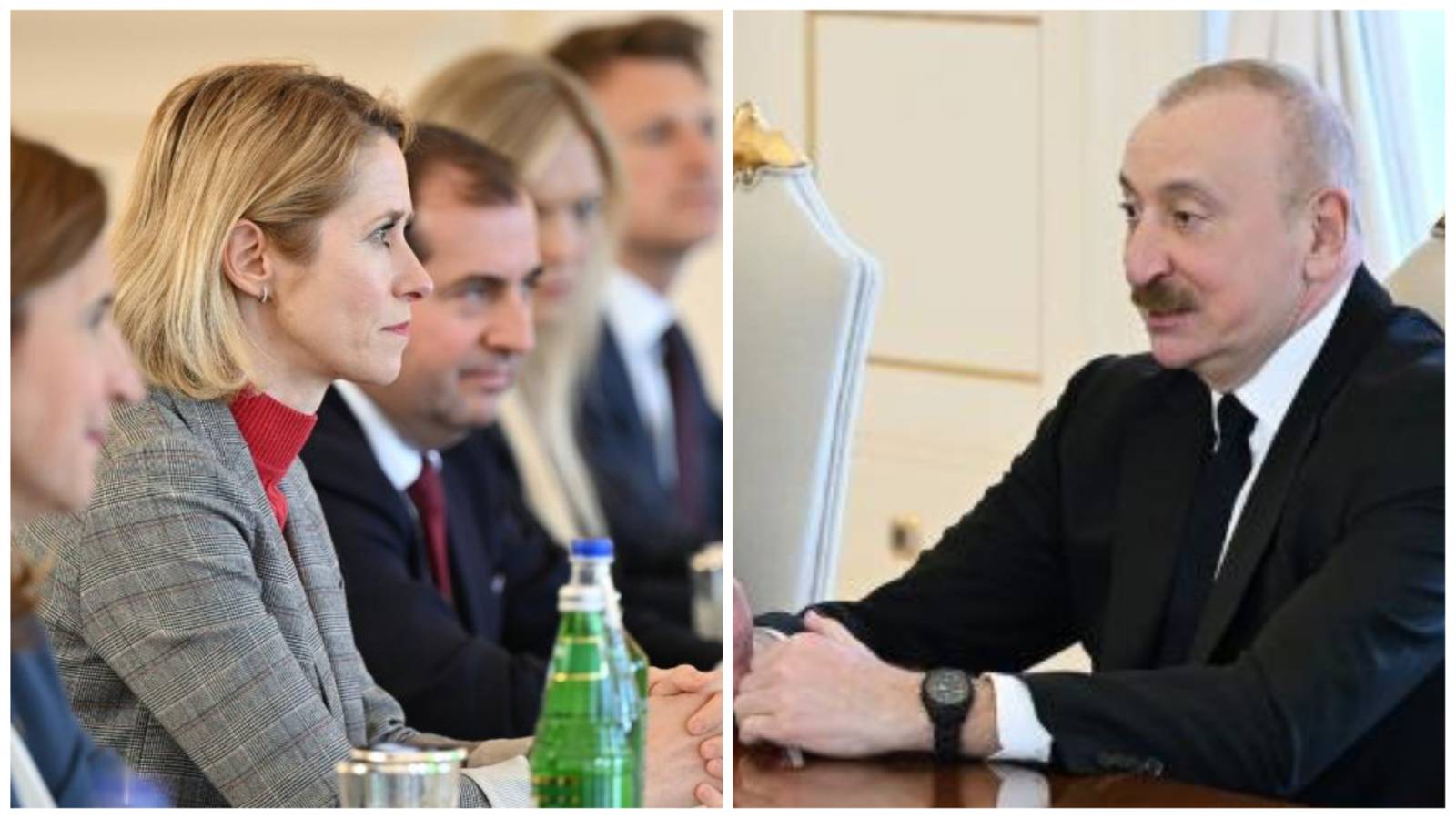
Vice-President of the European Commission and High Representative of the Union for Foreign Affairs and Security Policy Kaja Kallas arrived in Azerbaijan. In Baku, she held a series of meetings with the country's leadership, outlining key areas of dialogue, from energy to a regional peace settlement.
Kallas began her visit to the Azerbaijani capital by emphasizing Baku's strategic role for the European Union. She stated that "Azerbaijan is a valuable and reliable energy partner for the EU," and she was pleased to be in Baku.
The diplomat also highlighted prospects for expanded cooperation: "There is clear potential for deepening our cooperation, particularly in the areas of trade, transport, and digital technologies. Strengthening ties between the EU, the South Caucasus, and Central Asia is in our shared strategic interests, and we are ready to discuss a more structured partnership with Azerbaijan."
One of the central topics of the visit was the peace process between Baku and Yerevan. The head of European diplomacy called the current stage a "historic opportunity" and emphasized the importance of maintaining momentum.
"The EU has a range of tools to support this process, from confidence-building measures to mine action, and in these areas we are already the largest donor," she stated.
On May 6, Kallas met with Azerbaijani President Ilham Aliyev. The talks covered a wide range of issues, from energy cooperation to digital transformation and the development of renewable energy sources. Azerbaijan's role in ensuring Europe's energy security, including expanding the geography of gas supplies to EU countries, was also discussed.
At the meeting, Kallas called Baku an "important partner" for the EU. Aliyev, in turn, noted that the EU remains one of Azerbaijan's main trading partners, noting the stability of energy cooperation. He reported that Azerbaijani gas supplies had recently begun to two more EU countries – Germany and Austria.
Regional stability and transport connectivity were also on the agenda. The parties discussed the development of transport corridors and cooperation within the framework of broader regional projects. Furthermore, Kallas conveyed greetings to Aliyev from European Council President António Costa.
During the visit, Kallas also met with Azerbaijani Foreign Minister Jeyhun Bayramov. The parties discussed mechanisms for dialogue between Baku and the EU, prospects for resuming negotiations on a new bilateral agreement, and agreeing on a document on partnership priorities.
The Azerbaijani Foreign Ministry emphasized the significance of the visit amid ongoing changes in the region and globally.
"The visit underscores the importance of engagement and dialogue between Azerbaijan and the EU amid changing regional and global dynamics. It opens opportunities for expanding cooperation based on mutual respect and shared interests," the ministry noted.
Thus, Kallas's visit to Baku underscored the parties' desire not only to maintain the current level of interaction but also to make it more systemic—with a focus on energy, the economy, and support for regional stability.
Despite systematic human rights violations in Azerbaijan, as well as repression against political opponents, independent journalists, and human rights activists, the European Union has recently been establishing cooperation with Baku with the goal of replacing Russian energy resources.
A BBC report published last year cited a comment by Eldar Mammadov, a former Latvian diplomat who later served as a foreign policy adviser to the Social Democratic faction in the European Parliament. He claimed that European Commission President Ursula von der Leyen's visit to Baku in 2022 "has completely untied Aliyev's hands." A critic of the EU's rapprochement with Azerbaijan, Mammadov added that Brussels had disregarded its values practically "for nothing."
"Aliyev is an experienced player who very skillfully exploits the geopolitical fault lines between the West and Russia," the publication quoted the expert as saying, noting that, in his opinion, in relations with the EU, the Azerbaijani president acts as an accomplice in reducing dependence on Russia, and in relations with the Kremlin, as a partner in overcoming isolation under sanctions.