Israel becomes a source of discord: Azerbaijan bans 31 Turkish citizens from entering the country
Azerbaijan has banned 31 Turkish citizens from entering the country, including Fatih Erbakan, leader of the New Welfare Party, MP Ömer Faruk Gergerlioğlu, journalists and religious figures. Azerbaijan’s Foreign Ministry said the decision was prompted by their online publications, which it assessed as containing calls for the violent overthrow of the government and incitement to religious hatred. The ban marks another stage in the deterioration of relations between the two countries, which began after a diplomatic walkout at the UN General Assembly and intensified over restrictions on the wearing of hijabs in Azerbaijani schools.
On 24 September, during Israeli Prime Minister Benjamin Netanyahu’s address to the UN General Assembly, representatives of nearly 70 countries left the chamber or did not take their seats in protest against Israel’s actions in Gaza. The Turkish delegation was among them. Azerbaijan’s representative remained in the chamber to listen to Netanyahu’s speech.
Turkish media and public figures reacted sharply to the episode. Some commentators accused Baku of refusing to join the protest against Israel and linked the Azerbaijani representative’s conduct to the close relationship between the two countries. The accusations provoked outrage in Azerbaijan.
In September, Azerbaijani authorities introduced restrictions on the wearing of hijabs in schools. Following changes to school uniform rules, girls wearing headscarves were barred from classes. This prompted criticism not only among some Muslims in Azerbaijan but also in other Muslim countries, including Turkey. Representatives of Turkey’s ruling Justice and Development Party (AKP), religious figures and civil society activists joined the criticism.
On 12 October, Oktay Saral, chief adviser to Turkish President Recep Tayyip Erdoğan, spoke out against the exclusion of schoolgirls from classes because of their headscarves.
“Hijab is not an obstacle, but a requirement of faith! The right to education must not become a victim of ideological diktat!” he wrote on X.
Baku reacted angrily to statements by Turkish politicians. On 13 October, the ruling New Azerbaijan Party (YAP), led by President Ilham Aliyev, accused members of Turkey’s AKP and media outlets close to the party of interfering in Azerbaijan’s internal affairs. The party described the Turkish politicians’ remarks as “populist and irresponsible” and warned against using religious issues as a means of political pressure.
“No state in the Muslim world has the right to dictate its will to other Muslim peoples, interfere in their internal affairs or consider itself superior to them,” YAP said in a statement.
On 14 October, Devlet Bahçeli, leader of Turkey’s Nationalist Movement Party and Erdoğan’s ally in the ruling coalition, called for Azerbaijan’s sovereignty and domestic legislation to be respected.
Arif Yunusov, an Azerbaijani historian, conflict studies expert and human rights defender living in exile in the Netherlands, believes that the dispute over restrictions on wearing hijabs is one manifestation of deeper disagreements between Baku and Ankara.
In an article entitled The Passions of the Hijab or a Crisis in Azerbaijani-Turkish Relations, Yunusov writes that tensions between the two countries have been building for years, including since the end of the war over Karabakh.
In his assessment, Turkey had expected Azerbaijan to normalise relations with Armenia and subsequently move closer to Yerevan. This would have enabled Ankara to strengthen its position in the South Caucasus and reduce Russian influence.
Yunusov believes that Aliyev, who also looks to Moscow, is in no hurry to sign a peace agreement with Armenia and is obstructing the normalisation of Turkish-Armenian relations. Another source of tension has been Baku’s closer ties with Israel, whose relations with Turkey have deteriorated sharply.
According to the human rights defender, these disagreements, rather than the school uniform dispute itself, are behind the current escalation. He believes the Azerbaijani authorities have used the hijab issue to respond to criticism from Turkey and demonstrate that they will not tolerate interference in their domestic policy.
On 21 October, Azerbaijan’s Foreign Ministry announced that 31 Turkish citizens had been added to its list of undesirable persons. Alongside New Welfare Party leader Fatih Erbakan and MP Ömer Faruk Gergerlioğlu, the list includes Yahya Uğraş, deputy leader of the HÜDA PAR party; Mehmet Boynukalın, a former imam of Hagia Sophia; journalists, bloggers and religious figures.
The ministry said the individuals’ publications were directed against Azerbaijan’s sovereignty, national security, constitutional order, people and leadership. According to the ministry, the publications also contained calls for the violent overthrow of the government and incitement to religious hatred.
“Appropriate measures will continue to be taken in response to calls directed against the Republic of Azerbaijan and activities that contribute to inciting hostility,” the ministry warned.
The authorities did not, however, publish separate justifications for the entry ban imposed on each of the 31 individuals.
It is noteworthy that official Turkish media have not joined the campaign against Azerbaijan amid the public confrontation between Baku and Ankara.
Some Turkish politicians, public figures and writers for independent publications have nevertheless criticised the Azerbaijani authorities.
Azerbaijani state media and social media accounts affiliated with President Aliyev, by contrast, have adopted an unequivocally hostile anti-Turkish position.
Despite the close political and military ties between Turkey and Azerbaijan, the disagreements between Ankara and Baku have become increasingly apparent. The current dispute is likely to pose serious risks to the idea of a shared political space between the two countries, encapsulated in the slogan “One nation, two states”.
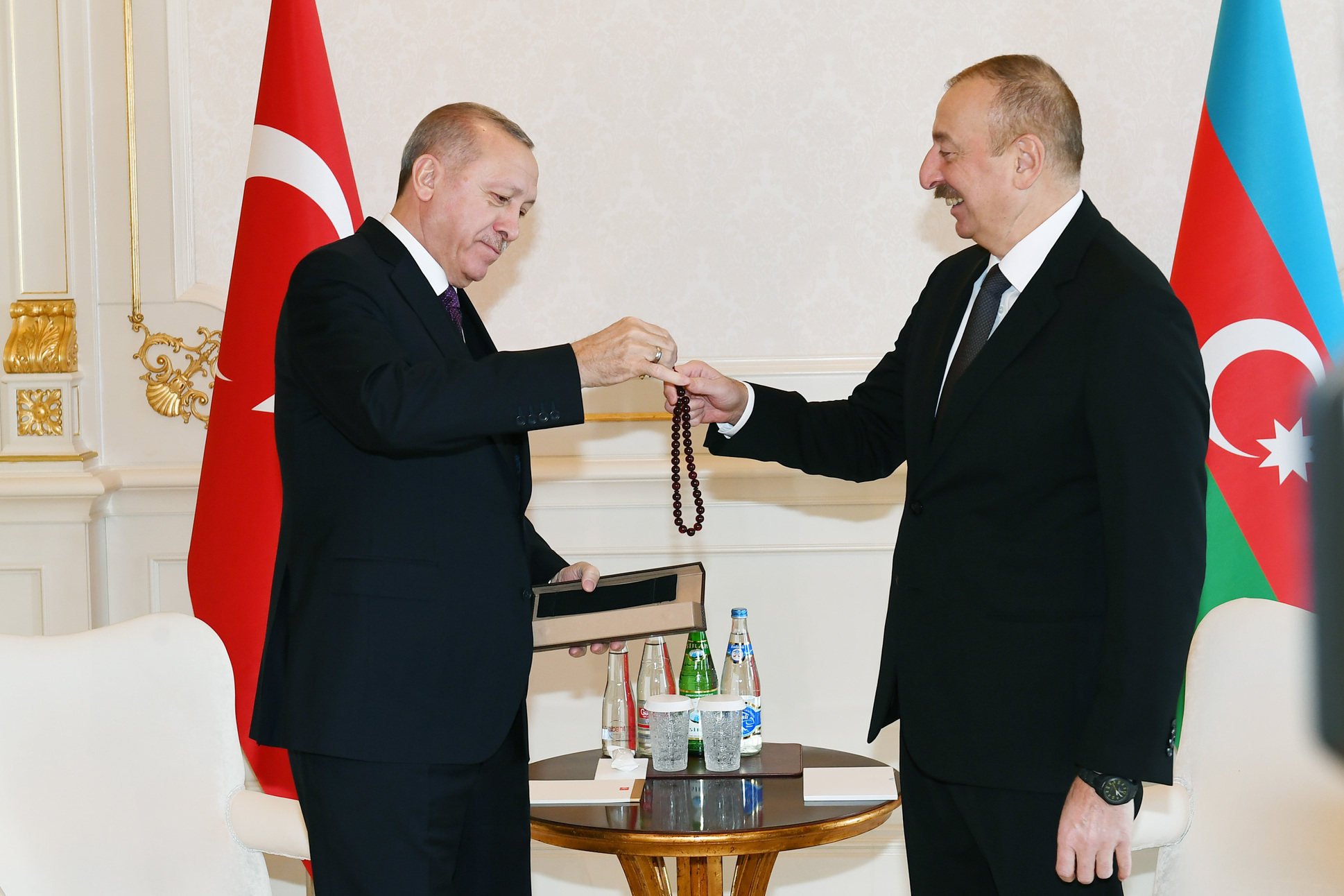
The escalation of public rhetoric has not, however, prevented direct contact between the two countries’ leaders. On the evening of 21 October, Turkish President Recep Tayyip Erdoğan held a telephone conversation with his Azerbaijani counterpart, Ilham Aliyev.
According to official sources in both countries, the presidents discussed bilateral relations as well as regional and international issues. Erdoğan expressed confidence that cooperation between Turkey and Azerbaijan, based on their fraternal ties, would continue to develop. He also once again congratulated Aliyev on the 35th anniversary of the restoration of Azerbaijan’s state independence and invited him to the 13th summit of the Organisation of Turkic States, which will take place in Ankara.