Kadyrov answers 50 questions — from the duration of the war to wedding customs
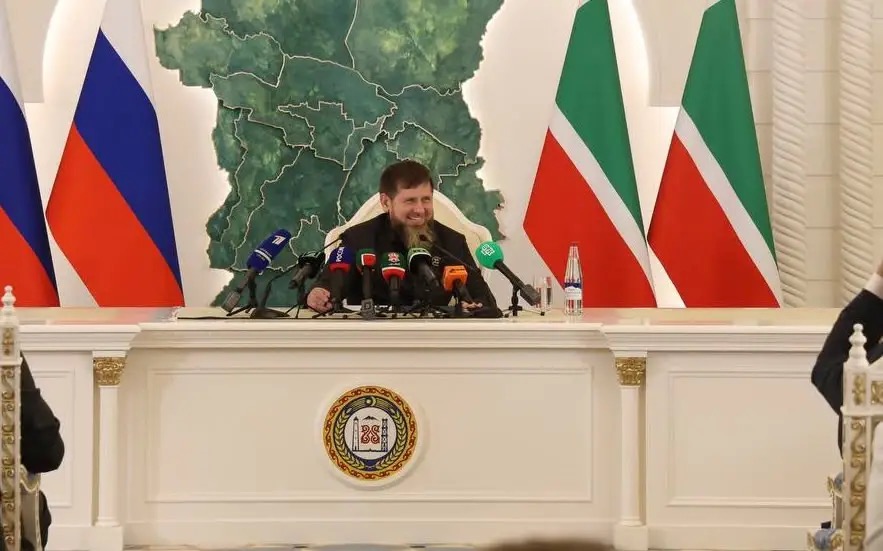
On November 24, the Head of the Chechen Republic, Ramzan Kadyrov, held his annual live Q&A session. The broadcast lasted one hour and 25 minutes, during which he addressed 50 questions. In total, more than 6,000 inquiries were received from residents, including some submitted anonymously.
At the start of the broadcast, the Chairman of the Government of Chechnya, Magomed Daudov, presented an overview of the republic’s socio-economic development. He reported that industrial production grew by 14.6% during the first nine months of 2026, with the gross regional product reaching 539.5 billion rubles. Over the same period, 110 investment projects, totaling 34.4 billion rubles, were implemented in the region.
Daudov also noted that the "Akhmat" ice arena had been built, the "Steklostroy" (Glass Construction) plant had opened, and a new runway at Grozny Airport had been put into operation. Additionally, 12 schools, 12 kindergartens, seven sports complexes, and four medical facilities are currently in various stages of construction.
The coming year in Chechnya will be designated as the "Year of Rural Settlements." According to Kadyrov, the authorities intend to focus on addressing issues related to water supply and electrical infrastructure in rural areas.
One of the topics discussed during the live session was the war in Ukraine—specifically, when it might come to an end. This question was posed by Islam Gachaev, head of the Information Department for the Head and Government of Chechnya. In response, Kadyrov stated that while he could not provide an exact date, he expects the hostilities to conclude within a year.
"No one knows when the 'special military operation' will end; everything is in the hands of the Almighty. Our fighters are working toward a result and making progress, but I cannot offer a precise forecast." "Taking into account the ongoing negotiations, the 'special military operation' might conclude within a year," the head of the republic stated.
He also addressed a question regarding the future of Chechen military units once the war ends.
"When they [the fighters] return home, they will resume their previous roles. Their units are not temporary; they are essential structures established for the Russian Federation. They will continue to serve in the same capacities they hold now," Kadyrov assured.
The head of the republic then touched upon the construction of mosques in other regions of Russia. Adam Shakhidov, an advisor to Kadyrov, noted instances where local authorities have obstructed the building of religious facilities. Kadyrov promised to prepare a report and discuss the issue with Vladimir Putin.
"Those in regional leadership who prevent the construction of mosques are godless people—perhaps they are even suffering from schizophrenia," the regional leader asserted.
Kadyrov dismissed the concerns of those who oppose mosque construction—specifically the argument that such projects are linked to a threat of terrorism—as groundless.
He also addressed the issue of blocking foreign social media platforms.
"In my view, if we cannot block these social media platforms entirely, then we should simply let them operate," Kadyrov said, while criticizing the spread of gossip and misinformation online.
Another topic discussed was wedding customs and the costs associated with dowries. Kadyrov stated that the financial demands placed on couples preparing for marriage hinder young people from starting families, and he suggested involving the clergy to help address the issue.
"We cannot force them to stop, but we can issue an appeal; we will instruct the mullahs not to perform the *nikah* [Islamic marriage ceremony] for those who engage in such behavior. Many people are unable to get married because these new, burdensome customs have created financial barriers." "This is something that needs to be worked on," he said.
Mufti of Chechnya Salakh-Khadzhi Mezhiev noted that the clergy had already attempted to conduct outreach and explanatory work, yet the problem persists.
Kadyrov also supported the idea of establishing a distinct honorary title for women in the republic. Among the options proposed, he highlighted the term "Siylakh yoi" — which translates to "Great Woman" — and instructed Prime Minister Magomed Daudov to oversee the preparation of the necessary official resolution.
Furthermore, the head of Chechnya ordered the creation of a commission to engage with the descendants of people from the republic who migrated to Turkey and other countries during the 19th and early 20th centuries. He stated that the authorities are prepared to facilitate the return of these compatriots, including those currently living in Syria and Jordan.
Following the broadcast, Kadyrov announced that any inquiries that could not be addressed during the live session would be forwarded to the relevant government departments and municipalities.