Chechnya bids farewell to mother of political analyst Mairbek Vachagaev
13 September 2026
"Putin's People"
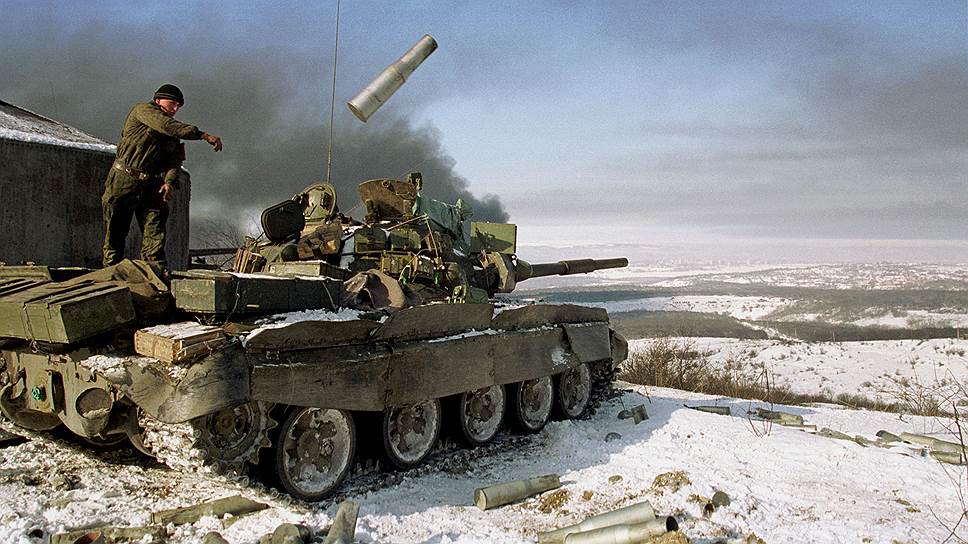
During the years of the second Russian-Chechen armed conflict, thousands and thousands of people were kidnapped and disappeared into obscurity. If for some of them relatives have guesses and suspicions that they were taken away on some, albeit often dubious, basis, then why were others kidnapped? This remains a mystery to this day. Death squads are behind many of these crimes. It is not entirely clear which department they belonged to and to whom exactly they reported. However, based on the password that they shouted at their own Russian posts and after which they were immediately allowed through at any time of the day and in any part of Chechnya, human rights activists then nicknamed them “Putin’s people”...
On the evening of February 19, 2002, between the regional center of Shali and the village of Avtury, masked Russian soldiers blocked the road. Arriving there in two armored personnel carriers, they checked the documents of people rushing home before the curfew. The car of the Gazalapov brothers was also stopped. 37-year-old Abubakar and his younger (by ten years) brother Idris, according to information received from their relatives, worked as watchmakers in Shali. Three more people were traveling with them as passengers: Ramzan Gandaev, Nurid Dzhabrailov and a resident of Grozny who lived in Avtury as a refugee. It was not possible to find out the name of the latter.
Acquaintances and people simply passing along the same road tried to find out the reason for their detention, but the Russian military, threatening them with weapons, rudely and imperiously ordered them to leave. Abubakar and Idris Gazalapov and their fellow travelers also said that everything was fine with them, that a formal check of documents was underway, after which they supposedly should be released. Reassured by these assurances, the witnesses to the arrest left.
However, subsequent events clearly went beyond the boundaries of normality, even such a conventional one, which one can talk about when talking about the then Chechnya. About half an hour later, villagers heard a strong explosion. The relatives of the Gazalapov brothers also heard it. The 71-year-old father of Abubkar and Idris, who had already been informed about their detention at the mobile post, immediately went there. The military greeted him with hostility. They stated that they did not detain anyone and did not even see the people they described.
The old man didn't believe them. Together with his fellow villagers, he headed to the suspected site of the explosion. There, a few kilometers from the military post, among the bushes and chaotically growing trees, he saw his sons’ car. It was mangled by the explosion, but there was nothing inside or around that would indicate the murder of the people riding in it.
Hoping that they were alive, the father and relatives of Abubakar and Idris Gazalapov contacted the occupying Russian authorities and met with officials of the military administration. In particular, with the commandant of the Shalinsky district, the heads of the Russian and local police departments, consisting of pro-Russian Chechens. The fellow villagers of the disappeared did not sit idle either. As a sign of protest, they even gathered at the gates of the nearest military unit and held a multi-hour rally there. But it was all in vain - the brothers and their passengers disappeared. As of February 2023, no information has yet been received about their further fate.
Another thing that is equally unclear is what actually caused their detention? Why, out of the huge number of people driving along the Shali-Avtury road that evening, did Abubakar and Idris Gazalapov and their passengers attract the attention of masked soldiers? Why did they blow up the car and where, since they weren’t killed on the spot, were they taken? Or here’s another interesting question: why didn’t the authorities take proper measures to investigate this crime? As in many similar cases, the Russian prosecutor's office opened a criminal case, only to then suspend it, citing the alleged impossibility of identifying the persons subject to prosecution. Soft and dust-free, as they say. To avoid accusations of harboring criminals who, like investigators and prosecutors, wore Russian uniforms. They didn’t immediately brush aside the relatives’ statements, made the usual shameless display for such kidnapping cases, and then threw up their hands: they said, they tried, it didn’t work - sorry!
Residents of the village of Avtury believe that the possible reason for the disappearance of these people is simple to the point of banality. Money! The Gazalapov brothers were driving home from work and had some cash with them. The military took the money, and at the same time decided to get rid of witnesses and victims of their robbery. The task assigned to members of Putin’s death squads is to instill terror through unmotivated murders and kidnappings. The goal was to intimidate the residents of Chechnya so that they would not even think about resistance. If at the same time you can also get some money, why not? Shouldn't we leave them on the road?..
We don't know much about the victims of that crime. There are only a small number of documents from the criminal case that was opened and, as stated above, almost immediately suspended. A brief summary of what happened, appeals from relatives to the Russian authorities and arrogant pieces of paper in essence and style with empty official responses to these requests, protocols for examining the scene of the incident with photographs of a blown up burnt car, copies of passport data of the disappeared with a description of their height, weight, hair and eye color , scars and moles on the body, who had them. There is nothing in this collection that would indicate the main thing: who kidnapped the five Auturiens and what happened to them after that? “Putin’s people” left no traces. It is useless to look for them: they have been well cleaned up.
True, it was useless then. Today, long-awaited and interesting events are taking place in the world. Let's wait a little longer?..
Information about many crimes committed during the second Russian-Chechen armed conflict is stored in the electronic database of the Documentation Center named after. Natalia Estemirova at the Norwegian Helsinki Committee.
Some of them can be found on the organization’s website at this address: https://www.nedc-nhc.org/ru/idoc-search/.
Последние новости