Menyaylo calls for withdrawal of North Ossetia language bill
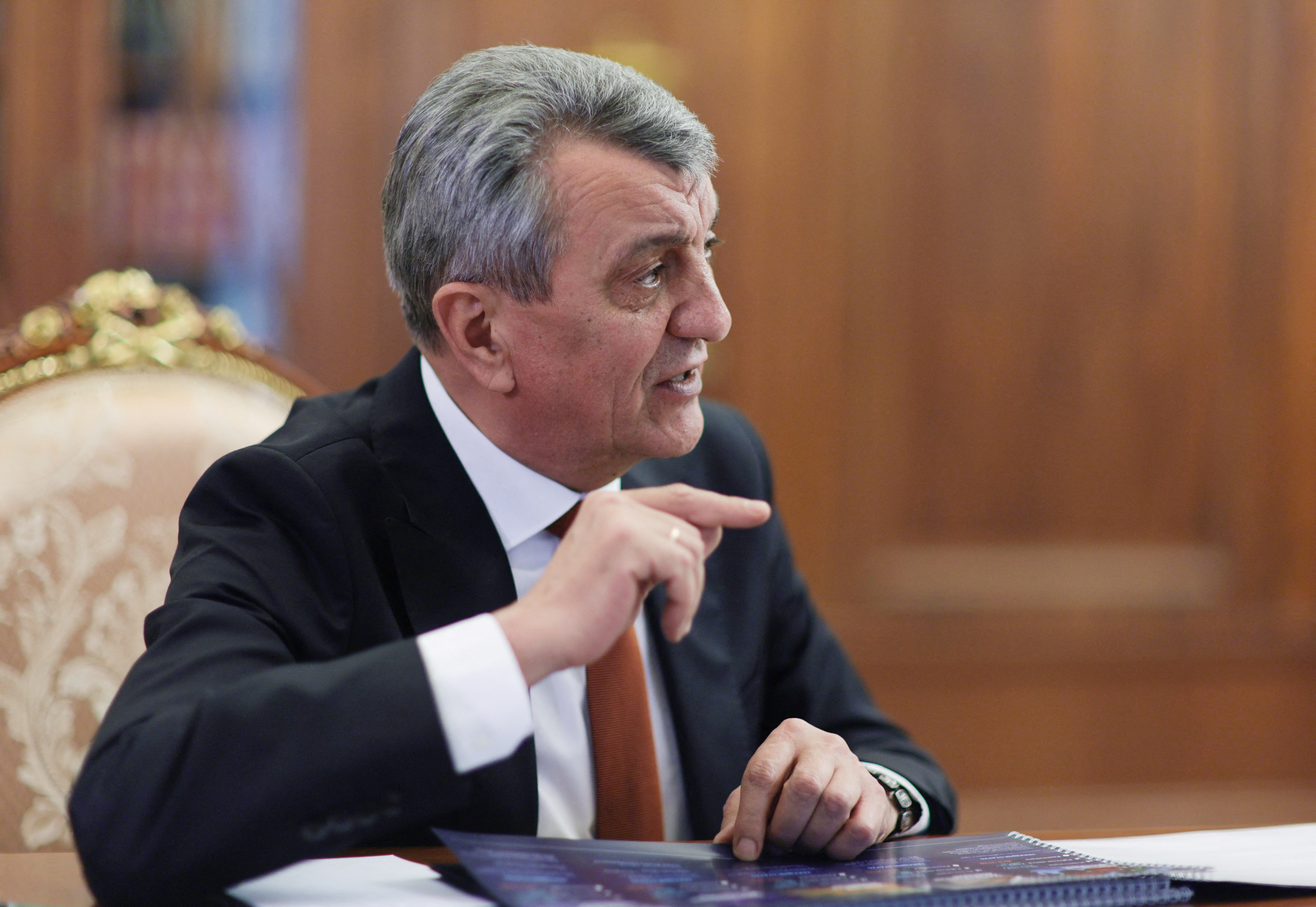
North Ossetia–Alania Head Sergey Menyaylo has criticized a draft law on the republic’s state languages after it introduced the terms “Literary Iron” and “Literary Digor.” According to the regional leader, these provisions are the “pitfalls” that risk dividing society, whereas the law should unite the people of the republic and strictly comply with the Constitution.
At a government meeting, Menyaylo said he had only seen the draft after it had been formally registered in the regional parliament. He announced that he had ordered the bill to be withdrawn and would exercise his right as head of the republic to submit his own version by Wednesday.
“This draft law must unite people, not divide them. That is why the working group was created. It must fully comply with the republic’s Constitution, without any other personal wishes,” Menyaylo said.
The regional leader also sharply criticized the authors of the bill, accusing them of including provisions that had once again fueled public controversy.
"This is one of the fundamental laws that stirs public concern. Yet it is as if you deliberately planted pitfalls to stir people up once again. Literary Iron, Literary Digor... The law must unite people, not divide them,” Menyaylo said.
According to him, the document must comply with both the Constitution of North Ossetia–Alania and federal legislation.
What is the bill about?
The draft law “On the State Languages of the Republic of North Ossetia–Alania” is intended to regulate the use of Russian and Ossetian in the work of public authorities, the education system, culture, mass media, official paperwork, and other areas of public life.
Work on the legislation has been underway since 2025. On Menyaylo’s instructions, a working group of linguists, historians, legal experts, academics, and representatives of public organizations was established. At the time, the regional leader stressed that the law should be the result of broad public discussion.
Under the Constitution of North Ossetia–Alania, the republic’s state languages are Russian and Ossetian. The Constitution also states that Ossetian consists of two dialects — Iron and Digor. Menyaylo specifically cited the appearance of the terms “Literary Iron” and “Literary Digor” in the draft as one of the reasons why it should be revised.
A long-running debate over the Ossetian language
The preservation of the Ossetian language remains one of the republic’s most sensitive issues. Following amendments to Russia’s federal Law on Education in 2018, which made the study of state languages of Russia’s republics voluntary at parents’ request, North Ossetia saw an intense public debate. Members of the academic community warned that ending compulsory instruction in Ossetian would inevitably accelerate the decline in the number of its speakers.
Tamerlan Kambolov, an adviser to the head of the republic on national and cultural affairs, argued at the time that making native-language education voluntary could “lead the Ossetian language to catastrophe,” as many parents would prioritize subjects required for the Unified State Exam (EGE).
UNESCO classifies Ossetian as a Vulnerable language in its Atlas of the World's Languages. The designation indicates that the language is gradually losing ground in everyday communication, particularly among children and young people. For this reason, many in the republic view the adoption of a law on the state languages as one of the key mechanisms for preserving Ossetian.