Moscow has once again expressed concern over Armenia's desire to transfer railway management to another country
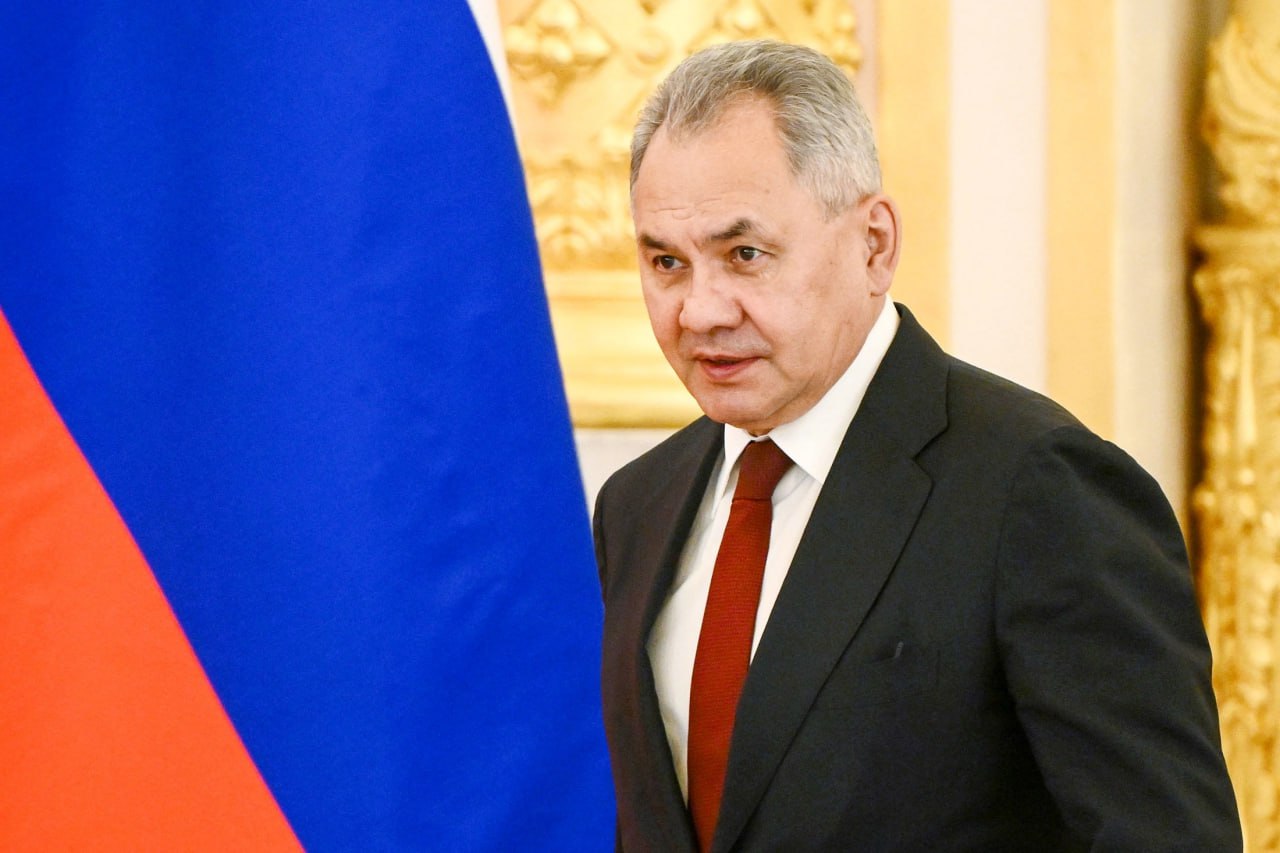
Russian Security Council Secretary Sergei Shoigu commented on the Armenian authorities' intention to replace Russia in the management of the republic's railway infrastructure.
Calling this decision "ill-conceived," he expressed doubt that "another company will be able to fully replace the Russian railway carrier, which has been operating effectively and for a long time in Armenia."
Shoigu compared this situation to plans for nuclear cooperation between Armenia and the United States, wondering whether "such ill-conceived decisions might lead to similarly dangerous experiments for which ordinary Armenian citizens will have to pay." He emphasized that "a system built over nearly two decades could simply collapse overnight," and "no 'friendly countries' will bear responsibility for this." Shoigu concluded by expressing hope that "when making important decisions, the Armenian leadership will proceed solely from the interests of its citizens."
Earlier, Russian Foreign Ministry spokesperson Maria Zakharova described Yerevan's statements about a possible change in the concession manager of Armenian Railways as "strange and unacceptable." She recalled that this infrastructure has been managed by the South Caucasus Railway, a subsidiary of Russian Railways, for over two decades.
Recently, Armenian Prime Minister Nikol Pashinyan proposed considering transferring management of Armenian Railways to a third country that maintains good relations with both Yerevan and Moscow. He believes this would counter attempts to isolate Armenia in current logistics projects, which is due to Russia's deteriorating international relations. Pashinyan emphasized that the railway belongs to Armenia and expressed hope that Russia will not become an obstacle to the development of regional initiatives.
Regarding Shoigu's statement on Armenia's nuclear cooperation with the United States, it should be noted that during the recent visit to Yerevan by US Vice President J.D. Vance, a civil nuclear energy cooperation agreement was signed, providing for the introduction of American small modular reactors (SMRs) worth $9 billion. Of this, $5 billion is earmarked for equipment, and $4 billion for long-term fuel and maintenance contracts.