Moscow has simplified the process of obtaining Russian citizenship for residents of Abkhazia and South Ossetia
On May 17, Russian President Vladimir Putin signed a decree "On the Admission of Citizens of the Republic of Abkhazia and the Republic of South Ossetia to the Citizenship of the Russian Federation." The document regulates a simplified procedure for obtaining Russian citizenship for residents of the self-proclaimed republics, which most countries recognize as part of Georgia.
FZ Law No. 138-FZ "On Citizenship of the Russian Federation" stipulates that a foreigner wishing to become a Russian citizen must, among other conditions, have permanent residence in Russia for five years, be proficient in Russian, and have knowledge of the history and fundamentals of Russian legislation. However, these requirements no longer apply to residents of Abkhazia and South Ossetia. They must be 18 years of age, have legal capacity, hold citizenship of these republics as of August 26, 2008, and have not lost it by the date of filing their application for Russian citizenship. Applications are submitted to the Russian diplomatic missions in Sukhumi and Tskhinvali or to the Ministry of Internal Affairs at the place of residence in Russia. The application form is published on the Russian legal acts portal as an appendix to the presidential decree.
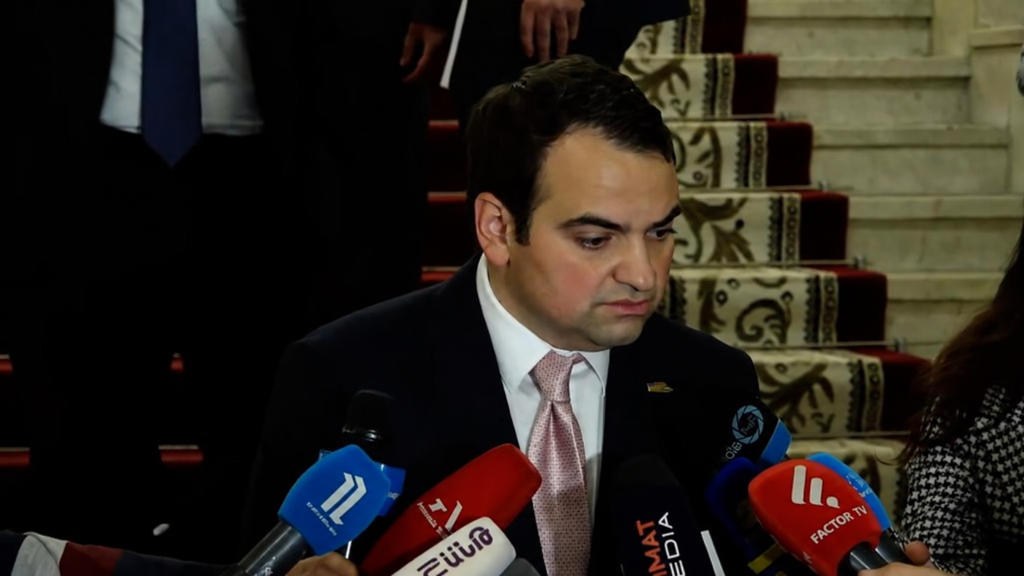
"We've been working towards this for a long time," said Zaza Driaev, a member of the South Ossetian parliament, regarding Putin's decree. "We've raised this issue at every meeting with our Russian colleagues from the Federation Council for three years, working to ensure that the agreement on the simplified procedure comes into force. The entry into force of this agreement will be especially important for the republic's military personnel. Previously, service in South Ossetia was not counted in Russia. However, this situation will now change."
Driaev also noted that a Russian passport will give residents of South Ossetia access to high-quality education and healthcare in the Russian Federation.
Pyotr Litvin, Director of the Central Migration Agency, believes that the simplified procedure for obtaining Russian citizenship will not lead to any significant consequences. According to him, two-thirds of Abkhazia's population already holds Russian citizenship. "The Abkhaz passport is not recognized by most countries... If a citizen of Abkhazia or South Ossetia travels to another country, they won't even pass passport control because the document won't be recognized. But with a Russian passport, they will at least be able to travel and exit Abkhazia and the Russian Federation," the expert explained.
As a reminder, on August 26, 2008, Russian President Dmitry Medvedev signed decrees recognizing the independence of South Ossetia and Abkhazia by the Russian Federation. This followed the armed conflict from August 1-16, 2008, between Georgia and Russia, which supported South Ossetian and Abkhaz separatists. In response, on September 2, 2008, Georgia severed diplomatic relations with Moscow and declared the two Transcaucasian republics occupied territories. The United States and the European Union refused to recognize the independence of South Ossetia and Abkhazia, stating their support for Georgia's territorial integrity and sovereignty. Besides Russia, only Nicaragua, Venezuela, Nauru, and Syria have recognized the independence of the self-proclaimed republics.
The Georgian Ministry of Foreign Affairs has not responded to Moscow's decision to simplify the process of obtaining Russian citizenship for residents of Abkhazia and the Tskhinvali Region (as South Ossetia is known in Georgia). Meanwhile, in August 2021, when an agreement was signed between Moscow and Tskhinvali on dual citizenship for residents of Russia and South Ossetia, the Georgian Ministry of Foreign Affairs accused Russia of "forced passportization" of residents of the former Georgian regions. Putin's order regarding this agreement was called "a gross violation of both Georgia's sovereignty and territorial integrity, as well as the principles of international law."