New elections, same faces: three-day voting begins in Russia’s North Caucasus
Russia’s North Caucasus regions are taking part in the three-day voting that began today and will run from 18 to 20 September, with elections for the ninth State Duma, regional legislatures and heads of several federal subjects. Observers note that in regions where governors are being elected, the favourites are already known: they are the incumbent republican leaders, who have received the Kremlin administration’s backing in advance and are expected to retain their positions.
This time, however, the predictability extends beyond the top regional officials. The lists of candidates at all levels of the elections were agreed in advance, experts say, describing this as part of the federal authorities’ strategy of ensuring political stability.
Chechnya
Chechnya is once again electing its head. Alongside incumbent leader Ramzan Kadyrov, who was nominated by United Russia in line with the established tradition of Russia’s federal power vertical, two other candidates are formally on the ballot: Khalid Nakaev of the Communist Party and Ismail Denilhanov of A Just Russia — For Truth.
Yet there is little expectation that anyone other than Kadyrov will win. Having received Vladimir Putin’s backing at the end of April this year, Kadyrov — Russia’s longest-serving regional leader — is seeking another term and is expected to go through the procedure for a fifth time.
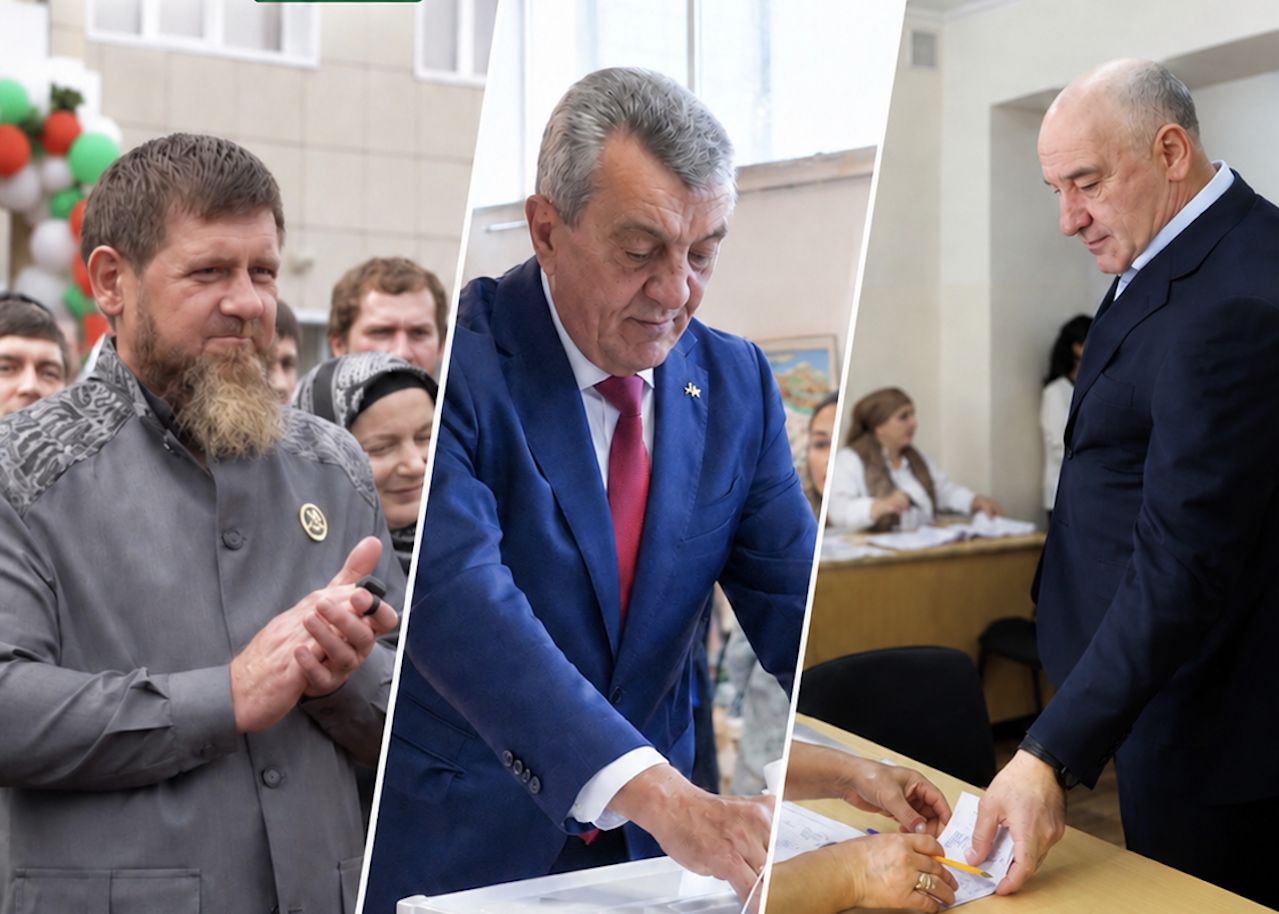
As a result, the first day of voting in Chechnya looked more like a celebration of the presumed winner than a competitive election.
Residents of the republic are also voting for deputies to the State Duma, the Chechen parliament and municipal bodies.
Dagestan
In Dagestan, voters are electing a new 90-member People’s Assembly, State Duma deputies and municipal representatives. All 90 seats in the republican parliament are allocated through party lists.
The head of the republic is not elected directly by voters. Once the new parliament has been formed, lawmakers will choose the regional leader from three candidates put forward by the president of Russia.
Ingushetia
In Ingushetia, voters are electing deputies to the State Duma and the People’s Assembly. The republican parliament will have 32 members elected through party lists.
There is no election for the head of the republic in this electoral cycle.
Kabardino-Balkaria
In Kabardino-Balkaria, voters are choosing a State Duma deputy in single-member constituency No. 17. Six candidates are standing for the seat.
The republic is also holding 122 municipal elections, involving a total of 1,505 council seats.
Karachay-Cherkessia
The head of Karachay-Cherkessia is likewise not elected directly by voters.
On 20 September, the People’s Assembly will choose the republic’s leader from three candidates put forward by Vladimir Putin: incumbent head Rashid Temrezov, regional parliament deputy Alexander Chaika and Crimean parliament deputy Shnakhov.
The republic is also holding an election for a State Duma deputy in a single-member constituency.
North Ossetia
The head of North Ossetia will also be chosen by regional lawmakers on 20 September.
The candidates submitted to the republican parliament are incumbent leader Sergei Menyailo, Oleg Varnavin and parliament deputy Chermen Dudati.
The republic is also holding an election for a State Duma deputy, as well as a number of municipal elections.
Across the North Caucasus, 49 candidates have been registered to contest State Duma seats in single-member constituencies. Voters are also choosing among party lists.