Pashinyan: First train carrying Azerbaijani petroleum products is heading to Armenia
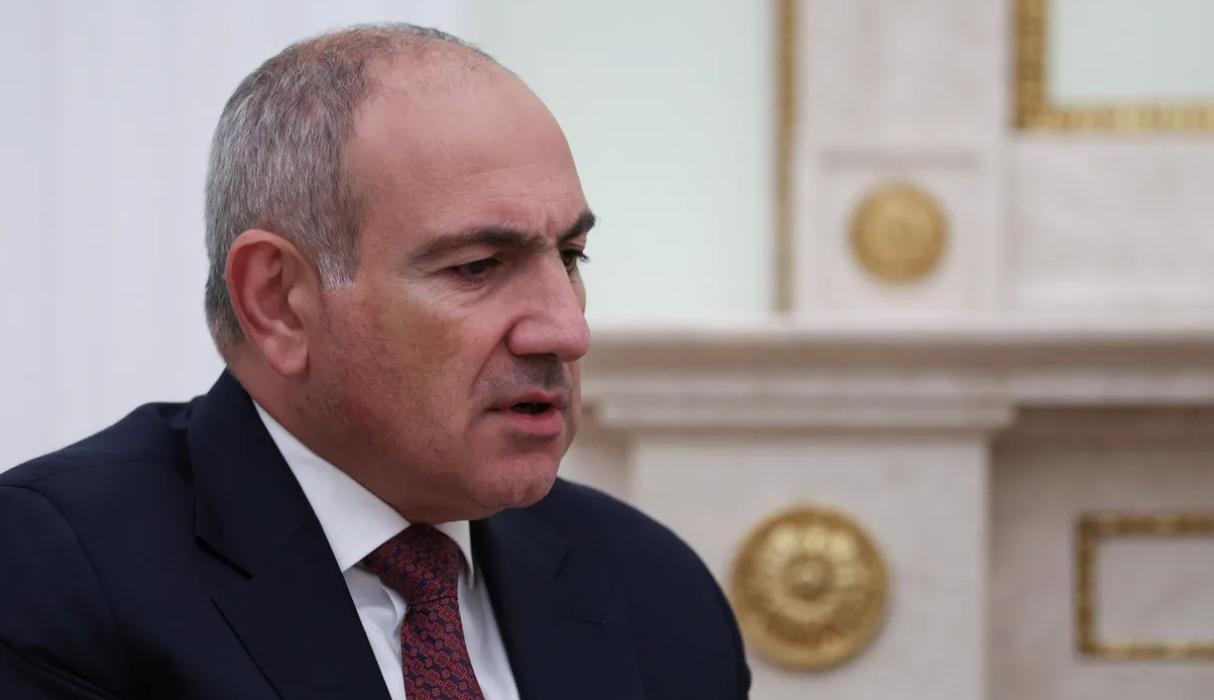
Armenian Prime Minister Nikol Pashinyan confirmed that the first shipment of Azerbaijani petroleum products is heading to his country.
"I know that the first train carrying Azerbaijani petroleum products is already on its way to Armenia. I welcome this development," he told local journalists.
The head of government noted that the deal is being conducted between private companies, but the political conditions for it emerged after peace was established between the two countries.
Earlier, Armenian Parliament Speaker Alen Simonyan stated that Yerevan is ready for trade and economic cooperation with Baku, including the purchase of petroleum products. The politician believes that "the more alternative energy sources Armenia has, the better."
Azerbaijani media recently reported that 22 railcars of SOCAR-produced AI-95 gasoline would be sent to Armenia on December 18. The corresponding agreement was reached on November 28 during a meeting between the Deputy Prime Ministers of Azerbaijan and Armenia, Shahin Mustafayev and Mher Grigoryan.
Since 2020, transport communications in the South Caucasus remain one of the most contentious regional issues. The route connecting Azerbaijan with Nakhchivan via southern Armenia has attracted particular attention. It received political and legal status in August 2025 as part of the US-brokered peace agreement. The project is known in the region as the "Zangezur Corridor," while the US agenda calls it TRIPP, including transport, energy, and digital lines.
The economic potential is estimated at up to 15 million tons of cargo per year and $3-5 billion in investment.
However, experts warn that if the route becomes an instrument of geopolitical pressure rather than transparent transit, it may lose its economic viability. Political interests include Azerbaijan's desire to secure a direct link with Nakhchivan, Armenia's control over transit through its territory, and the influence of regional players, including Turkey and Russia. In such a case, the project risks becoming a "highway of tension," where economic gains take a backseat to political maneuvering, and transit stability remains at risk.