"As long as Putin is in power, 'Kadyrovism' will continue in Chechnya" — Lana Estemirova
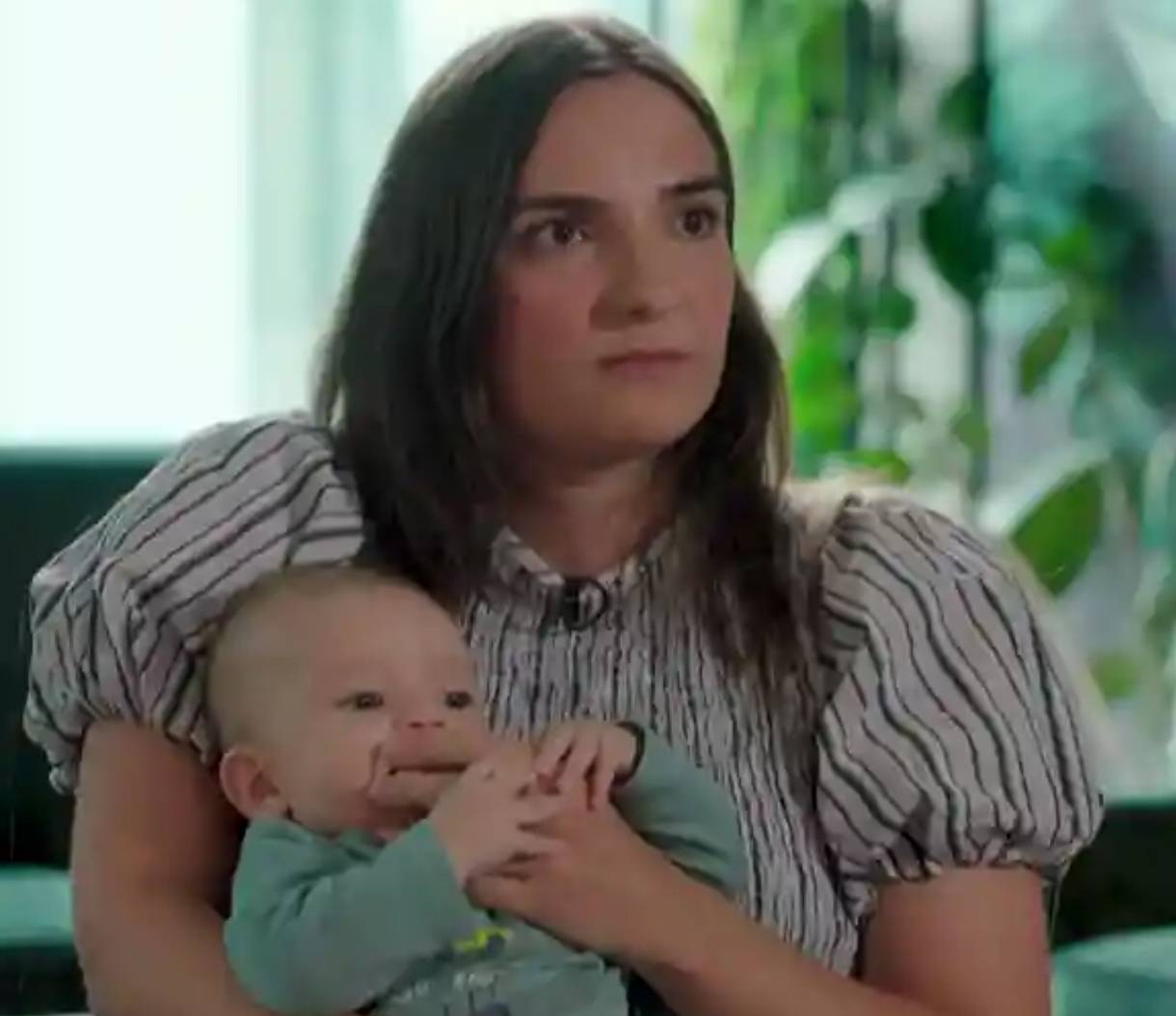
Lana Estemirova—daughter of human rights activist Natalia Estemirova, who was murdered in 2009—presented the Russian edition of her book, *Please, Live!*, in Prague. In an interview with DW, she discussed the situation in Chechnya, the plight of its residents, and the possibility of a change in power.
According to Estemirova, interest in Chechnya has surged again since the start of Russia's full-scale war against Ukraine. She believes many people have drawn parallels between the events in Ukraine and the Russo-Chechen wars—citing the destruction of cities, "filtration" camps, security sweeps, and torture.
"I would say that Chechnya is even closer to Russia than Ukraine is, because, however you look at it, Chechnya is currently part of Russia," she said.
Speaking about Ramzan Kadyrov, Estemirova described him as a "local petty potentate with whom a deal was struck." She rejected the notion that Chechnya's residents live off massive federal subsidies or receive a form of war reparations from Russia.
"If that were the case, why is the unemployment rate in Chechnya so high? Why do people there live in poverty, relying on meager handouts? The idea that milk flows from the taps in Chechnya is a massive myth," she declared.
She noted that a significant portion of the population lives in fear; while resistance to Kadyrov's rule does exist, it is brutally suppressed.
"It seems to me that most Chechens are currently living like hostages. And it is simply not true that there is no resistance. It exists, but it is crushed with extreme brutality," Estemirova said.
She attributed this to the practice of collective responsibility, under which punishment can extend to the relatives of anyone who speaks out against the authorities. "The fact is, so many generations of Chechens now know what awaits you if you resist—what awaits not just you, but your entire family," she noted.
In Estemirova’s view, a change in Chechnya’s leadership—while Vladimir Putin remains in power—would not necessarily lead to a change in the region's current governance model.
"It seems to me that as long as Putin is in power, whatever happens in Chechnya will, to one degree or another, be a continuation of 'Kadyrovism.' It might take a different form; it would be a different person with a different appearance. But that person would perform roughly the same function," she said.
Estemirova believes the decision regarding Kadyrov’s successor will most likely be made in the Kremlin.
"Because Kadyrov is just a cog in the machine. I know it’s very fashionable right now to view him as practically a rival to Putin—even though he hasn't looked his best lately—but he is a cog; a more interesting, more colorful one compared to other cogs, perhaps, but a cog nonetheless. And they will find another cog that fits the role and replaces him," the human rights activist's daughter stated.
She also spoke about the memory of the 1944 Chechen deportation, describing it as an "open wound." According to Estemirova, this trauma played a significant role in the emergence of the Chechen independence movement in the 1990s.
"The memory of the deportation is still alive. It is a part of our history that is passed down from generation to generation," she said.
Estemirova also mentioned that while working on the book, she encountered a reluctance among people to speak openly about Natalia Estemirova or their own experiences due to fear for their relatives' safety. "People are afraid to speak not only about Mom but also about Anya. They are afraid to speak about their own pain, about their abducted loved ones, and about their own traumas," she said, referring also to journalist Anna Politkovskaya.
Lana Estemirova emphasized that she does not consider herself the "voice of Chechnya" and views the book primarily as a personal story.
"My book is just one of those stories," she said.