The Armenian government will support businesses affected by Russian export restrictions

Armenian Prime Minister Nikol Pashinyan assured Armenian businesses facing problems due to Russian trade restrictions of state support. Speaking to residents of the village of Lchashen during his election campaign, he announced that the government will develop subsidy and assistance programs for enterprises whose export activities face unjustified obstacles.

"We are implementing support and subsidy programs in all cases where unfair export barriers arise, so that no one in our economy suffers," Pashinyan assured.

He also added that support will also be provided to those producers whose products do not meet established quality standards, to help them bring their goods into compliance with the new requirements.

Furthermore, Pashinyan emphasized the importance of diversifying export markets, noting that Armenia's economy should not be dependent on a single export market.

"We produce 100 tons of pepper; we shouldn't export 90 tons in one direction; we should export 25 tons in four directions. Then in five, six, seven directions. This is the formula I was talking about: independence is replacing dependence on the few with dependence on the many," he said.

During the campaigning ahead of the June 7 parliamentary elections, the Armenian prime minister stated that restrictions on Armenian agricultural products were turning people against the EAEU.

"I believe these are wrong steps, as they are turning people against the EAEU. And for me, as a high-ranking EAEU official, this is a problem. But we will resolve all these problems," he said.

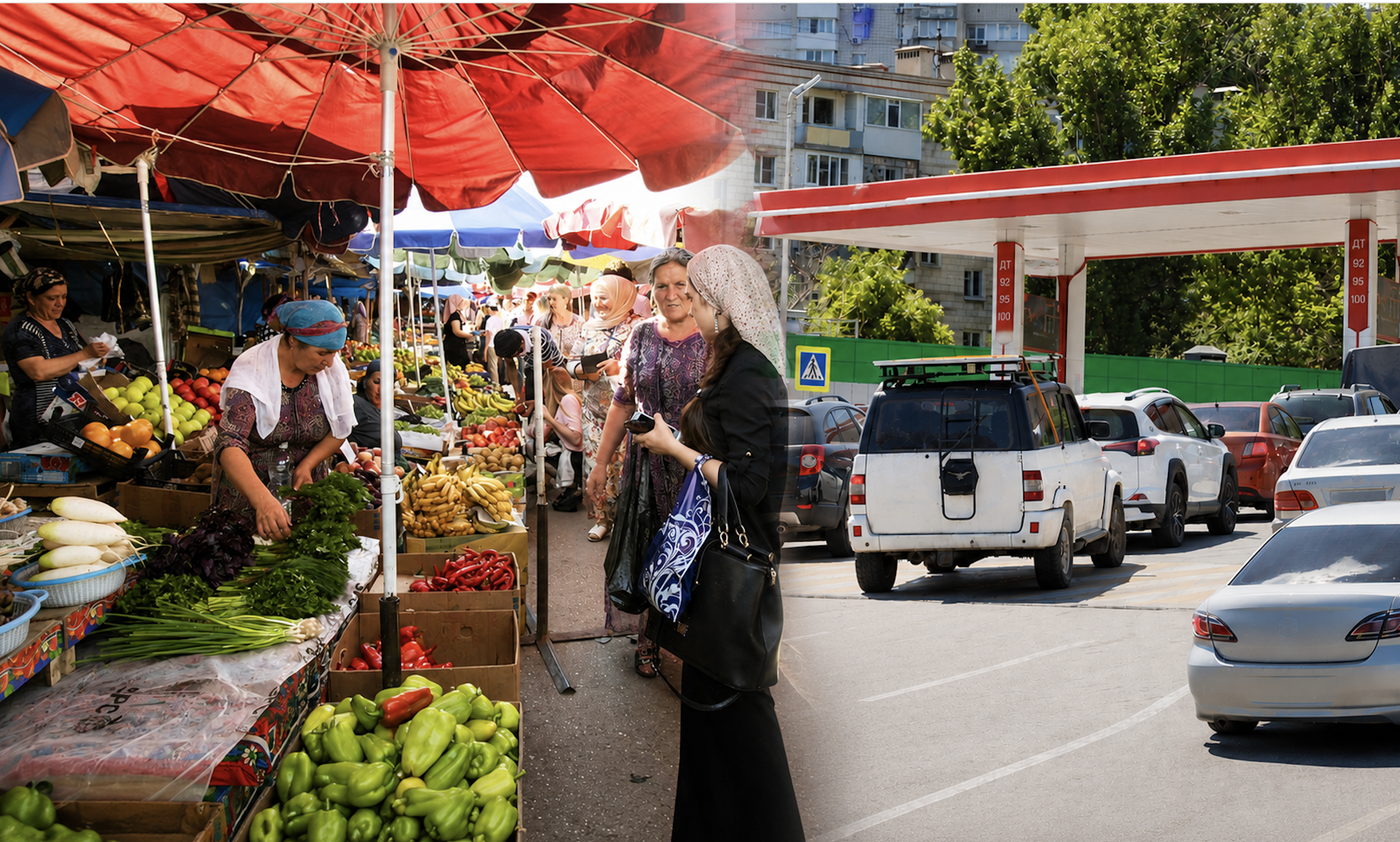
Recently, Rosselkhoznadzor imposed restrictions on the import of certain Armenian fruits, fish, vegetables, flowers, cognac, wine, and mineral water. These measures were taken amid political tensions and Russia's criticism of Armenia's rapprochement with the EU. The Kremlin previously stated that Yerevan's desire to integrate with the European Union is its sovereign right, but Armenia cannot and should not do so at the expense of the EAEU countries.

Последние новости
Stavropol Region Resident Sentenced to Correctional Labor for Desecrating Soviet Soldiers' Mass Grave
Society
Stavropol Region Resident Sentenced to Correctional Labor for Desecrating Soviet Soldiers' Mass Grave
14 August 2026

A court in the Stavropol Region sentenced a 40-year-old resident of the village of Staroizobilnenskaya to ten months of correctional labor for desecrating a mass grave of Soviet soldiers.

AI-generated personas supported
Politics
AI-generated personas supported "Georgian Dream": researchers identify 230 suspicious Facebook accounts
14 August 2026

A network of 230 Facebook accounts featuring photos likely generated by neural networks has been discovered in Georgia. These accounts were used to create the appearance of widespread support for the ruling "Georgian Dream" party and its chairman, Irakli Kobakhidze. Researchers from the "Myth Detector" platform reached this conclusion.

17 Ukrainians living for over a year in a basement at the Georgia-Russia border evacuated due to mudslide threat
Human rights
17 Ukrainians living for over a year in a basement at the Georgia-Russia border evacuated due to mudslide threat
14 August 2026

Seventeen Ukrainian citizens, who had been staying for more than a year in the basement of the Georgian "Daryali" checkpoint on the Russian border, were evacuated on August 13 due to the threat of a natural disaster. Following the evacuation, they were not taken away from the border crossing area entirely; instead, they were placed in a truck and transported a few hundred meters to the grounds of a nearby monastery.

The war in Abkhazia, which claimed around 10,000 lives, began 34 years ago
History
The war in Abkhazia, which claimed around 10,000 lives, began 34 years ago
14 August 2026

On August 14, 1992, hostilities broke out in Abkhazia; the conflict lasted over a year and became one of the most severe in Georgia's modern history. On that day, Georgian units entered the self-proclaimed Autonomous Republic of Abkhazia, crossing from the direction of the Inguri River. Tbilisi justified the deployment of the National Guard by citing the need to protect railway links. However, the advancing Georgian column encountered armed resistance from Abkhaz forces.