President of Georgia Pardons 232 People; Pro-European Protesters Among Those Released
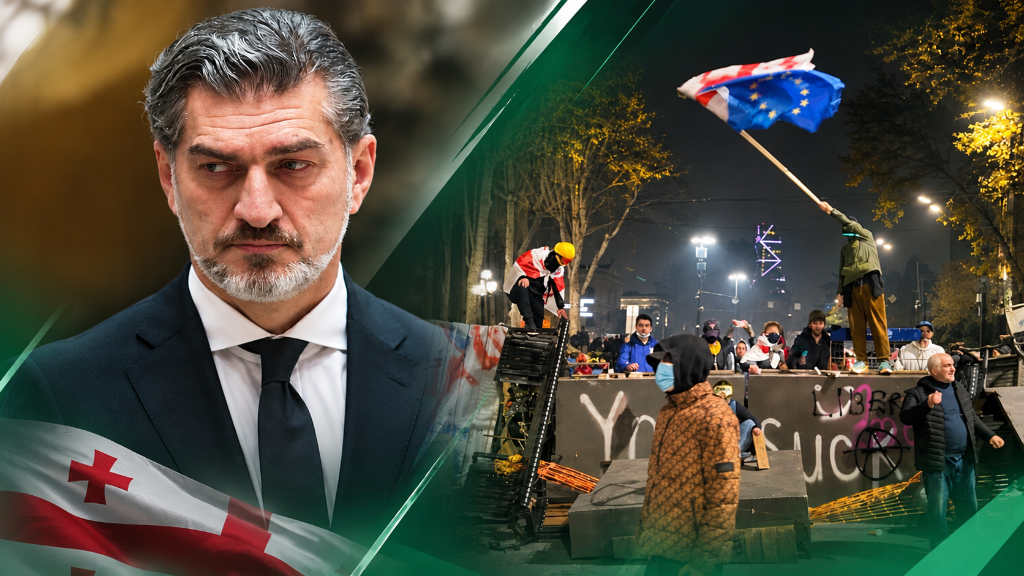
Georgian President Mikheil Kavelashvili has pardoned 232 individuals in observance of St. George’s Day (Giorgoba), celebrated on November 23. Among those pardoned are participants in the pro-European protests that took place in late 2024, who had been sentenced to prison terms of up to five years.
According to the Presidential Administration, the pardons apply to 216 individuals currently serving time in penal institutions, as well as 16 others who were given non-custodial sentences. The authorities have not released a full list of those pardoned.
Those released include Giorgi Mindadze, Anri Kvaratskhelia, Nikoloz Javakhishvili, David Lomidze, and Temur Zasokhashvili. All five were convicted in cases linked to the protests that occurred in November and December 2024. Another individual granted a pardon is Giorgi Okmelashvili, who was detained in the spring of 2024 during demonstrations against the "foreign agent" law. News of his pardon was first reported by the program *Prime Time* on the Georgian television channel Imedi.
Mindadze had been sentenced to five years in prison on charges of attacking a member of an Interior Ministry special unit using pyrotechnics. Kvaratskhelia received a four-and-a-half-year sentence for throwing a Molotov cocktail at a police officer. Javakhishvili was sentenced to two years for participating in group actions. Lomidze and Zasokhashvili each received four-and-a-half-year sentences on charges of attacking officers from the Interior Ministry’s Department of Special Assignments. Okmelashvili was sentenced to five years in prison on charges of assaulting a police officer during protests against the "foreign agent" law. He maintained that he had acted in self-defense.
Upon his release, Javakhishvili stated that he had not requested a pardon from the president.
"The struggle continues until the end! Leaving a penitentiary is a highly emotional experience for any prisoner. I didn't expect this. I did not ask for a presidential pardon," he said.
Javakhishvili also urged other protesters who remain in custody to take the opportunity to secure their freedom.
"Everyone is needed on the outside right now. We don't need anyone in prison—I’m referring to my fellow protesters. I would advise them to take this opportunity and get out, because the situation in the country is such that it needs us—the young people," he declared.
As he left Gldani Prison, Mindadze remarked, "I just want to go home; freedom to everyone."
Kvaratskhelia also sent a message to those still behind bars: "Greetings to the guys; I wish for everyone’s swift release. They are great people, and they know what they are doing."
The presidential administration explained the decision by citing humanitarian principles and the national interest.
"The exercise of the exceptional powers granted to the President of Georgia by the Constitution is based on the principles of humanism and the interests of the state," the administration stated.
In August, the president had already granted pardons to participants in anti-government demonstrations. On that occasion, in observance of the holiday of Mariamoba, the president released 226 individuals, including nine who had been convicted in connection with the protests.