Ramzan Kadyrov Breaks His Own Record and Retains Post as Head of Chechnya
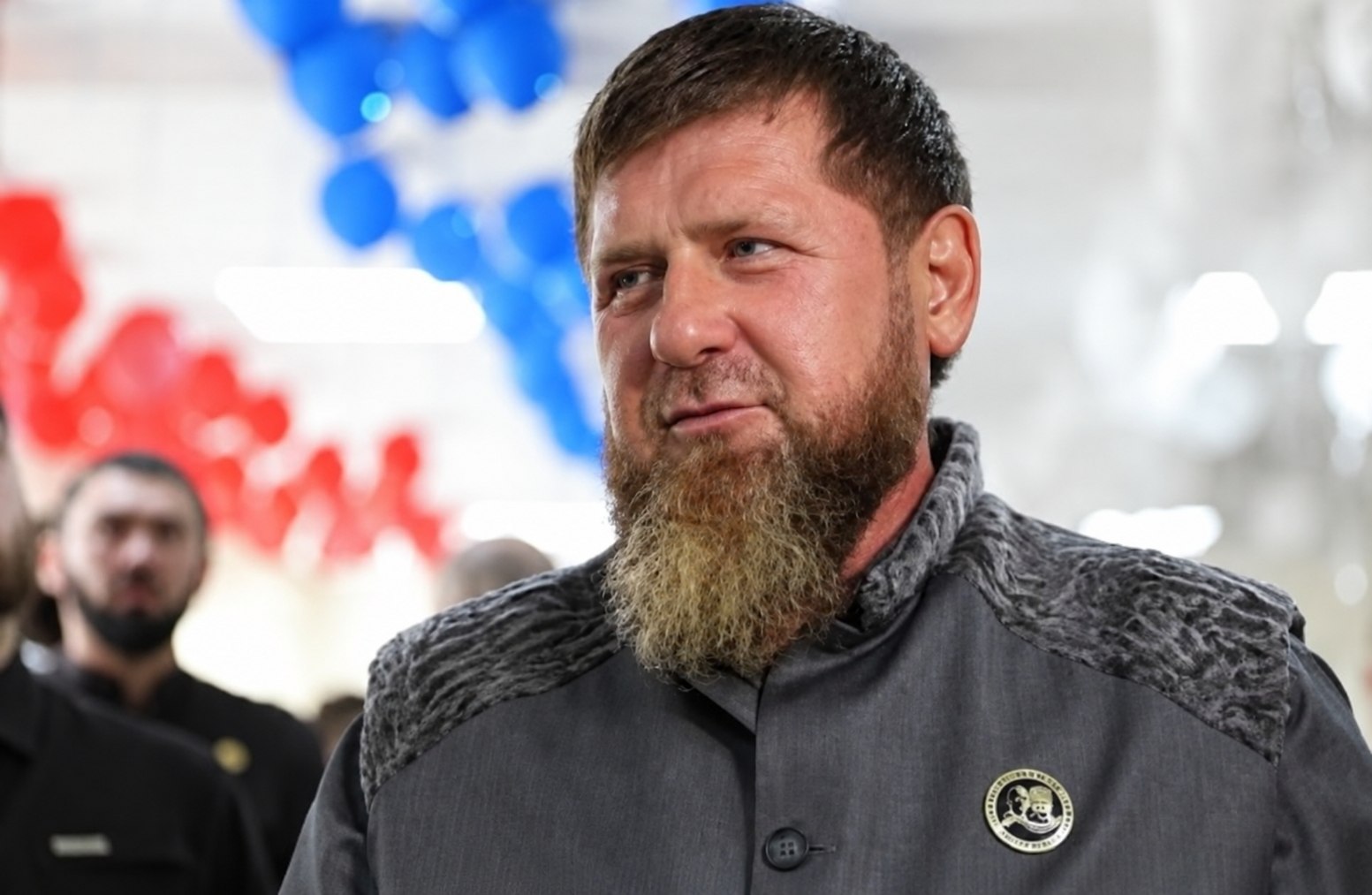
Ramzan Kadyrov secured 99.85% of the vote in the election for the head of Chechnya—a record-breaking figure even by his own standards. The Central Election Commission (CEC) released these numbers after processing 100% of the ballots.
The result was entirely predictable, given that in 2021, according to official data, Kadyrov had received just slightly fewer votes from the republic's electorate—99.7%.
Two other candidates—whom both observers and local residents regarded as "technical" candidates (running merely to fulfill procedural requirements)—each received 0.05% of the vote: Ismail Denilkhanov, Chairman of the Civic Chamber of Chechnya (representing A Just Russia), and Khalid Nakayev, a deputy in the republic's parliament (representing the CPRF). Denilkhanov received 451 votes, while Nakayev received 437.
Reportedly, 831,946 people participated in the vote. Voter turnout stood at 95.19%.
Ramzan Kadyrov is the longest-serving regional leader; he has headed Chechnya since 2007—initially as president, and since 2010, as the head of the republic. It was Kadyrov who, in August 2010, initiated the move to rename the top office held by the leaders of Russia's constituent entities.
"My position is that there should be only one president in a unified state, whereas the top officials in the constituent entities can be designated as heads of republics, heads of administrations, governors, and so on," he stated at the time.
Kadyrov also noted back then that "from the very first days, [he] had rejected the idea of signing an agreement between the federal center and the Chechen Republic regarding the division of powers."
"I am firmly convinced that such documents are completely unnecessary. We have a constitution that spells everything out." "And there should be no constituent entities with special powers," he stated confidently.
Voting for the State Duma took place in Russia concurrently with the elections for regional heads. With 93.06% of the ballots processed, United Russia secured 57.83% of the vote, the CPRF received 13.81%, the LDPR 8.93%, New People 7.97%, and A Just Russia 4.96%.
Prior to the current elections, Kadyrov had spoken several times about his reluctance to continue serving as the head of the republic. Notably, in December 2025, he stated that he would run for office "if the president proposes it and the people support it."
"But if you ask me, I am fed up with this power and with serving the people. I think new forces, new people would be more interesting; the situation would be better if there were others," he said at the time.
Although Ramzan Kadyrov had previously expressed a desire to step down on numerous occasions, he invariably remained in his post and ran for a new term each time. This time, his remarks came amidst widespread rumors regarding a serious illness afflicting the Chechen leader.
Kadyrov himself and his inner circle consistently and vehemently denied these reports. However, at a certain point—particularly in the summer of 2025—it became evident that he was facing health issues that could no longer be concealed, even from outward appearances: he made increasingly rare public appearances, and in the few brief videos of him at work, he was visibly struggling to move, while his speech had slowed. At that time, many Russian and international media outlets predicted his imminent replacement, speculating on potential successors and estimating how much time he had left to live.
Yet, contrary to these predictions, Ramzan Kadyrov’s health began to show signs of improvement. He gradually began returning to work and making public appearances.
In February 2026, Kadyrov announced that he would agree to run for office again only with Vladimir Putin's support.
"I will agree to run only if our national leader supports my candidacy," he emphasized.
In late April, Putin endorsed his participation in the election.
After being nominated by United Russia in July, Kadyrov reiterated that he would have preferred a different candidate.
"If you ask me, I would choose another candidate, because it is a huge responsibility—I know what a difficult task it is. Today, one could say I am running in the election out of necessity. I am confident the people will show their support. If the people do support me, then I am ready to serve them," he emphasized.