Russia and Georgia Fail to Agree on Format for Future Dialogue
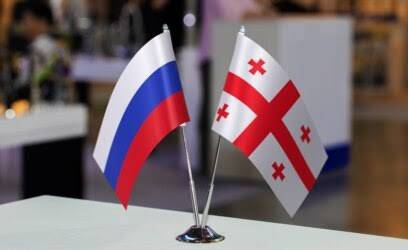
Following the first round of direct talks between Georgia and Russia, the question of where the next meeting will take place remains open. Prime Minister Irakli Kobakhidze proposed alternating between Moscow and Tbilisi; however, Foreign Minister Maka Bochorishvili noted that the two sides have yet to agree on a format for future engagement.
On November 26, Bochorishvili commented on a recent statement by Russian Foreign Minister Sergey Lavrov. She emphasized that public declarations of a readiness for dialogue are not enough—Tbilisi expects concrete steps from Moscow.
"Simply expressing a desire is not sufficient. If there is a genuine desire, we need to see concrete actions and specific steps; we need to understand what is actually meant by the realization of this intent. This desire cannot be fulfilled from our side—we are not the country that should be taking the initiative toward the Russian Federation," Bochorishvili said in an interview with the Georgian Public Broadcaster.
A day earlier, Russian Foreign Minister Sergey Lavrov stated that Moscow is interested in normalizing relations with Georgia. He welcomed the Georgian authorities' stance in favor of direct contact with Russia, describing this approach as pragmatic.
"We are interested in normalizing relations with Georgia. I welcome the recent statement by the Georgian Foreign Minister that there is no need to fear contact with the Russian Federation. I believe this is a pragmatic approach that serves both the interests of the Georgian people and our bilateral relations with Georgia," Lavrov concluded.
Bochorishvili linked the prospects for restoring relations to the consequences of the August 2008 war. Following that event, Georgia severed diplomatic relations with Russia, while Moscow recognized the independence of Abkhazia and South Ossetia—territories that Tbilisi considers to be under occupation.
"If Russia wants to normalize relations with Georgia, there is nothing to hide; it is well known what steps need to be taken—and by whom—to achieve any progress in this regard," the Foreign Minister added.
According to Bochorishvili, the two sides have not yet agreed on a date or a venue for their next meeting.
"There is no proposal, no decision, and the matter is not on the agenda. Therefore, I believe it is premature to discuss such issues," Bochorishvili said.
She also dismissed suggestions that the appointment of Giorgi Zurabashvili as the Prime Minister’s special representative for relations with Russia signals preparations to restore diplomatic ties.
"There are no grounds to link this to the restoration of diplomatic relations," the minister emphasized.
On the same day, Kobakhidze suggested that future rounds of talks could be held alternately in the Georgian and Russian capitals.
"These meetings could certainly take place in either Moscow or Tbilisi. If such an approach is adopted, it is essential that the meetings be held alternately in Moscow and Tbilisi," Kobakhidze explained to reporters.
He clarified that visits by Georgian representatives to Russia would not constitute recognition of Abkhazia and South Ossetia as independent states.
The Prime Minister identified a peaceful resolution to the conflict as Tbilisi’s "ultimate goal," noting that "this is impossible without de-occupation."
"However, we understand that this task cannot be accomplished in a day, a month, or even a year." "Therefore, we must work patiently and consistently on all issues, including technical ones," the head of government stated.
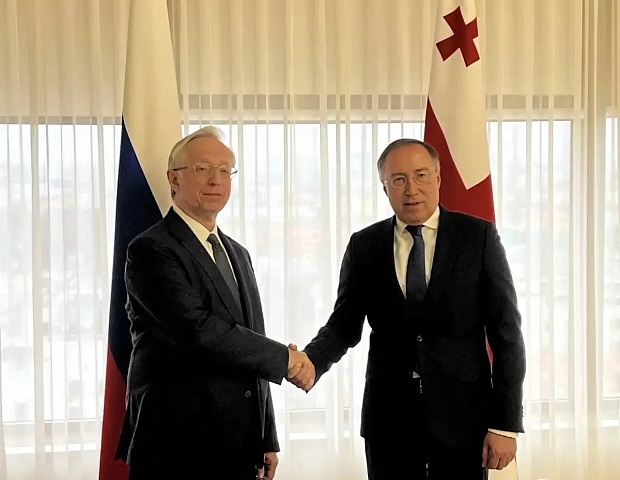
The first round of direct talks between the Georgian Prime Minister’s special representative, Giorgi Zurabashvili, and Russian Deputy Foreign Minister Mikhail Galuzin took place on November 19 in Minsk. The parties discussed trade, economic, cultural, and humanitarian relations, as well as regional security. The Georgian government reported that a number of agreements had been reached, but did not disclose their content.
Diplomatic relations between Georgia and Russia have remained severed since 2008. Nevertheless, since the war, the two sides have continued to engage within the framework of the Geneva International Discussions and have maintained trade and humanitarian contacts.