"Holy Struggle": A Conflict Between Secular and Clerical Authorities Erupts in Armenia
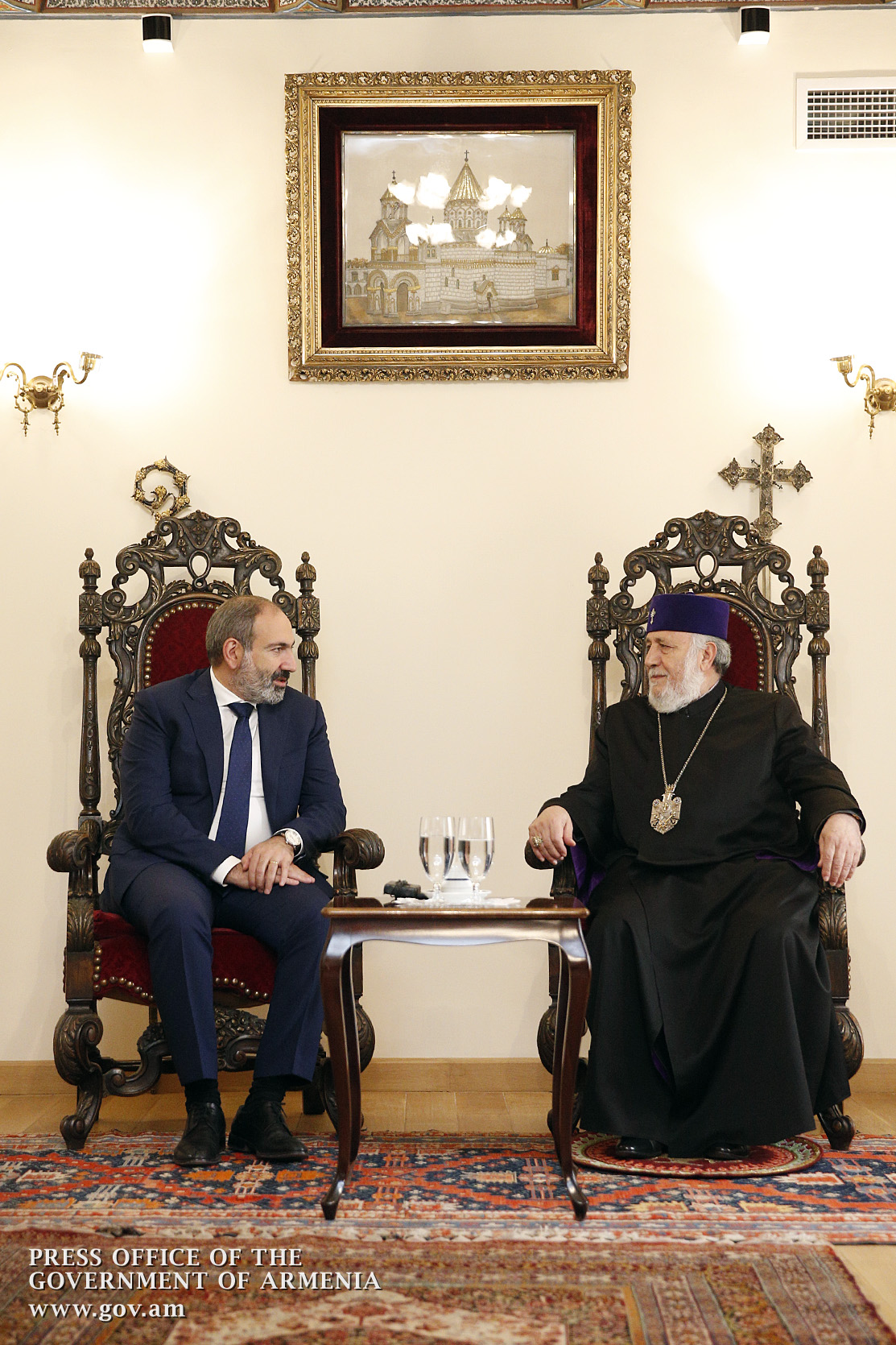
On June 25, Armenian Prime Minister Nikol Pashinyan announced that an attempted coup by the "criminal-oligarchic clergy" had been thwarted. Following house searches, 16 people were detained, including Archbishop Bagrat Galstanyan, the leader of the "Holy Struggle" movement, who criticized the government for its decisions on Nagorno-Karabakh and led protests last spring. But Pashinyan hasn't stopped there and is threatening to remove the Catholicos of All Armenians.
Background
The standoff between the prime minister and the Armenian Apostolic Church has been ongoing since 2018, when Nikol Pashinyan first came to power. Even then, the clergy criticized him for his pro-Western policies, which were at odds with the traditions of Armenian society. The conflict escalated after the Second Karabakh War in 2020, when Catholicos of All Armenians Garegin II called on the prime minister to resign.
In April 2023, he repeated his call, saying that "incorrect and unacceptable statements are being made regarding the status of Nagorno-Karabakh. The deepening disunity, impatience, and spirit of intolerance among our people are worrisome."
The prime minister responded: "If the church wants to engage in political activity, then Armenia is a democratic country, and they can create a political party."
And the church heeded his advice. In April 2024, after the border delimitation with Azerbaijan began and four villages in the Tavush region were transferred to Baku, the head of the local diocese, Archbishop Bagrat (secular name Vazgen Galstanyan), created the protest movement "Tavush for the Motherland." It was later renamed "Sacred Struggle." The archbishop's supporters announced his candidacy for the post of prime minister. Bagrat himself called on Pashinyan to resign "peacefully, without upheaval." On June 17, an extraordinary parliamentary session was scheduled to discuss the government's resignation, but a quorum was not reached.
Escalation
A new round of conflict erupted in late spring 2025. Pashinyan suddenly made a surprising statement that churches in the country were being used as storage rooms and were littered with construction debris. "You enter a church and see floor tiles, bags of cement, pieces of old, rusty rebar," the prime minister lamented. His wife, Anna Hakobyan, didn't mince words at all. She called Garegin II "the country's main spiritual mafioso" and his supporters in the church "black-haired maniacs."
In June, Pashinyan intensified his accusatory rhetoric, accusing the head of the Armenian Apostolic Church of violating his celibacy and claiming to have a child. "This means that according to church canons, Garegin II could not be a bishop, archbishop, could not be elected, and cannot remain Catholicos," the prime minister declared, demanding his resignation.
The head of the Tashir holding company, billionaire Samvel Karapetyan (who, incidentally, holds Russian citizenship), defended the Armenian Apostolic Church. "A small group, forgetting Armenian history... attacked the Armenian Church..." the businessman said. He added: "If the politicians fail, we will participate in all of this in our own way." His home was searched that same day, and the following day, Karapetyan was arrested on charges of "public calls for the seizure of power."
Coup
Pashinyan declared that an "attempted coup by crooks" had occurred in the country.
On June 25, the Investigative Committee of Armenia accused Archbishop Bagrat and his supporters of plotting terrorist attacks. Searches and arrests were conducted in the homes of members of the "Sacred Struggle."
The Prosecutor General's Office of Armenia reported that the searches revealed "firearms and ammunition, action plans, lists of recruits, metal objects, firecrackers, smoke alarms, military equipment, radio communications equipment, drones, plant matter resembling narcotics, a list of individuals appointed to relevant positions in executive bodies after the violent seizure of power, and documents detailing the detailed planning, sequence, and chronology of the illegal actions to be carried out by the criminal group." Sixteen people were detained, and 14 were arrested on suspicion of terrorism and preparations for the seizure of power.
On June 27, Armenian security forces attempted to detain Archbishop Mikael Ajapakhyan, head of the Shirak Diocese of the Armenian Apostolic Church. A scuffle broke out between them and the priest's supporters. Ajapakhyan became ill. He later presented himself to the Investigative Committee and was placed under arrest.
The leadership of the Armenian Apostolic Church accused the authorities of an anti-church campaign. Nikol Pashinyan, in turn, called on believers to demand the resignation of Catholicos of All Armenians Garegin II and proposed his own procedure for electing a new Catholicos, in which the state would play a decisive role.
Towards the Elections
Experts believe the conflict between Pashinyan and the Armenian Church is driven by the upcoming 2026 parliamentary elections and Pashinyan's desire to retain power. During his premiership, Pashinyan subjugated the executive, legislative, and judicial branches, with only the Church maintaining its independence. Given the high prestige of priests among the electorate, criticism from the clergy is extremely painful for Pashinyan.
"The ruling party hardly sees the parliamentary opposition as a serious threat. Meanwhile, the ruling party's ratings are extremely low. But the elections are still a year away. From a political perspective, the only force, structure, and institution that is not controlled by the authorities is the Church," Alexander Iskandaryan, director of the Caucasus Institute (Yerevan), noted in an interview with Kommersant.
According to a May Gallup International poll, 11.5% of respondents are prepared to vote for Nikol Pashinyan's Civil Contract party. The opposition, including the blocs of former presidents Robert Kocharyan and Serzh Sargsyan, received less than 10%. Meanwhile, trust in the church was nearly 80%.
Will Pashinyan be able to win under these circumstances? Armenia's first president, Levon Ter-Petrosyan, who led the country from 1991 to 1998, is convinced that he won't. "Pashinyan is the embodiment of defeat. He shamefully lost the Artsakh War and will undoubtedly lose the war he has declared on the Armenian Church," noted his press secretary, Arman Musinyan.
Sergey Markedonov, a leading researcher at the MGIMO Institute of International Studies, also believes that Pashinyan has "started a dangerous game." "He has already broken a number of unspoken Armenian political taboos, initiating a series of criminal prosecutions of 'former' figures, launching an unprecedented anti-church campaign comparable only to the early Soviet era... The stakes are the main election campaign of the five-year period. And defeat in it is tantamount to an early departure from power and politics, because the old taboos have been broken, the old rules no longer apply, and there are plenty of avengers of all calibers, even if their approval ratings are not particularly impressive," the expert told RBC.
Between West and East
However, the conflict also has a foreign policy aspect. The Armenian prime minister's attacks on the church are dictated by external pressure, and this is a "serious mistake," Ilyas el-Morr, secretary general of the Orthodox Middle East Union El-Mashreq and head of the Al-Arabi Al-Mashriq research center, told RIA Novosti. "What Nikol Pashinyan is doing isn't an independent decision. He's following external directives aimed at undermining Armenia's historical ties with its allies, primarily Russia, and weakening Russian influence in the region," El-
Morr said.
According to the expert, this policy is imposed by the West and is aimed at systematically weakening the Church, as has already happened in Ukraine, Moldova, and Romania.
"Armenia is currently experiencing a profound internal conflict between two factions: one seeks to preserve the cultural, spiritual, and historical heritage embodied in the Church, while the other is pulling the country under the Western umbrella, turning it into a tool against its own allies and neighbors," El-Morr believes.
However, other experts believe the attacks on the Armenian Church are more of a pro-Turkish move. Normalization of Armenia's relations with Turkey is clearly stalling, and Pashinyan would like to accelerate this process.