Three witnesses in the terrorist case recanted their testimony and alleged pressure from security forces
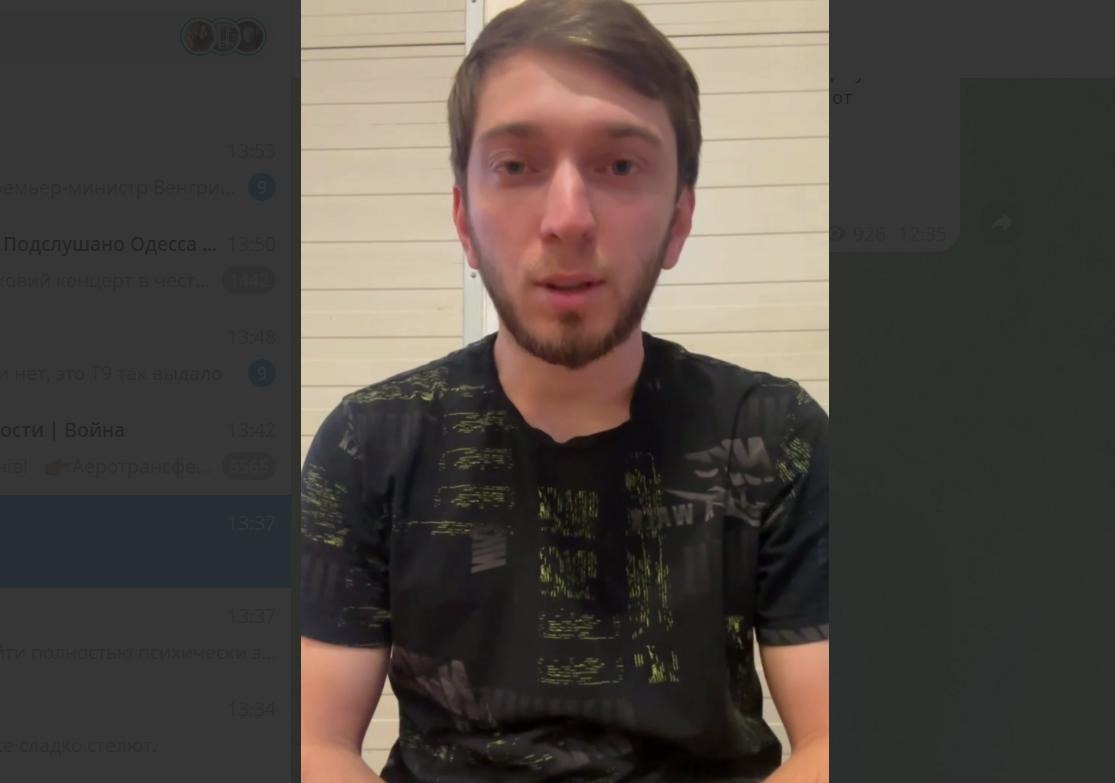
On May 24, Adam Maloroyev, a native of Ingushetia living abroad and wanted by the federal government for "failure to report a crime," released a video message via Telegram channels in which he stated that FSB officers tortured him into incriminating himself and two Dagestanis convicted of terrorism.
The men in question are 23-year-old Abas Saidov and 21-year-old Zamur Tagirov. In March 2025, the Southern District Military Court found them guilty of organizing a terrorist organization, possessing weapons, and preparing armed attacks on police officers and clergy, and sentenced them to 19 years in a maximum-security prison.
According to the investigation and the court, in 2020, they became interested in radical ideas, exchanged videos on social media, then met and began renting an apartment together in Makhachkala. They attempted to recruit other young people to their group and planned to attack security forces, purchasing knives from Kizlyar and then finding pistols in a cache. Both were detained the following day. Evidence presented in court included the pistols, social media correspondence, testimony from several witnesses stating that Tagirov and Saidov urged sympathizers to purchase weapons, and their own confessions.
The defendants' lawyers claimed that the young men had incriminated themselves under torture and that the pistols had been planted on them.
A month after the verdict, video messages from "witnesses" who had retracted their testimony began appearing online, including on Tumso Abdurakhmanov's channel. On May 18, Dagestan natives Asiyat Batyrova and Izabella Israfilova stated that FSB officers had threatened them into giving false testimony against Tagirov and Saidov. The girls filed a complaint with the Investigative Committee, the Military Prosecutor's Office, the FSB, and the Office of the Russian Human Rights Commissioner, demanding a review of the sentence.
On May 24, 25-year-old Adam Maloroev also made a video statement. "After the two sisters came forward, I decided to join the effort... I am the very witness the FSB put on the wanted list. The one who left Russia to avoid giving false testimony against these guys. FSB officers in Magas (Ingushetia) forced me and another Ingush man, Magomed Khashiyev, to give false testimony," he stated.
According to Maloroev, he was tied to a chair with a bag over his head for three or four days and beaten, coercing him to incriminate himself. "They hit us in the face, on the head, in the groin, in the kidneys." They beat me so hard that blood came out of my mouth... They electrically charged me—attached wires to my ears, and tased me below the waist and all over my body... They forced me to incriminate myself: to say I was interested in the war in Syria or Chechnya, that I was planning to join jihad, that I knew these guys."
Having agreed to sign the testimony the investigators wanted, Maloroev was released on his own recognizance and fled the country.
A series of video messages from former witnesses gave Tagirov and Saidov's lawyers grounds to seek a review of the criminal case. Meanwhile, "exposés" about the whistleblowers appeared in media outlets and Telegram channels close to law enforcement.
"As if on cue, Wahhabi propagandists from Turkey, Ukraine, and Europe, hiding from Russian justice, began their usual hysteria on social media and Telegram channels. "The very same people who enthusiastically praise the murderers of police officers and religious leaders, calling them "mujahideen," and terrorist attacks "amals for the glory of faith." But as soon as the latest fanatics are caught before they can blow up or shoot people on the streets of Dagestan, this entire crowd unanimously begins to shriek about the "arbitrariness of the security forces" and "fabricated cases." Three characters particularly distinguished themselves in this performance: Asiyat Batyrova and Izabella Israfilova and Adam Maloroyev, who fled to Turkey," one such article states.
Another emphasizes that Asiyat Aminarsanova (now Batyrova) worked as a waitress in the cafe where Saidov was a chef and entered into a Muslim marriage with him in January 2022. According to lawyers, the Tagirov and Saidov case bears clear signs of falsification and the use of unacceptable methods of intimidation against witnesses, but is not exceptional. Such methods have long been used by security forces, along with the use of inmate witnesses and "secret" witnesses whose testimony is completely impossible to verify.