A Crimean Tatar political prisoner has had his home—which his family spent 20 years building—seized
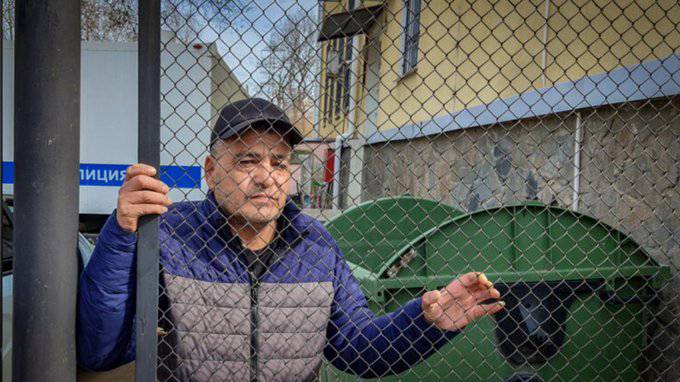
In the occupied town of Novooleksiivka in the Kherson region, representatives of the Russian administration have seized the home of the family of Crimean Tatar political prisoner Rustem Guguryk. The property was sealed off, and the residents were not even permitted to retrieve their furniture, kitchenware, or personal belongings. This was reported by Zarema Barieva, a manager at the Crimean Tatar Resource Center.
According to Barieva, on September 11, Asan Aliyev—a former member of the Mejlis of the Crimean Tatar People whose authority had been suspended due to his collaboration with the Russian occupation authorities—arrived at the house. Together with others, he sealed the building.
"The children have been deprived of their father and his care, and now, they have also lost the roof over their heads. The occupiers justified their actions by claiming that Rustem—who was convicted on 'terrorism' charges—has no right to own housing or property in Russia. The family was never provided with any official court ruling or decree, even though the house is fully registered under Ukrainian law and the relatives possess all the relevant documentation," Barieva wrote.
According to the human rights advocate, in mid-September, Aliyev decided to move a family of FSB officers—who are working in the occupied territory—into the house.
"The owners were not allowed to take anything from their own home: not the furniture, not the kitchenware, not even the curtains. It seems that the Russian security officers have no qualms about living in a 'terrorist's' home, sleeping in his bed, or eating the homemade preserves prepared by his family," Barieva remarked indignantly.
Rustem Guguryk was detained on March 27, 2022, at the administrative boundary between Crimea and the Kherson region, at the Chongar checkpoint. Before the full-scale invasion, he worked as a taxi driver, transporting passengers across the border. On the day of his arrest, he was attempting to take his family to stay with relatives in Bakhchisaray.
The occupation authorities accused him of participating in the Noman Çelebicihan Volunteer Battalion. On October 26, 2022, a Russian-controlled court sentenced Gugurik to 8.5 years in a strict-regime penal colony. His older brother, Bekir, was also detained in connection with the same case and sentenced to 3.5 years in prison.
The brothers’ mother had passed away in the house just five months before it was sealed off. In 1944, Soviet authorities had deported Rustem and Bekir’s parents from the Alushta district of Crimea to Uzbekistan, stripping the family of their home, possessions, money, and livestock.
Upon returning from exile, the family could not settle in Crimea immediately; in the 1980s, they established themselves in Novooleksiivka. There, they rebuilt a home—a project they worked on for about 20 years alongside the son and his wife, Viktoriia. The couple raised their three children in that house.
"Generations change, but the empire’s methods remain the same: to arrive on someone else’s land, destroy a family’s life, steal their home, and move in," wrote Barieva.