Chechen Resident Fined in Astrakhan for Praying on a Closed Section of Road
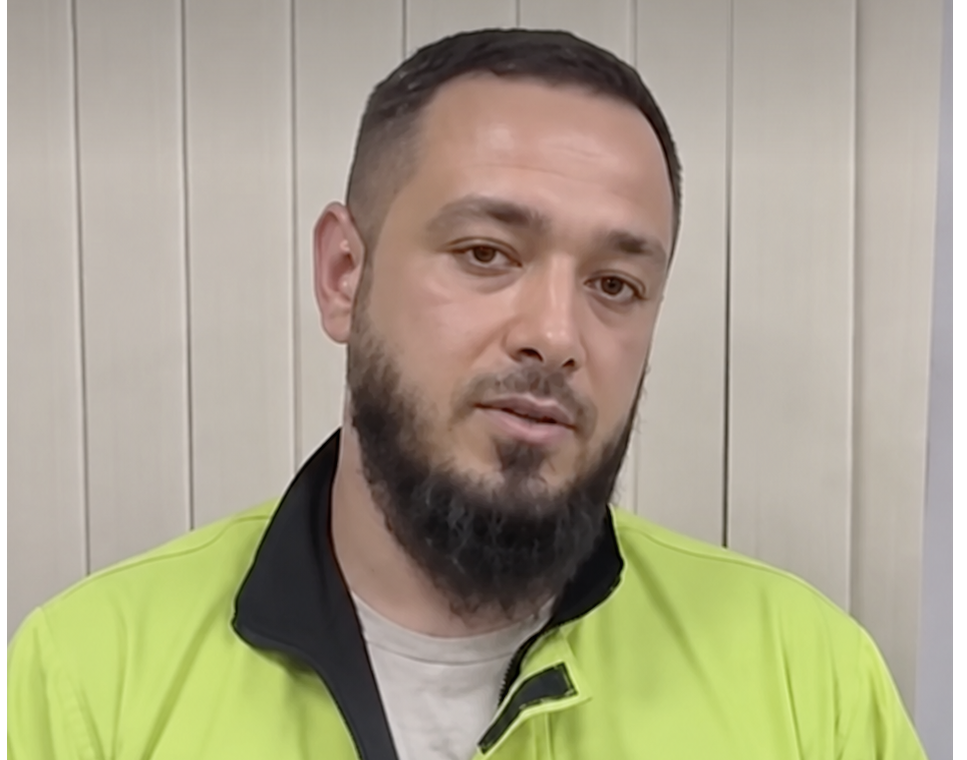
On August 24, a resident of Chechnya performed Muslim prayers on a fenced-off section of road in Astrakhan where road-marking work was being carried out. On August 26, a video of the prayer appeared on local social media, after which FSB and police officers identified the Muslim man.
Posts accompanying the video claimed that he had allegedly blocked the road in order to pray. However, the section had already been closed to traffic. In a subsequent video, the Chechen man explained that he had started praying when the time for prayer had arrived. According to him, he was praying on a closed section of road where he was working. The man also said that he had not intended to incite hatred or hostility.
After an investigation, a report was drawn up against him under Part 4 of Article 5.26 of Russia’s Code of Administrative Offences, which provides for liability for violating requirements governing missionary activity. A court fined him 5,000 roubles. The published reports do not specify which court issued the ruling.
At the same time, the available description of the case does not indicate that the man preached, disseminated religious views, called on anyone to convert to Islam or attempted to involve anyone in a religious organisation.
Rauf-Khazrat Dzhantasov, the mufti of Astrakhan Region, effectively took the authorities’ position.
“When we pray on the road, on children’s playgrounds, or in public places, we interfere with people,” the mufti said.
He also urged Muslims to avoid demonstrative forms of religious practice in public places and to take the rights of those around them into account.
The Astrakhan case is another instance in which performing prayers outside a mosque has led to scrutiny by law enforcement agencies and subsequent administrative penalties against Muslims.
In February, an administrative case was opened in Moscow after a visitor performed Muslim prayers in the corridor of the Nagatinsky District Court.
In March, a native of Kabardino-Balkaria was fined 5,000 roubles in the capital after performing Muslim prayers on the ice at Chistye Prudy. The investigation began after a video of the prayer was posted on social media.
Another case involved a Chechen taxi driver who performed Muslim prayers on Izmailovsky Zoo Street. The man explained that the time for prayer had arrived while he was working and that there was no suitable place nearby. After a complaint from a passer-by, he was taken to the prosecutor’s office and fined 5,000 roubles.
In May, in Astrakhan itself, a Tajik citizen was fined 30,000 roubles and ordered to be deported from Russia after taking part in a group prayer in Journalists’ Square. His Russian fellow student was fined 5,000 roubles.
In July, another Astrakhan resident was fined 5,000 roubles after praying in a shopping centre.
Such cases have caused indignation among Muslim communities in Russia. If a person does not violate public order, interfere with others or take actions affecting the rights of those around them, punishment for the mere fact of praying is perceived by them as a restriction on the ability to practise their religion in public.
For many Muslims, this provides grounds to speak of religious and ethnic discrimination, when administrative measures are applied solely for performing an ordinary religious ritual.