Head of Civil Rights Institute in Azerbaijan Sentenced to 7.5 Years in Prison
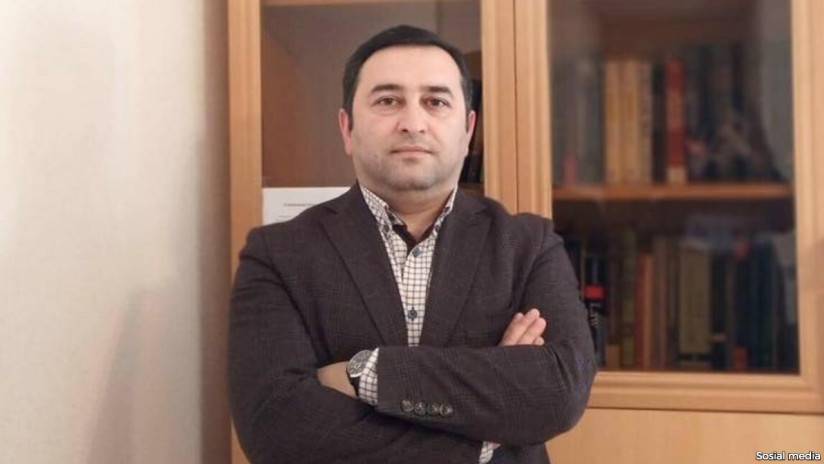
The Baku Court on Grave Crimes has sentenced Bashir Suleymanli, head of the Institute for Civil Rights, to seven years and six months in prison. The verdict was announced on November 19. The prosecution had requested a nine-year sentence for the human rights defender.
Suleymanli was found guilty in a case concerning the foreign funding of non-governmental organizations. He faced charges of official forgery, the legalization of funds obtained through criminal means, and abuse of office. He was detained in March 2025.
In court, Suleymanli denied the charges. He stated that grant funds were used for the purposes specified in the projects—providing free legal aid to citizens, legal education, and election monitoring. He also described the prosecution as politically motivated. His lawyer, Elchin Sadygov, stated that no evidence of his client’s guilt had been presented and announced plans to appeal the verdict.
Suleymanli’s sentencing is part of a broader series of criminal cases brought against members of civil society. The Prosecutor General’s Office of Azerbaijan resumed its investigation into the foreign funding of NGOs in February 2025; the case was originally opened in 2014 and subsequently suspended in 2022.
In March 2025, in connection with this case, authorities also detained Mammad Mammadzadeh, head of the Alliance for Election Monitoring; Asef Ahmadov, leader of the Ganja Regional Public Center; and social worker Zamin Zaki. In April, several more activists were drawn into the investigation. According to Human Rights Watch, approximately 50 representatives of civil society have been questioned, either as witnesses or as suspects.
Some of those involved have already been sentenced. Asefa Akhmedova was given an eight-year prison term, while Zamina Zyaki received a sentence of seven years and three months; in October, the Supreme Court upheld the verdict against Zyaki. Other individuals involved in the case received suspended sentences or are subject to other restrictive measures. The accused maintain their innocence.
Concurrently with these legal proceedings, a new phase of tightening regulations for non-governmental organizations (NGOs) has begun. On November 18, the Parliament of Azerbaijan approved, in the first reading, amendments to legislation concerning NGOs. These amendments mandate the re-registration of existing organizations within 30 days of the law’s entry into force. To comply, NGOs must align their charters with the new requirements, which include establishing internal financial control mechanisms. Should an organization fail to complete the re-registration process—or have its application rejected—its operations may be suspended, followed by a court petition for its formal dissolution.
The draft legislation also proposes increasing the minimum statutory capital for foundations from 10,000 to 100,000 manats. Furthermore, it suggests granting executive authorities the power to suspend the activities of an NGO without a prior court order. At the time the initiative was being considered by Parliament, these provisions remained in draft form and had not yet become law.
Restrictions on this sector have been imposed in the past as well. In 2014, Azerbaijan adopted a package of amendments that tightened the rules for receiving and registering foreign grants; specifically, banks were prohibited from processing transactions related to unregistered grant agreements. In July 2025, additional requirements were introduced for the registration of service agreements funded from foreign sources.