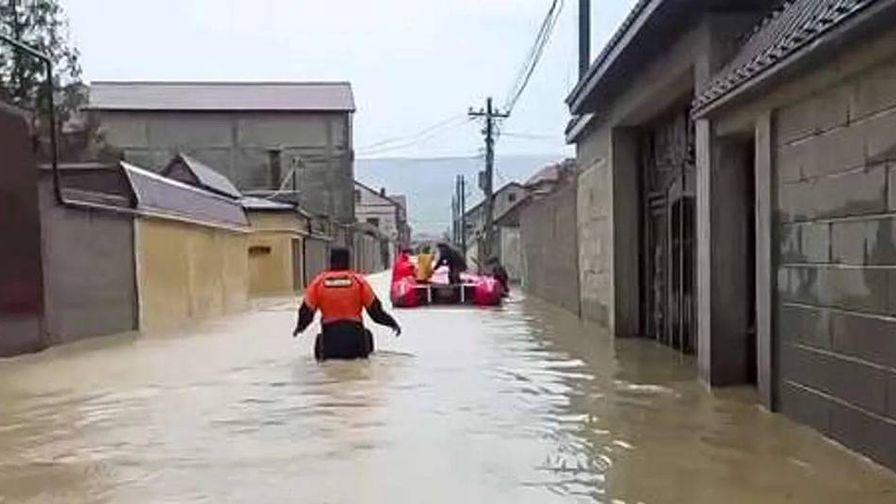
In Dagestan, over 3,000 homes were damaged by the floods: compensation per person will amount to approximately 15,000 rubles
Over 43,000 residents of Dagestan affected by the floods have submitted applications for payments. However, approximately half of these applications (24,000) will not be processed because the applicants did not provide an address. This prevents the payment of 15,675 rubles from being awarded to each affected person.
Additional compensation is provided for those who partially lost their property (78,735 rubles) or whose home was completely destroyed (156,750 rubles).
Official data indicates a smaller number of victims: according to the government, over 3,000 homes were damaged. The largest number of flooded buildings were in Makhachkala (over 2,000), Khasavyurt District (over 770), and Dagestanskiye Ogni (285).
Previously, access to compensation for the loss of essential items was limited to areas with a declared state of emergency, excluding residents of other settlements, particularly the villages of Novokuli and Karaman.
Dagestan authorities are currently considering introducing an interregional state of emergency to provide more effective assistance. The head of the republic explains the phased implementation of the state as a targeted approach to addressing the consequences and supporting the population.