The flood death toll in Dagestan has risen; Putin "received reports on the situation in the republic" the day before
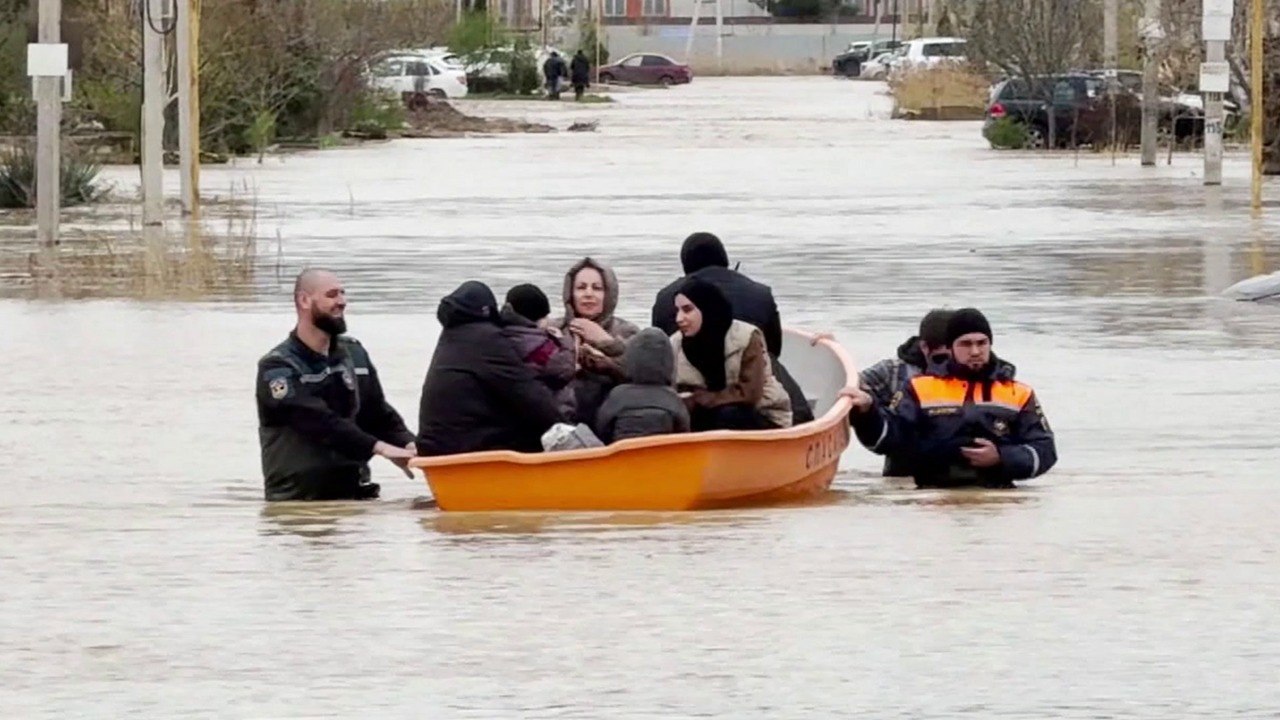
The death toll from the massive flooding in Dagestan, triggered by heavy rainfall, has reached seven. The Investigative Committee has opened two criminal cases for causing death by negligence (Article 109 of the Russian Criminal Code).
According to the agency, one of the incidents involved a car carrying five passengers, while the permissible limit is four. The car was washed away by the floodwaters after the Gedzhukh Reservoir dam burst, resulting in the deaths of the children.
A similar tragedy occurred nearby: another car was flooded, killing a local resident and her minor granddaughter.
According to the Russian Ministry of Emergency Situations, more than 2,000 residential buildings in nine settlements, over 1,800 garden plots, and 173 sections of roads remain flooded in Dagestan. There are 731 people in 15 temporary accommodation centers.
Russian President Vladimir Putin received reports by telephone from Emergencies Minister Alexander Kurenkov and Dagestan Governor Sergei Melikov on the situation in the republic, according to the Kremlin website. A brief statement from the presidential press service, published in the second week of the natural disaster unfolding in the region, noted that Putin "gave the necessary instructions to all relevant agencies to provide assistance to people" and ordered "a meeting to be held on April 7 with representatives of Dagestan, the Emergencies Ministry, and other federal agencies to discuss in detail the situation in the republic."
Meanwhile, the situation in the region remains extremely dire: torrential rains that began in late March caused widespread flooding and disruptions to water and electricity supplies. A new wave of heavy rains hit the republic on April 4 and 5.
The neighboring North Caucasus republics were the first to respond to the tragedy in Dagestan: Emergency Ministry rescuers from Chechnya arrived the day before, and humanitarian aid is being sent from Ingushetia, Kabardino-Balkaria, North Ossetia, Karachay-Cherkessia, and Adygea, in addition to the Chechen Republic.
Prominent figures from a variety of fields across Russia—from aristocrats to bloggers—and ordinary citizens are participating in fundraising efforts to help those affected by the tragedy.