Western embassies reaffirm support for Georgia on anniversary of Sukhumi’s capture by Abkhaz forces
On the 33rd anniversary of the capture of Sukhumi by Abkhaz forces, the embassies of the United States, Germany, France, and Sweden in Tbilisi issued statements supporting Georgia's territorial integrity.
The U.S. diplomatic mission issued a brief statement noting that, together with Georgian partners, it honors "the selflessness and courage of those who gave their lives to defend Georgia and those who were forced to leave their homes as a result of the war." Courtney Austrian, the U.S. Chargé d'Affaires in Georgia, laid flowers at the memorial to the victims of the struggle for the country's territorial integrity at Heroes' Square in Tbilisi.
In its statement, Germany noted that the consequences of the events of 1993 are still felt by Georgian families, including among the generation born after the war.
"Today, we share the pain and sorrow of the Georgian people. Germany remains steadfast and unwavering in its support for Georgia, its sovereignty, and its territorial integrity within internationally recognized borders. May the memory of this day strengthen our resolve to work tirelessly for dialogue, lasting peace, and a European future where reconciliation becomes possible," the statement read.
The French Embassy highlighted the plight of hundreds of thousands of internally displaced persons who are still unable to exercise their right to return to their homes. Paris noted that this right is reaffirmed annually by the UN General Assembly.
Representatives of the Georgian leadership also marked the anniversary. Prime Minister Irakli Kobakhidze, President Mikheil Kavelashvili, and Parliament Speaker Shalva Papuashvili visited the memorial to those who died fighting for Georgia's territorial integrity. Papuashvili laid a wreath at the memorial.
The war in Abkhazia began against the backdrop of a standoff between the Georgian authorities and the Abkhaz leadership, which advocated for secession from Georgia. On August 14, 1992, Georgian armed forces entered Abkhazia. Georgian authorities stated that the operation's goal was to free hostages and secure the railway link with Russia; the Abkhaz side viewed the troop deployment as an attempt by Tbilisi to establish control over the region. According to Human Rights Watch, after entering the Gali district, Georgian forces continued their advance toward Sukhumi and attacked administrative buildings belonging to the Abkhaz authorities. Russian military units and detachments of North Caucasian volunteers fought alongside Abkhaz forces in the conflict.
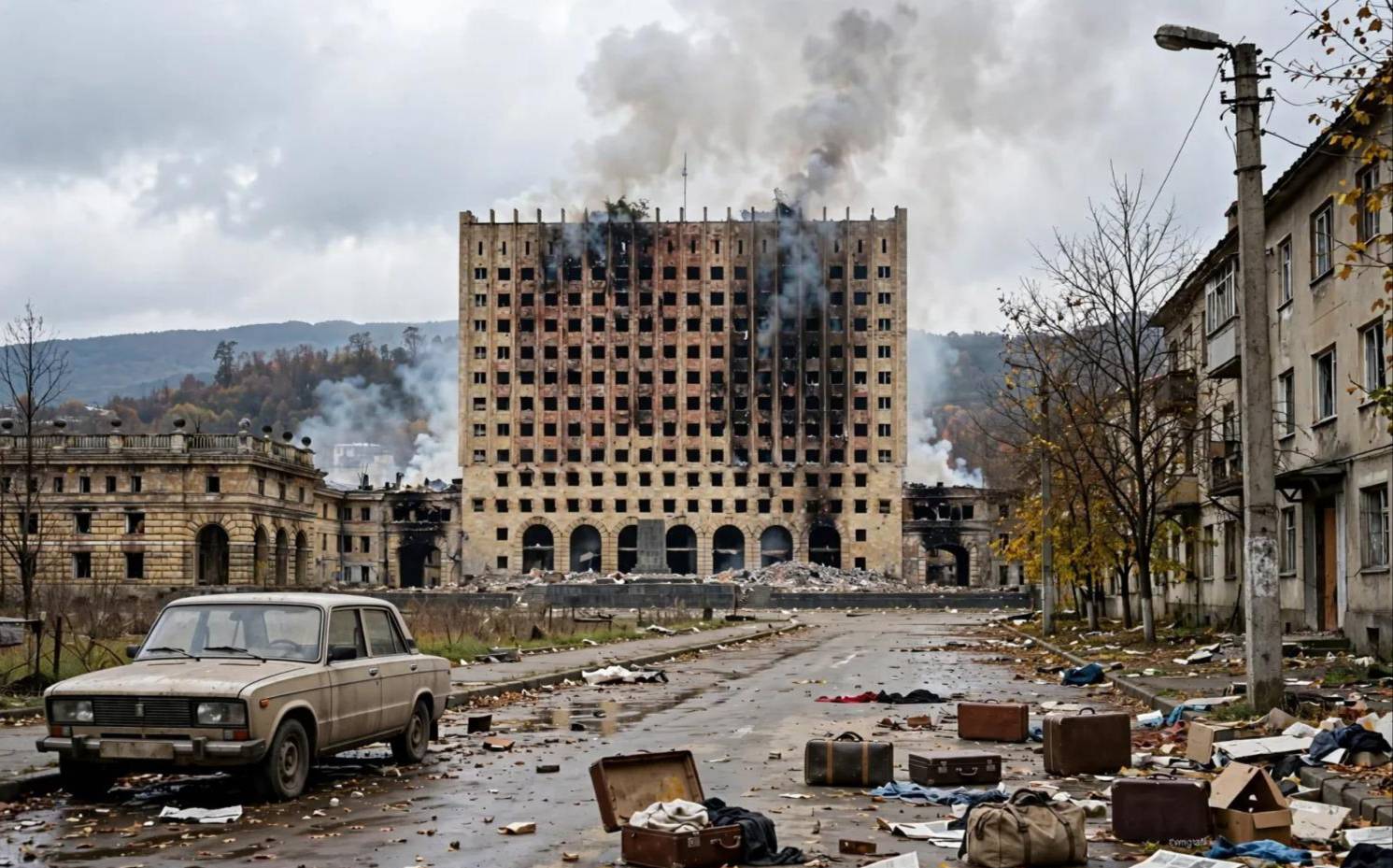
On September 27, 1993, Abkhaz forces captured Sukhumi. Over the following few days, they established control over the remaining territories held by Georgian government forces. Subsequently, a significant portion of the population was forced to flee the region.
According to the UN High Commissioner for Refugees (UNHCR), up to 350,000 people were forced to leave their homes in Abkhazia between August 1992 and October 1993. The majority were ethnic Georgians; approximately 270,000 people headed to other parts of Georgia, while the rest went to Russia, Armenia, Greece, and other countries. Human Rights Watch offers a more cautious estimate—over 200,000 displaced persons, the majority of whom were ethnic Georgians.
Abkhazia’s independence is recognized by Russia, Nicaragua, Venezuela, and Syria. The majority of the world's states consider the region to be part of Georgia.