Georgia launched an investigation into the dispersal of protesters, which was called illegal
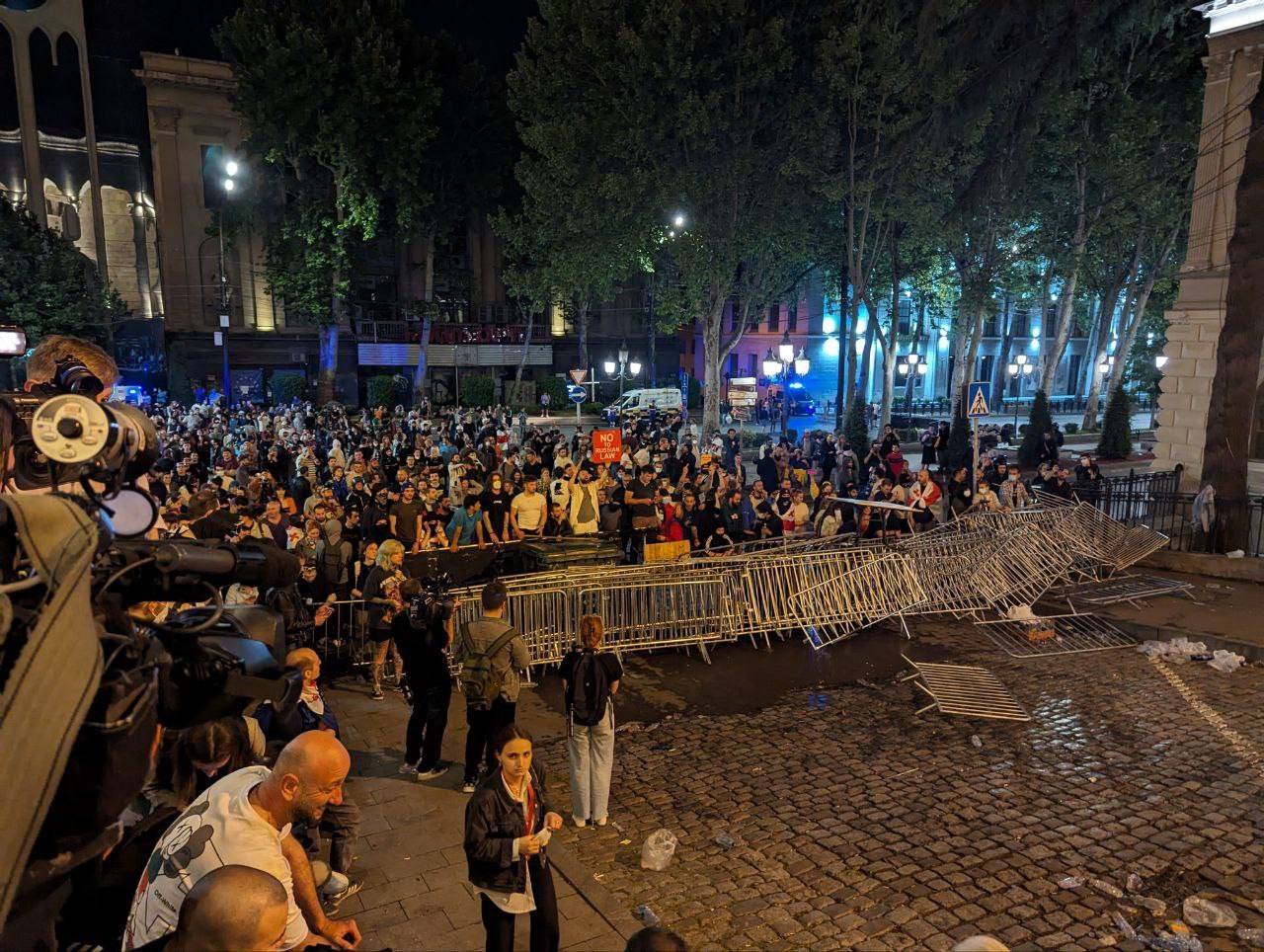
The Special Investigation Service of Georgia has launched an investigation into the abuse of official powers of law enforcement officers in relation to demonstrators near the parliament building in Tbilisi. The Ministry of Internal Affairs reported that yesterday 63 people were detained during the action. The police also beat the chairman of the largest opposition party, the United National Movement, member of parliament Levan Khabeishvili.
Security forces used water cannons, rubber bullets and pepper spray against the protesters to push them away from the Georgian parliament. However, towards the morning, the special forces retreated from parliament, leaving Rustaveli Street free for protesters.
Some non-governmental organizations called the dispersal of protesters against the law on foreign agents illegal. At a press conference held today, human rights activists said that the actions of the police were illegitimate and disproportionate and could amount to torture and inhuman treatment. In addition, it was noted that the practice of administrative detention is still a tool for restricting freedom.
The President of Georgia has repeatedly stated that she will not sign the law. At the same time, the parliamentary majority with the participation of the ruling Georgian Dream party began to consider the bill in the second reading. Protests against him have been going on for 23 days.
Zurabishvili condemned the harsh dispersal of the protesters and called on the head of the country's Ministry of Internal Affairs to “immediately stop the dispersal of the peaceful rally, the use of disproportionate force, and violence against the youth who came with their bare hands.” In an interview with French radio RFI on April 29, the president once again criticized the sensational law and saw in it “a sign of Russian influence.” The bill, in her opinion, “does not meet any need.”
“All necessary transparency regarding the functioning and funding of non-governmental organizations or international organizations that have assisted Georgia since its independence is already provided for [in the legislation]. Everything was already very transparent. There is no need for this law. And if it serves anyone's interests, then it serves the interests of Moscow, because it moves Georgia away from the European Union, which has always been one of the ambitions of Russian policy, and this has intensified today. So this is a sign of Russian influence,” concluded Ms. Zurabishvili.