World Press Freedom Index 2026: Things Have Worse in the South Caucasus and Russia
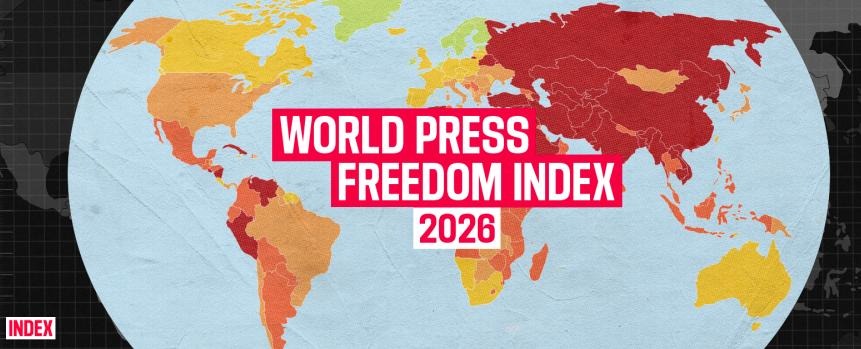
The 2026 World Press Freedom Index, published this morning by Reporters Without Borders (RSF), records the worst deterioration in global media freedom in 25 years. More than half of the world's countries rank the situation as "challenging" or "very challenging," and the average index level has never been lower. A key trend is increasing legal pressure on the media: of the five indicators used to assess press freedom worldwide (economy, law, security, politics, culture, and society), the "law" indicator showed the most significant decline.
In the South Caucasus, the trend is generally negative, although it manifests itself in different ways.
"The trajectories of Armenia, Georgia, and Azerbaijan illustrate three distinct but converging trends in the deterioration of press freedom in the Index," Jeanne Cavelier, head of the Eastern Europe and Central Asia desk at Reporters Without Borders, told Novy Dosh magazine.
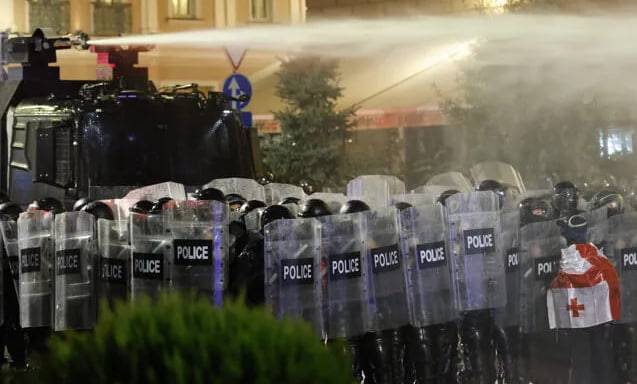
In Georgia, the situation is deteriorating most rapidly, demonstrating one of the sharpest declines in the world. The country now ranks 135th out of 180, a drop of 21 spots. This is happening against the backdrop of a protracted political crisis and the persecution of participants in pro-European protests and journalists covering them. The ranking pays special attention to laws adopted in recent years, particularly those on "foreign agents" and media funding regulations. Their enforcement and obstruction of access to information, according to Reporters, indicate a significant weakening of legal guarantees and the instrumentalization of legislation in favor of the authorities.
Armenia, ranked 50th, also shows a decline: it has moved into the "problem" category, down from 34th last year. The main factors are the increasing number of prosecutions of journalists on libel charges, as well as legislative initiatives that can be used to pressure the media.
Azerbaijan remains one of the most dire in the region. The country, which ranked 167th in last year's ranking and 171st in the current one, is among the countries with the worst legal conditions for journalists. In this context, the region as a whole is increasingly characterized by the use of the law not as a protective tool, but as a control mechanism.
"Taken together, these trends show that in the Caucasus, despite significant differences, press freedom is declining under the combined pressure of political, legal, and security factors," concluded Jeanne Cavelier.
Russia, which recently occupied Azerbaijan's current position, has fallen one place lower. Ranked 172nd—one of the lowest—the country remains second in the world for the number of journalists imprisoned and first for the number of foreign (Ukrainian) journalists held.
"Among regimes hostile to the government, Vladimir Putin's Russia (ranked 172nd) has become an expert in using laws against terrorism, separatism, and extremism to restrict press freedom. In April 2026, 48 journalists were in custody. Those who wanted to continue working in the profession were forced to emigrate, which, however, did not completely protect them, as prosecutions do not stop once a journalist crosses the Russian border," the RSF report states.
A similar trend is observed in the broader context of Eastern Europe and Central Asia. Belarus (165th place), Kazakhstan (149th place) and Kyrgyzstan (146th place) have seen tightening legal frameworks and increasing pressure on journalists, including online harassment and a climate of impunity.
RSF notes that in a number of countries, restrictions on press freedom are linked to armed conflicts (for example, in Iraq, Sudan, Palestine, and Israel), while in others, they are linked to established dictatorships (such as China and North Korea). In the former case, this manifests itself in restricted access to information and threats to the safety of journalists, while in the latter, it stems from systemic legal and political pressure on the media.
"This is evidenced by the results of Putin's Russia (172nd place), which continues its aggressive war against Ukraine and remains among the worst countries for press freedom. Iran (177th place; -1) also remains in the bottom ten; in addition to persecution by the regime, journalists there face an additional threat due to the war waged by the US and Israel on its territory," the report's authors argue.
As an example of the impact of armed conflict on press freedom, Reporters also cites Israel's (116th) war on Palestine (156th), which has seen more than 220 journalists killed in Gaza by the Israeli army since October 2023, at least 70 of whom were killed while doing their jobs.
The Eastern Europe and Central Asia region (according to RSF's classification) once again ranks among the worst, ranking second to last, behind only the Middle East and North Africa.
However, democratic countries have also seen increasing legislative pressure on the press—through laws on national security, counterterrorism, "disinformation," and other legal instruments used to restrict journalists' work, access to sources, and independent investigations.
Ukraine, an exception, rose to 55th place (+7), despite the ongoing war. This improvement is explained by the active media sector and the development of investigative journalism.
Moldova (31st place) stands out as the only country in the region with a "fairly good" rating, highlighting the overall contrast within EECA.
A comment from RSF Editorial Director Anne Bocande reflects the overall tone of the report:
"By offering a historical perspective in this 25th anniversary edition of the index, RSF is not simply reviewing history but also attempting to peer into the future, directly asking: until what point can we tolerate the stifling of journalists and media outlets, the gradual erosion of press freedom?... Authoritarianism is contagious, but it is not inevitable."
The RSF 2026 Index shows that pressure on the press is becoming more systemic and legally formalized. For the Caucasus countries and Russia, legal instruments remain the key factor—from repressive laws to judicial prosecutions. As a result, the region is increasingly becoming a space where formal norms are used not to protect freedom of speech, but to restrict it. Against this backdrop, even limited positive examples appear to be exceptions rather than trends.