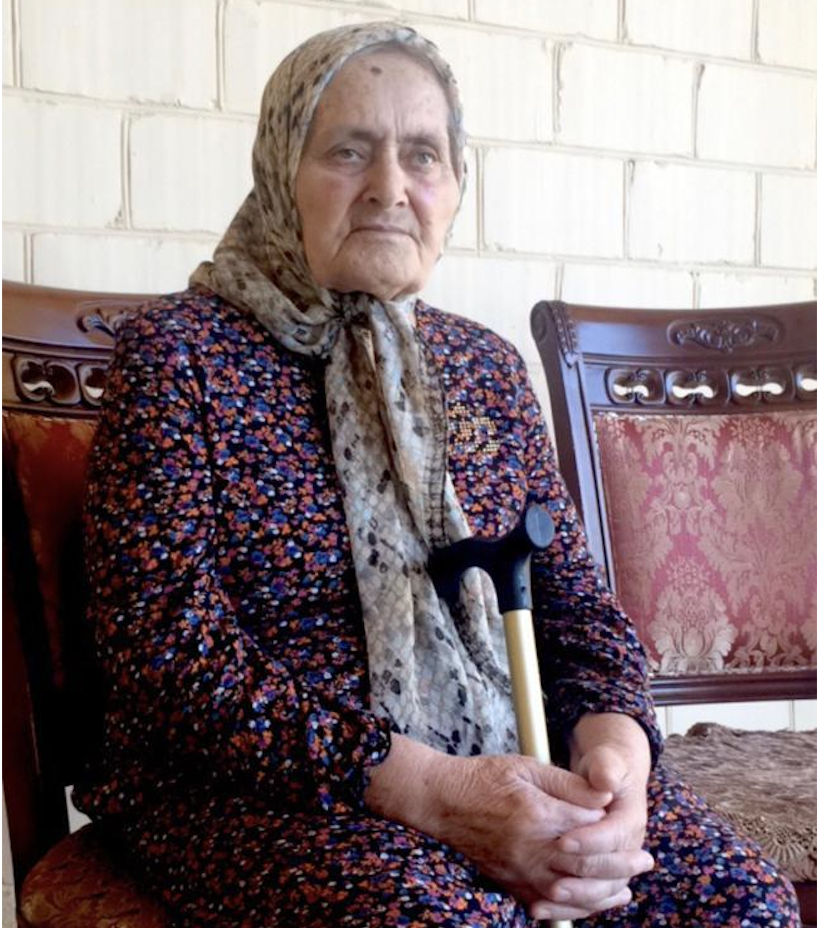
Chechnya bids farewell to mother of political analyst Mairbek Vachagaev
13 September 2026
Alleroy's most brutal “cleansing”: indiscriminate shooting, robberies, mass detentions and “filtering” in the military unit with the use of torture
August 16, 2001
***
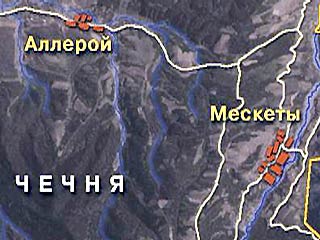
At dawn, the village of Alleroy, Kurchaloy District, was surrounded by military equipment. The "cleansing" began there. Several thousand military personnel took part in the operation (according to local residents, at least 7,000 people). Apparently, not only military personnel of the federal forces were involved in the operation, but also employees of the special forces of the Ministry of Internal Affairs and the Federal Security Service of the Russian Federation.
Alleroi is a small village located in the foothills. This is the birthplace of the ancestors of CRI President Aslan Maskhadov. He never lived in the village, but he has many relatives here. It is for this reason that the settlement is constantly subjected to “cleansing operations” and is in the area of attention of the federal command.
It was announced on television that an operation was being carried out to capture A. Maskhadov. However, the Alleroites claim that he was not in the village. Even if he was there, the operation could hardly have been successful, since the passage of heavy equipment was heard by the inhabitants of many surrounding villages, through which troops were pulled up to Alleroi, and could warn him of the danger.
However, a small armed group, consisting of local residents, probably members of the CRI VF, was blocked in the village. According to media reports, when trying to leave the settlement, members of this group stumbled upon Russian servicemen and entered the battle. As a result, six members of this group died. According to the residents of Alleroy, they were captured and then shot - allegedly, their bodies had traces of lifetime abuse.
According to other information, these people fought in the first war. One of them was a member of the raid in the city of Budennovsk, Stavropol Territory, the rest fell under the amnesty decree. Knowing that their names were on the wanted list and fearing detention, they never left the village. Seeing how densely the village was surrounded this time, they decided to go out, according to acquaintances, in order not to bring trouble on fellow villagers. When leaving, they stumbled upon the military and entered the battle. All six died.
During the morning military equipment entered the village; Alleroy was taken under full control by the military. The movement of the civilian population in the settlement was stopped. Some of the residents were not allowed to leave their yards for several days, so many locals experienced a lack of food.
Entering the village, the military fired indiscriminately. Shooting in the village itself was repeatedly resumed in the following days. As a result of such indiscriminate firing on August 18, a local resident Bisultanov, born in 1980, was mortally wounded. Rural doctors were detained at the very beginning of the "cleansing", so he was not provided with medical assistance in a timely manner. In addition to him, two more people were killed during the special operation. During the blockade of the neighboring village of Tsentoroi, a 17-year-old young man, A. Kadyrov's cousin, was killed. The military buried his corpse in the garden where he worked before his death. Network media, reporting on this case, called the murdered shepherd. On the outskirts of the village of Alleroy, Khizriev, who lived in the city of Gudermes, died of a heart attack. He came to the village, worried about his relatives, but he could not get into the village.
During the ten days of the “cleansing operation”, the servicemen who conducted it indiscriminately and en masse detained the male population of the village, starting from the age of 14. So, among the detainees was a 60-year-old director of an elementary school. Most of the detainees were taken to the location of the military unit stationed on a hill between Alleroy and neighboring Tsentoroy. This place has already become infamous - over the past year, civilians were kept in pits there, who were treated extremely cruelly. Now, the people brought from Alleroy were placed not only in pits, but also in a reservoir, which used to accumulate water for the village of Novogroznensky. A terrible stench spread from this reservoir. In total, according to the residents of Alleroy, up to seven hundred people were delivered to the military unit.
On August 17, many people were detained in the village. The military, for example, visited house 36 on Kavkazskaya Street five times, and on the sixth, without explaining anything and without checking the documents, they detained Magomed-Emin Soipovich Alsultanov, born in 1979, and his cousin Khan-Ali Imalievich Alsultanov, Born in 1970, and together with their neighbors Rizvan Gilanievich Zakaev and Said-Ali Bilalovich Silkhadzhiev, they were put on a military truck with smeared license plates and taken away towards the village of Tsentoroy to the Russian military unit stationed at a height between him and Alleroy, on the territory of which there is a filtration point "Titanic" with pits for holding captured residents of the republic. As it turned out later, they sat in one of these pits until about 19:00. After that, all four were taken in armored personnel carriers to the commandant's office of the Kurchaloy district, where they stood in the corridor until two in the morning. After they were separated. The next day, Rizvan Zakaev and Said-Ali Silkhadzhiev were released. The other two have disappeared. After some time, the relatives spoke to four young men (Turpal-Ali Baisagurov, Kazbek Chinhigov, Dalambek (surname unknown) and another), who claimed that they had been in the same pit with Magomed-Emin Alsultanov for some time.
With a request for assistance in the search for the disappeared, their relatives also turned to the head of the administration of the republic, Akhmat Kadyrov. He promised this, but nothing concrete was done on his part. Employees of HRC "Memorial" sent inquiries to the prosecutor's office (No. 251/01 of December 21, 2001) and deputies of the State Duma of the Russian Federation. In response and O. Prosecutor of the Argun Interdistrict Prosecutor's Office R.V. Timshin (No. 117 of February 12, 2002), in particular, it was reported that “the Alsultanov brothers were transferred to the filtration point under the responsibility of S.N. Baryshev, an employee of the FSB for the Chechen Republic. , who, in turn, handed over the detainees to servicemen for delivery to the temporary detention center of the Kurchaloy VOVD. However, the Alsultanov brothers were not handed over to the temporary detention center of the Kurchaloy VOVD; their whereabouts are currently unknown; the investigation into the kidnapping of the Alsultanovs is being carried out by the military prosecutor's office of the Chechen Republic.
On the fact of the abduction (Article 126 of the Criminal Code of the Russian Federation) of Magomed-Emin and Khan-Ali Alsultanov, the prosecutor's office of the Kurchaloevsky district on November 19, 2001 opened criminal case No. 39083. Neither the kidnapped nor the perpetrators were found. The preliminary investigation in the case was suspended several times, the last time it was suspended on 5 February 2004 due to the failure to identify the person to be charged as an accused. The response of the military prosecutor's office specifically states: "As a result of the prosecutor's check, the involvement of military personnel of the federal forces and special services in the disappearance of the Alsultanovs was not confirmed." However, the text of the resolution of February 5, 2004 contains the following indication: “In the course of the preliminary investigation, it was established that on August 17, 2001, during a special operation in the village of Alleroy, Kurchaloevsky district of the Chechen Republic, unidentified armed men were taken to the courtyard of the commandant's office military unit 64634 on the territory of the Kurchaloevsky district Alsultanov M.-E.S., Alsultanov Kh.-A.I. The case is under the jurisdiction of the Military Prosecutor's Office. They remained in the courtyard of the commandant's office under the protection of military personnel, their further fate is unknown.
Three militants were imprisoned by the Alleroyevs who were taken to the military unit, who were captured, apparently, quite a long time ago and in another place. Their bodies were covered with old festering wounds. Villagers were placed next to them and photographed. Several detainees were hung with a machine gun around their necks and also photographed in this form. People were interrogated, seeking information about the whereabouts of Maskhadov, forced to sign confessions of involvement in "illegal armed formations." The interrogation was conducted by FSB investigators, who themselves treated the detainees relatively correctly. However, as soon as the investigator stepped aside, the guards (apparently, employees of some special forces) immediately beat and tortured the interrogated. Many were tortured with electric current, attaching electrodes to the fingers and toes, to the genitals. To some, electrodes were attached to their ears, mockingly suggesting that they “call”. Several detainees had their heads squeezed with tourniquets. A number of detainees, for example, the Nochuev brothers and their uncle (the latter arrived from Urengoy a few days ago), could not bear the torture and signed a “confession”. On August 18, during such an “interrogation,” a young man named Soltamuradov, born in 1983, was beaten to death.
The military also mistreated women. Thus, the pregnant wife of one of the detained residents of Alleroy, Musaev, was brought to the location of the military unit. He was severely beaten, and his wife was stripped naked and cut with knives, threatened to cut the child out. Musaev signed all the papers that were slipped to him. After that, the woman was released.
A 17-year-old girl was seized because she responded sharply to one of the soldiers. She was dragged through the village and taken to the military unit. Only on the second day were her relatives able to take her away with the help of representatives of the district commandant's office.
When women approached the place of detention of the detainees, demanding to release them, they began to throw grenades with tear gas at them and shoot at their feet. Several grenades were intercepted and discarded - after that the grass caught fire.
In the location of the military unit there was a "filtering" of the detainees. Some of them were allowed to go home after interrogation, while others were taken to Kurchaloy to a temporary detention center. People who signed the “confession”, the wounded (during the “cleansing operation” from indiscriminate shooting, several villagers were injured, including women), all those who inspired suspicion in the military were taken there. For example, a woman was taken there, about whom it became known that she took an active part in the rallies. A man was also sent there, having previously been severely beaten, who taught boys and young people karate techniques - he was accused of teaching militants.
On August 20, Akhmed Ayubovich Umarov, born in 1973, a teacher at the Alleroevsky secondary school, was detained and placed in the Kurchaloy VOVD (the assistant prosecutor refused to accept a statement from his father, the director of the school).
On the same day, Khas-Magomed Boisarovich Taramov (by mother Esuev), born in 1969, was detained in his house and subsequently disappeared. He was put in an unmarked armored personnel carrier and taken to the Titanic filter station located on the territory of the military unit. He was later seen in the military commandant's office in the regional center of Kurchaloy. Nothing is known about his future fate at Memorial Human Rights Center.
Of the 52 people who were taken to the ITT in Kurchaloy, 11 people were released on September 2. None of these people were interrogated during their stay in Kurchaloy. Among those who remained there: a mentally ill person; a person with an open form of tuberculosis; wounded old man Aishanov; his son, wounded by shrapnel in the jaw; two women, one of whom is accused of participating in rallies, and the other of being found with a machine gun in her garden.
Those who were "filtered" often did not reach their homes. They returned on foot through the “cleansed” village. They were intercepted by servicemen of other units and again taken to the location of the military unit. Some Alleroites thus went through the “filtration” four or five times, which created inconvenience for the military themselves. Then the officers who led the "mopping-up", after consulting with the local residents, suggested that everyone who had been "filtered" go to the village secondary school and stay there until the end of the operation. Prior to this, the military gathered 14-16-year-old teenagers at the school for two days.
The servicemen set up a computer in the school, on which they began to check the people who came using the database they had. Gradually, people themselves began to come here in the hope of being tested on a computer and avoiding "filtering" in the military unit. As a result, 2,700 people gathered at the school, including 14 underage boys. It was very crowded, many had to sleep in the yard - so people spent seven days.
On the third or fourth day of the “cleansing” a crowd of women gathered near the school and brought food for their relatives who were there. At that moment, a military man (presumably one of the officers in charge of the operation) drove up to the school. Both women and men turned to him with claims to the iniquity they were doing. This man, who introduced himself as a general, replied: “Bandyugi, I don’t feel sorry for you! I only feel sorry for women and children.” And, turning to his subordinates, he added: “Eagles, do not spare them at home!”
Only women, old people and children remained in the houses. The military threatened that the houses in which they found at least one cartridge would be burned - the residents were more afraid not that they would be robbed, but that cartridges or weapons would be planted. Usually, during the "check" of the houses, the owners were driven out into the yard and held at gunpoint. At this time, everything that the “checkers” liked was taken out of the house: carpets, televisions, audio-video equipment, gold items, money. Photographs and family videocassettes were taken from many residents.
At the beginning of the “cleansing” of the three neighboring houses where the Musaev family lived, the military detained all the men; women and children, herded into the basement of the middle house, mined two other households and blew them up. After that, they doused the middle house with gasoline and set it on fire. Women and children were not allowed out of the basement, despite the fact that they could suffocate in the smoke. The servicemen, taking the men with them, left. Only after that people were able to get out of the basement of the burning house. The house burned out completely, even the ceiling above the basement collapsed. The houses of the Umarkhadzhievs, Akhmiyevs, Kerchimovs, and Lalayevs were also blown up and burned down.
The soldiers wanted to throw grenades at another house. The owner lay at their feet, begging them not to do this: his children and grandchildren were in the house. All the children were taken out into the yard, put against the wall and machine guns were pointed at them. A three-year-old girl asked in Chechen: “Grandfather, is this some kind of game?” The soldiers immediately demanded that the old man translate her words - he explained, and after that the military left.
In the basement of the house where two women were hiding, the servicemen drove old men Aishanov and Tsukuev and threw grenades into it. All those who were in the basement were injured, one of the women had her legs crippled, the other lost her eye. Later, Ayskhanov was detained and taken to the Kurchaloy ITT. What caused the increased "attention" of the military to these houses, we do not know.
On the third or fourth day of the “cleansing operation,” the military began to catch boys aged 11–13, gather them in groups and beat them. Mothers began to hide their children. Some of the boys had to spend those days in cesspools.
This “cleansing” was also accompanied by sacrilege. All spiritual literature was taken away from a student of the theological institute. Then sheets of the Koran were found in the toilet. Several soldiers climbed the minaret, first they shouted “Allah Akbar”, then they shouted “Akhtung, Akhtung!”, “Heil Hitler!” In the mosque, they defecated on carpets, broke open the floor under the pretext of searching for weapons. The military broke into the tomb of St. Abbas-hadji, in the ziggurat (the burial place of the saint) they left inscriptions insulting to Chechens and Muslims on the walls.
At the cemetery, the servicemen opened up two fresh graves, under the pretext that militants could be buried there. Right among the graves, the military drank alcohol, and then sunbathed, stripped almost naked, which is unacceptable according to Chechen customs.
During the "cleansing" about 20 heads of cattle were killed.
The military began to leave the village on the eleventh day of the “cleansing”. The military told the residents: "As soon as your Kadyrov says two words, we will leave." Indeed, they left the next day after the head of the administration of the Chechen Republic announced on television that A. Maskhadov had managed to leave Alleroy. As the troops left, residents estimated that 645 pieces of equipment passed through just one of the three withdrawal directions.
After the troops left the settlement, it turned out that some houses and fields were mined. For example, a field with an area of 0.5 hectares of the so-called. minami frogs, from a distance similar to flowers and butterflies. Mines fell into the hands of children. On the third day after the military left, 12-year-old Abdurakhmanov found and picked up an object that exploded in his hands. The boy lost his hand.
A few days after the end of the "cleansing operation", the residents complained about robberies and violence to the district commandant's office. Soon, nine conscripts were brought to the village, who were forced to apologize to the assembled residents for allegedly committing theft. However, one of the nine soldiers said, "Forgive me for what I didn't do." The commanders immediately took him aside. Local residents said that other soldiers were engaged in open robberies. The stolen property was not returned to anyone. It was during the days of Alleroy's "cleansing" in the nearby village of Novogroznensky that the military tried to sell carpets at a reasonable price in the market. After two carpets were bought, there was a scandal - the locals were indignant at what was happening, and the military had to urgently leave.
Only five or six criminal cases were initiated against people detained in Alleroy and placed in temporary detention facilities. Zhanati (Zhanna) Ustarkhanova, an employee of Vladimir Kalamanov's office, was told by prosecutors that by September 10, except for three or four people, everyone would be released. She appealed to the inter-regional and district prosecutors, but they told her that the prosecutor's office of the republic gave the sanction, so they have no right to release anyone. For those who were released, they demanded bribes.
The wounded were kept in a common cell. The dressings were done by cellmates. The doctor was only at the beginning, but acted unprofessionally. Medicines and dressings were brought by relatives. Not everything was given to the wounded.
From the book "People Live Here", Usam Baisaev, Dmitry Grushkin, 2006
Последние новости