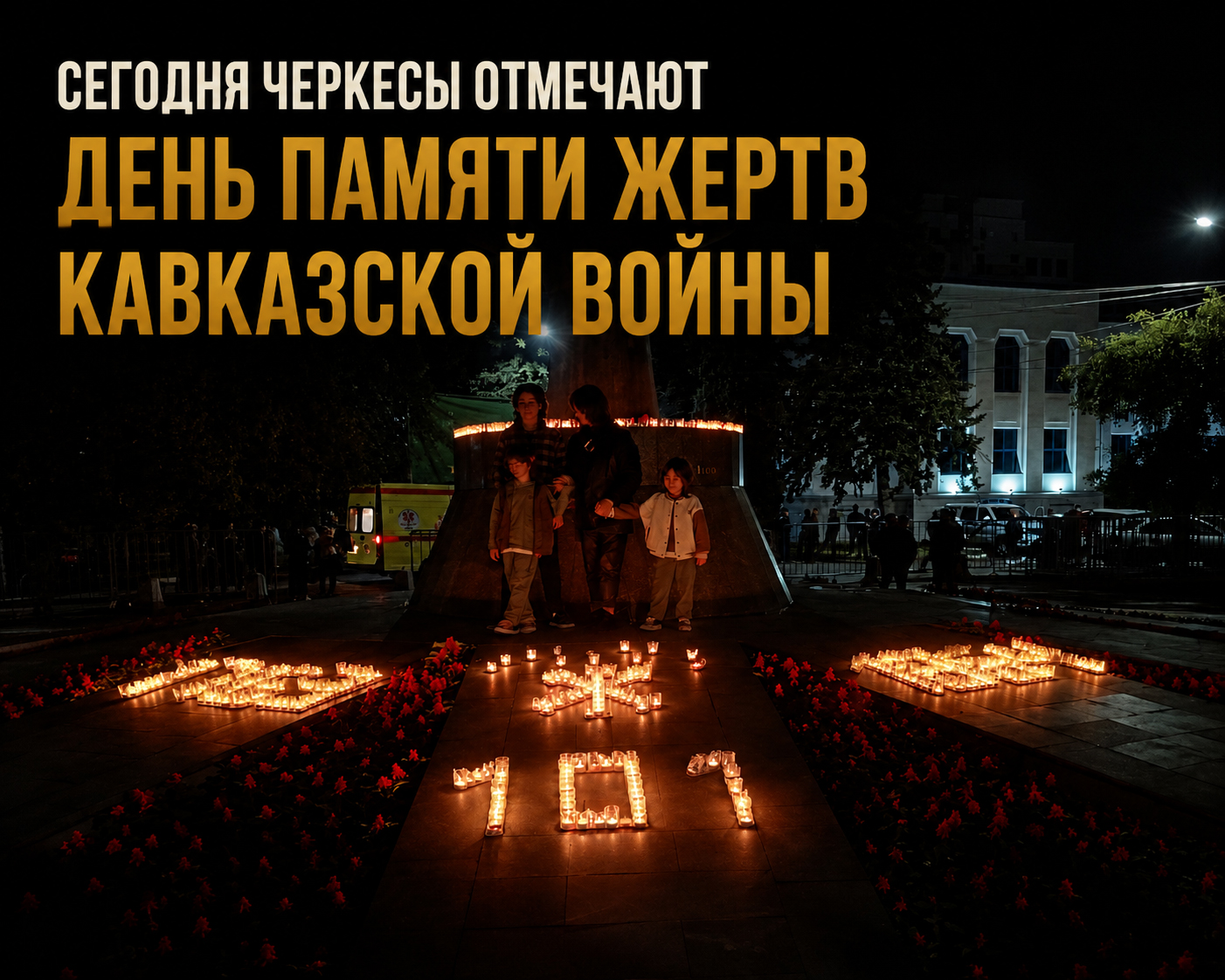
On May 21, several North Caucasus republics and the Circassian diaspora abroad are holding memorial events dedicated to the victims of the Caucasian War
The previous evening in Nalchik, at the "Tree of Life" memorial, participants lit 101 candles—a symbolic number referring to the years of the Caucasian War.
In his address on the anniversary, Kabardino-Balkarian leader Kazbek Kokov stated that the war resulted in "colossal human losses," forced displacement, and grave consequences for the Adyghe people. "On this day, we bow our heads in memory of all the victims of this terrible war," Kokov said in his address.
Adygea leader Murat Kumpilov also made a statement. He called the Caucasian War one of the most dramatic periods in the history of the peoples of the Caucasus and emphasized that the memory of the fallen and displaced Adyghe people lives on through generations.
This year, the authorities of Kabardino-Balkaria refused to approve a memorial procession on May 21. As reported by the regional human rights center, several days before the memorial day, residents of the republic were summoned to police stations, where they were given warnings about the inadmissibility of violations during public events.
The Caucasian War refers to a series of bloody and brutal military campaigns of the Russian Empire in the North Caucasus, lasting from 1817 to 1864. After the war, approximately 90% of the Adyghe people were forcibly deported from their native lands to the Ottoman Empire. In Circassian historical memory, these events are considered one of the greatest tragedies of the people.
Today, the Circassian diaspora lives in more than 50 countries. The largest community is in Turkey—according to various estimates, between three and six million descendants of people from the North Caucasus live there.