Kobakhidze Alleged an Attempt by "Foreign Curators" to Create a Discord Between Georgia and Armenia
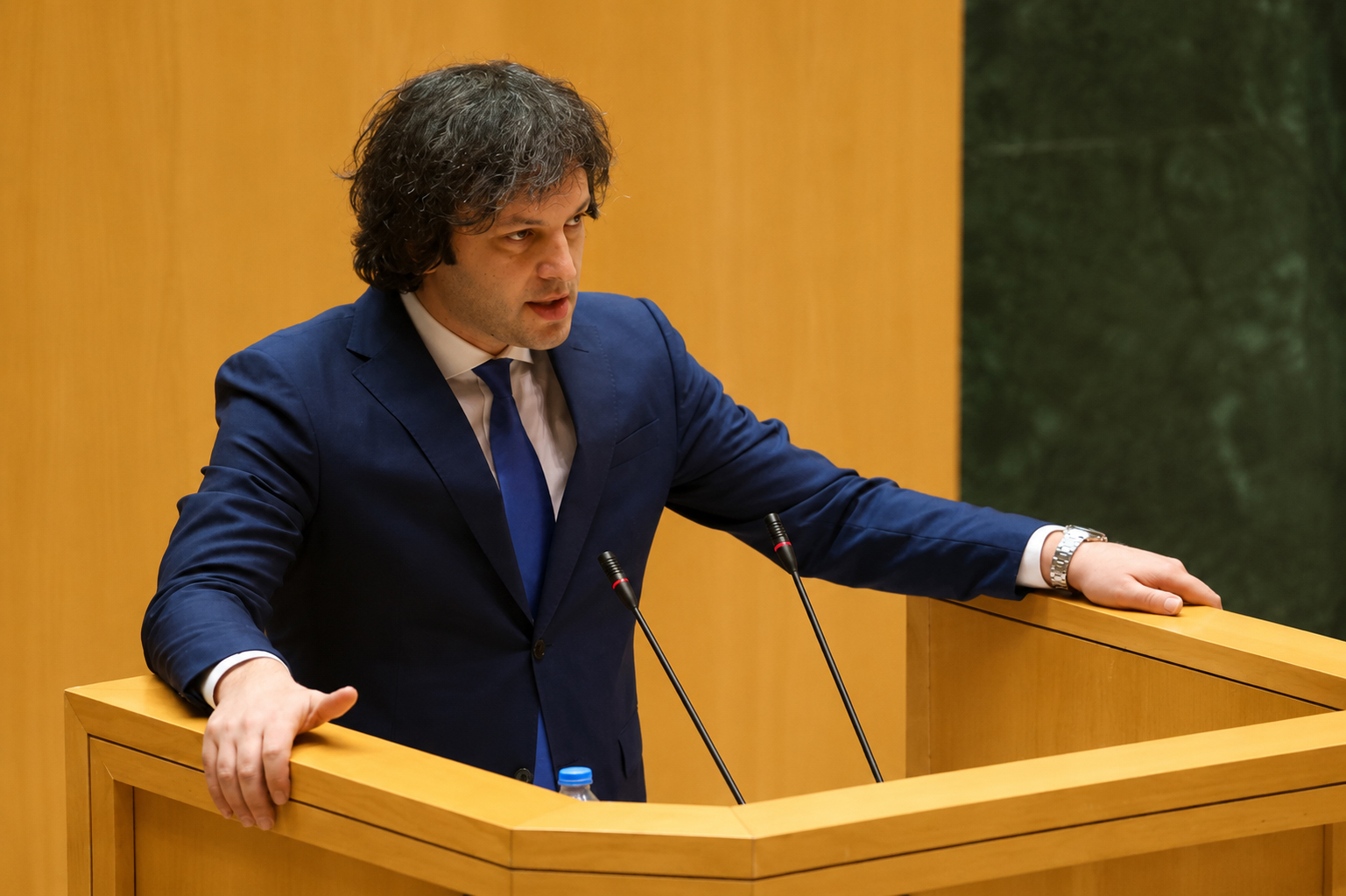
Georgian Prime Minister Irakli Kobakhidze stated that "foreign curators" and "local agents" are attempting to sour relations between Tbilisi and Yerevan amid the European Union's growing interest in Armenia. However, he did not provide any names or evidence.
In an interview with the pro-government television channel Imedi, Kobakhidze criticized attempts to compare Georgia and Armenia in the context of European integration and regional policy.
"There are attempts by local agents and foreign sponsors to pit us against Armenia, including through comparisons. But this won't work," the prime minister stated.
Kobakhidze did not specify who exactly the Georgian authorities consider "agents" and what forces, according to Tbilisi, are trying to pit the two countries against each other.
The prime minister emphasized that Georgia and Armenia enjoy "historically friendly relations" and a strategic partnership. He also thanked Armenian Prime Minister Nikol Pashinyan for his "special attitude toward Georgia" and recalled his words that discussing Armenia's European integration without Tbilisi's participation is impossible.
Kobakhidze then went on to criticize European officials, questioning their "knowledge of geography."
"It appears that, in addition to economic problems and other crises, European bureaucrats are also experiencing difficulties with geography," he said.
This was likely the Georgian prime minister's response to European Commission President Ursula von der Leyen's statement made on May 4 at the EU-Armenia summit in Yerevan. She then called Armenia "the shortest route between Europe, Central Asia, and the Caspian region."
For Tbilisi, such language proved sensitive. For many years, the Georgian authorities have positioned the country as a key transit corridor between Europe and Asia, primarily for energy and transport routes bypassing Russia.
Rhetoric about "external forces," "agents," and foreign sponsors has become a key theme for the Georgian leadership in recent years. Authorities often use such language to explain both domestic protests and criticism from Western partners.
Kobakhidze himself previously stated that Georgia in 2008 was allegedly "carrying out a task received from outside," effectively placing some responsibility for the war with Russia on external actors. The opposition believes that such rhetoric is used to discredit political opponents and gradually distance Tbilisi from the West.