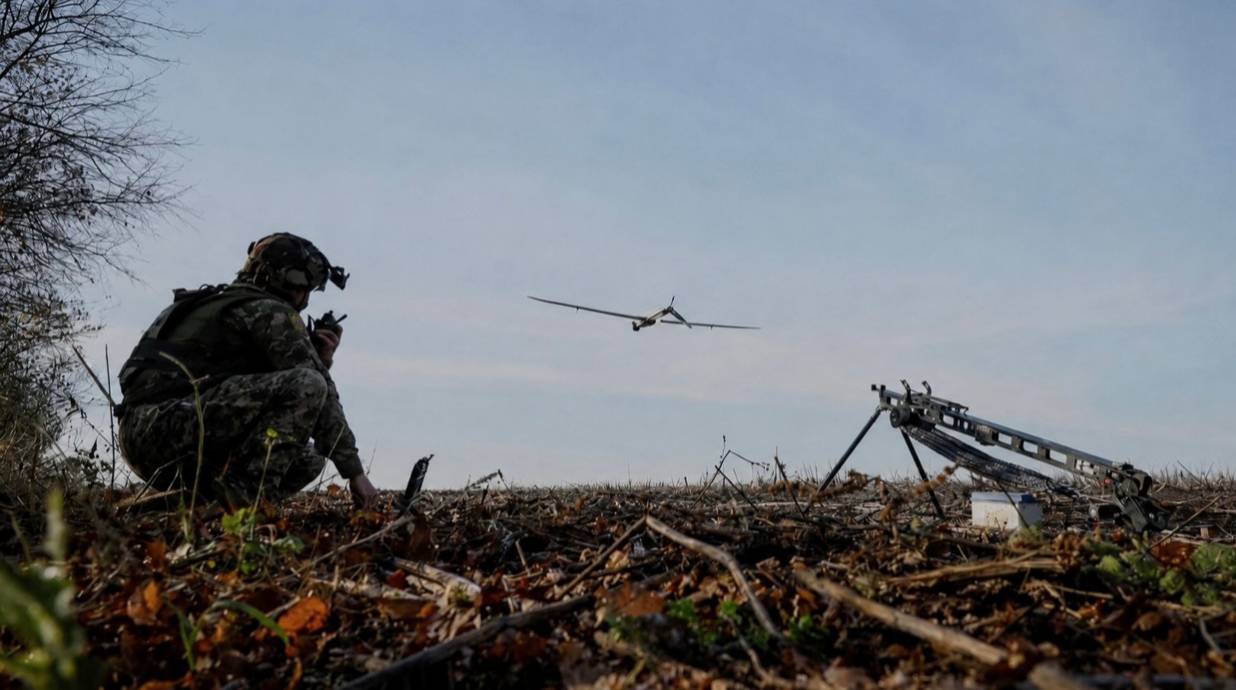
Drone attacks in southern Russia killed a woman and hit grain exports
On the night of August 17, drone attacks killed a resident of the Astrakhan Region. Governor Igor Babushkin reported that a drone struck a private home in the Yenotayevsky District. The woman inside was killed. Her teenage son was unharmed.
That same night, the Rostov Region came under heavy attack. According to Governor Yuri Slyusar, Russian forces shot down approximately 50 drones in nine districts of the region, as well as over Bataysk, Taganrog, Donetsk, Kamensk-Shakhtinsky, and Novoshakhtinsky. Authorities reported no casualties or damage.
This occurred a day after another attack on the Rostov Region. On the night of August 16, according to local authorities, five people were killed and another was injured. Authorities claim the region has been subjected to four heavy attacks in the past week. In total, more than 380 drones have been shot down during this period.
The attacks are affecting more than just military and infrastructure facilities. The strikes in southern Russia have already begun to impact one of the country's key export commodities: grain.
According to SovEcon analysts, wheat prices fell by 2.8% over the week, while barley prices fell by 5.6%, to 9,700 rubles per ton. Depending on the grade, a ton of wheat currently costs 10,000–11,500 rubles.
Analysts cite problems with exports through ports in the Krasnodar Krai as one of the reasons. Following a drone attack on Novorossiysk on the night of August 12, operations at the grain terminal were halted. Fires also broke out at the oil terminal and in the Voyennaya Gavan area.
Freight shipments by rail to the Novorossiysk port have been suspended until August 22, according to Russian Railways. In the Rostov Region, authorities also acknowledged that the attacks on Novorossiysk and the Azov-Don Canal have significantly hampered grain exports.
This is particularly pressing for the region: this year, the Rostov Region harvested a record 13.6 million tons of grain. A significant portion of the harvest remains in warehouses, as transporting it to foreign markets is currently more difficult.
Another problem for farmers is the gap between the selling price and the cost of production. Mikhail Maryshev, a representative of Opora Rossii, estimated the cost of a ton of wheat at 14,000–17,000 rubles, attributing the increase to fuel shortages and rising equipment prices. Against this backdrop, falling purchase prices are creating additional pressure on producers.