Azerbaijan Included in $265 Million U.S. Demining Program
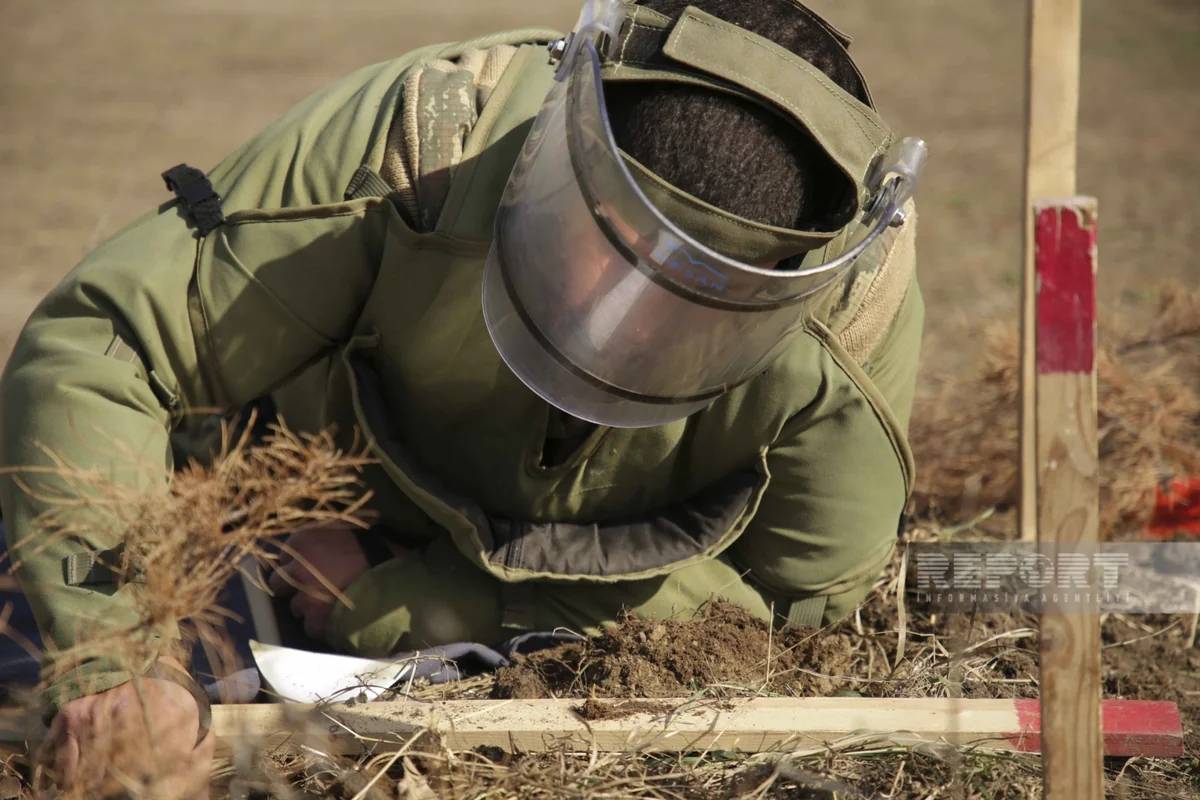
The U.S. Senate Committee on Appropriations has recommended allocating at least $265 million for programs focused on the destruction of conventional weapons, demining, and the neutralization of unexploded ordnance. Azerbaijan has been included in the list of countries slated for such operations. This is stated in an explanatory memorandum accompanying a bill on funding for the U.S. Department of State for the 2027 fiscal year, which was published on the Senate’s website.
In addition to Azerbaijan, the program covers Angola, Cambodia, Laos, Sri Lanka, Ukraine, Vietnam, Zimbabwe, and various Pacific island nations. The document specifies that at least $265 million should be earmarked for these purposes; however, it does not state a specific amount allocated for Baku.
Azerbaijan remains one of the most heavily mine-contaminated countries in the world. Explosive devices and unexploded ordnance were left behind following the long-standing Armenian-Azerbaijani conflict—particularly in territories that came under Baku’s control after the cessation of hostilities.
In an interview with Axios in August 2026, Azerbaijan’s Ambassador to the U.S., Khazar Ibrahim, noted that his country is interested in American demining technologies and methodologies. He stated that, on a per capita basis, Azerbaijan is among the most mine-contaminated nations globally. The diplomat also emphasized the importance of accurately mapping the areas affected by landmines.
The issue of mine contamination remains a point of contention between Baku and Yerevan. Azerbaijan accuses Armenia of failing to provide accurate maps of minefields, a situation that continues to pose a threat to civilians and hinders the return of displaced persons. Yerevan rejects these claims.
In January 2024, Armenia reported that it had handed over eight sets of documentation containing data on minefields to Azerbaijan. Baku described the materials as incomplete and largely ineffective, asserting that it requires precise maps of all mined areas.
In April 2025, Armenian Foreign Ministry spokesperson Ani Badalyan stated that Azerbaijan had already received 972 documents—containing the information available to the Armenian side regarding minefields—back in 2021, with additional data provided in early 2024. Yerevan also proposed involving international experts to verify the accuracy of this information.
At the same time, the threat of landmines persists in the border regions of Armenia as well. According to the UNDP, mines and unexploded ordnance pose a danger to local residents and restrict their access to land and infrastructure.