ECHR orders Azerbaijan to pay compensation to opposition figures for detentions during protests
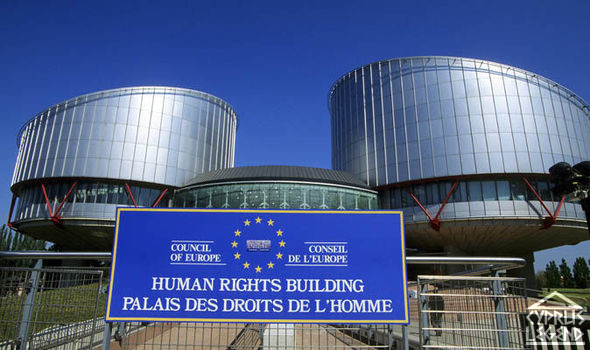
The European Court of Human Rights (ECHR) has ruled that the short-term detentions of three Azerbaijani opposition figures during protests in Baku were unlawful. The Court ordered the country’s authorities to pay 3,500 euros each to politician Tofig Yagublu and activists Idris Amiraslan and Aziz Mamiyev.
The complaints concerned events that took place in 2021 and 2022. Amiraslan and Mamiyev were detained on December 15, 2021, at Fountain Square during a demonstration calling for the release of activist Saleh Rustamov, who at the time had been on a hunger strike in detention for 40 days. Tofig Yagublu was detained on November 11, 2022, near the city administration building, where a protest was being held against amendments to the Law on Political Parties.
In both instances, the police dispersed the demonstrations shortly after they began, even though the organizers had provided prior notification to the authorities. During the December 2021 protest, more than 20 people were detained. In November 2022, according to human rights defenders, security forces detained at least 150 participants, as well as approximately 50 others before the event even began. Human rights advocates also reported the use of excessive force.
Following their detention, all three individuals were taken to police stations and held for about two hours, during which time they were not permitted to leave. No official reports (protocols) were drawn up, and the reasons for the restriction of their liberty were not explained to them. In the case of Amiraslan and Mamiyev, their presence at the police station was recorded in a logbook, whereas in the case of Yagublu, it was not. The Azerbaijani authorities argued before the Strasbourg Court that the detentions were necessary to prevent violations of the rules governing public assemblies. However, the ECHR did not find these explanations sufficient. The Court pointed out that, for a preventive detention to be justified, it must be proven that there is a high risk of a specific offense being committed. In the Court’s assessment, the materials presented indicated that the police’s actions were aimed at obstructing peaceful assemblies.
The ECHR found violations of two articles of the European Convention on Human Rights: the right to liberty and security (Article 5) and the right to freedom of assembly and association (Article 11). In addition to 3,000 euros in compensation for non-pecuniary damage, each applicant was awarded 500 euros to cover legal costs.
A lawyer from an Azerbaijani NGO, speaking to "Novy DOSH" on condition of anonymity, emphasized the significance of the ruling: "The Strasbourg Court has confirmed that even holding a person at a police station for a short period without a proper legal basis constitutes an interference with their right to liberty."
"The duration of a detention does not, in itself, make it lawful. If a person is taken to a police station without being given a reason for the restriction of their liberty, without the necessary documentation being processed, and without the opportunity to challenge the police's actions, this creates conditions for the arbitrary exercise of power."
"Furthermore, the Court highlighted the link between such detentions and the right to peaceful assembly. When the police use the act of taking someone to a police station as a means to effectively end that person’s participation in an event, it can become a tool for suppressing protest activity. The state has an obligation not only to refrain from unjustified interference with peaceful assemblies but also to ensure the genuine protection of this right." "The ECHR ruling is also significant in a broader context: it demonstrates that the authorities cannot circumvent the guarantees of the European Convention by resorting to informal or short-term detentions. The absence of a prolonged period of arrest does not absolve the state of responsibility for the unlawful restriction of human rights," our source explained.