Clergy conflicts in Dagestan: Some theologians defend Kerimov and accuse the Muftiate of cronyism
A council of theologians in Dagestan—a group that has long opposed the Muftiate’s leadership—has come to the defense of Senator Suleyman Kerimov. This follows an appeal to Vladimir Putin by Aina Gamzatova, an advisor to and the wife of Mufti Akhmed Abdulaev. The theologians rejected her claims that the Muftiate was being subjected to pressure; instead, they praised the senator’s charitable work and accused the Muftiate itself of having turned into a "family enterprise."
As reported by *Novy Dosh*, Gamzatova stated in a November 13 appeal that the Muftiate of Dagestan has faced years of pressure from regional authorities and individuals linked to Kerimov. She alleged that the senator’s associates are playing their own political game within the republic, seeking to weaken the religious administration—in part by pressuring the commercial assets that fund the Muftiate’s operations.
"Even though almost everyone associated with his name pursues their own 'politics' in Dagestan—aimed not at constructive development or the public good, but at a struggle for power—we have repeatedly tried to mend relations, choosing to ignore the attempts by his supporters to dismantle the Muftiate," Gamzatova wrote.
As one example, she cited the case of the 60-year-old director of a hotel affiliated with the Prophet Isa Spiritual Center, who, according to her, has spent about six months in a pre-trial detention center in connection with a dispute over the replacement of an electricity meter. Gamzatova also warned that the challenges facing the Muftiate’s business entities threaten the funding for its social and educational projects. "The only thing that remains consistent is the clandestine struggle against the Muftiate," the Mufti’s advisor complained.
The Council of Theologians of Dagestan rejected the accusations leveled against Kerimov and the regional authorities. The authors of the statement spoke positively of the work being done by the republic’s current leadership, headed by Fyodor Shchukin and Prime Minister Magomed Ramazanov. They specifically highlighted the senator’s charitable projects, which include the construction of mosques, hospitals, and other social infrastructure.
"Suleyman Abusaidovich Kerimov deserves special respect. His reputation as a philanthropist extends far beyond the borders of the republic, and his contribution to the development of both Dagestan and the country as a whole is evident—especially during these difficult times. He is a man of his word and action, whose authority is recognized well beyond the Dagestani community," the statement reads.
The theologians also deemed Gamzatova’s public letter to be in violation of Islamic ethics. They argued that those in power should be counseled privately and gently, and suggested that public accusations are merely a ploy to garner attention and cultivate the image of a "victim."
At the same time, the Council of Theologians leveled criticism at the leadership of the Muftiate itself. The authors of the statement claimed that, in recent years, many prominent theologians from the republic have been dismissed from the Spiritual Administration, and that control over the organization has become concentrated in the hands of a single family.
"It is no secret that, in recent years, the Muftiate of the Republic of Dagestan has effectively turned into a family enterprise. Many of the republic’s well-known theologians have been dismissed from its ranks," the statement asserts.
Furthermore, the theologians accused followers of Abdulaev of exacerbating divisions among religious communities in the cities and villages of Dagestan. The Council itself has long opposed the current leadership of the Muftiate and represents a faction of the clergy that stands in opposition to it.
According to observers, the core of this confrontation lies in a struggle for economic resources and political influence in Dagestan. Denis Sokolov, a researcher of the North Caucasus, has previously noted that the republic’s Muftiate functions as an independent political force, maintaining close ties with regional authorities and law enforcement agencies. The religious administration’s financial independence is sustained by its own commercial assets—including hotels, food service establishments, and entities involved in organizing the Hajj.
Consequently, the Muftiate’s leadership views the scrutiny directed at these assets by security forces and energy sector officials as a threat to its autonomy. However, those who oppose Abdulaev offer a different perspective: they criticize the concentration of both religious authority and economic resources within his inner circle, arguing that the Muftiate has evolved into a closed structure where decisions are made by a narrow group of individuals. The outlet *Pravda Kavkaza* also links the escalation of the conflict to a shift in the balance of influence between political and religious factions following a change in the republic’s leadership.
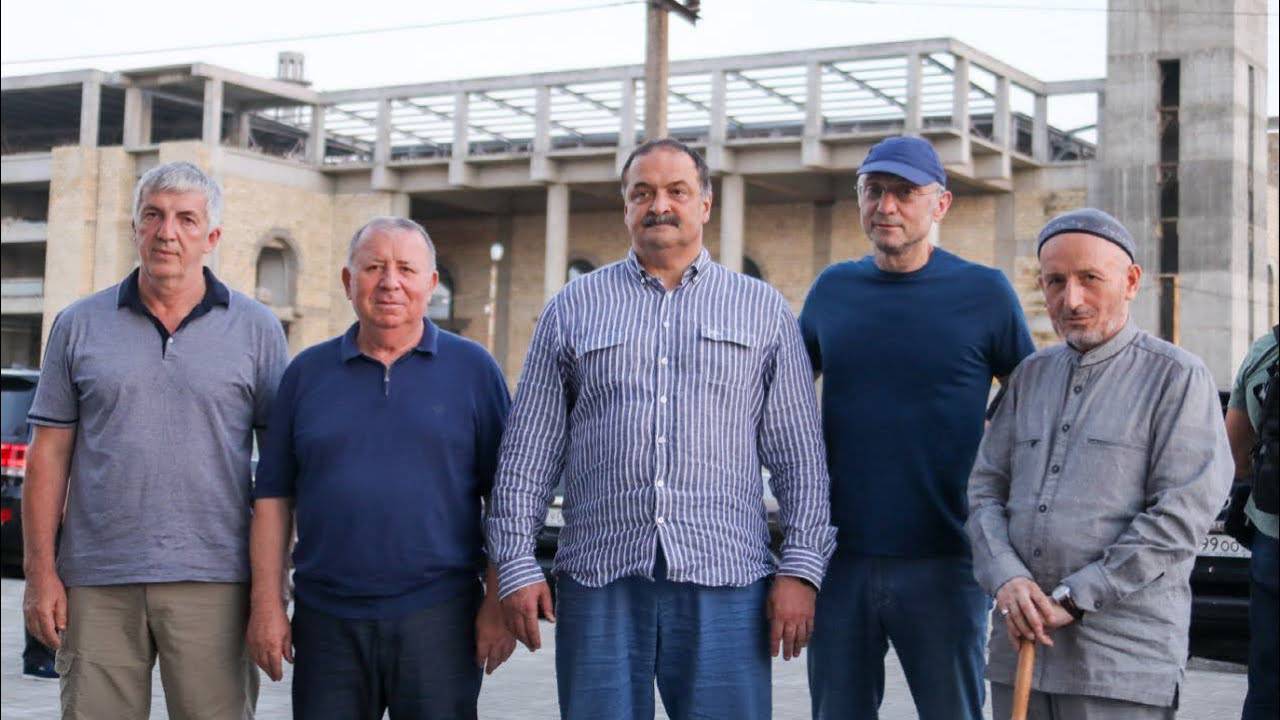
In the photo (from right to left): the Mufti of Dagestan, Sheikh Ahmad Afandi; Senator Suleyman Kerimov; the then-head of the republic, Sergey Melikov; State Secretary of the Republic of Dagestan Magomed-Sultan Magomedov; and State Duma deputy Khizri Abakarov, seen while inspecting the construction of the Spiritual Center named after the Prophet Isa on August 1, 2022. The development of this grand social and religious complex was funded, in part, through significant philanthropic support from Kerimov.
In May 2021, the press service of the Muftiate of Dagestan reported that Suleyman Kerimov had taken on the full cost of financing the construction of this religious facility.