Proekt: Men Convicted of Boris Nemtsov’s Murder May Have Been Released After Signing Military Contracts
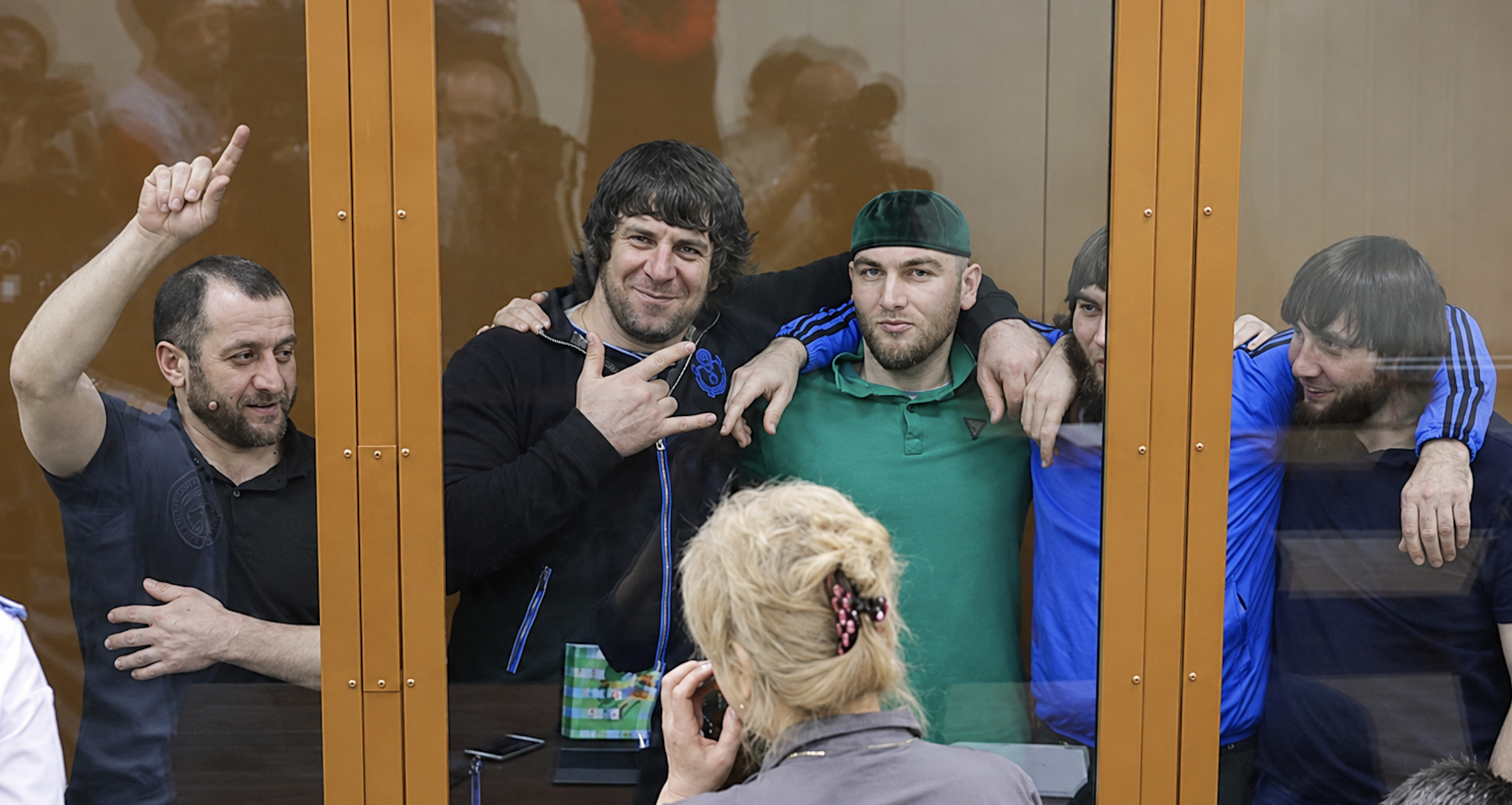
Five men from Chechnya convicted of the murder of Russian opposition politician Boris Nemtsov may now be at liberty. Three of the main defendants in the case — Zaur Dadayev and brothers Anzor and Shadid Gubashev — may have used the recruitment of prisoners to fight in the war against Ukraine as a formal pretext for securing their release from prison colonies before returning to Chechnya. This is reported by the investigative outlet Proekt in an investigation published today.
The investigation was prompted by a message received by Boris Nemtsov’s daughter, Zhanna, in the summer of 2026. Proekt quotes the message:
“Zhanna, look at this situation. Your father’s killers — […] the Gubashev brothers and Zaur Dadayev — are free. Officially, they are taking part in the special military operation, but in reality they are in Grozny. Did you know anything about this?”
The authors of the investigation say that further communication with the source and an analysis of circumstantial evidence led them to believe that the information was accurate. The report says that the convicted men have probably been released and are living quietly in Chechnya under the protection of those who organised and commissioned the murder. However, the journalists were unable to confirm this information directly.
According to Proekt, the war against Ukraine and the shortage of personnel at the front gave prisoners an opportunity to leave their colonies early. The authors note that the five men’s cases have followed different paths.
-
Temirlan Eskerkhanov was sentenced to 14 years in prison. In September 2023 and March 2024, a court in Stavropol rejected his applications to have the unserved portion of his sentence replaced with compulsory labour. Nevertheless, in the summer of 2024, five years before his expected release date, he was freed. TASS, citing security officials, reported that Eskerkhanov had signed a contract with the Defence Ministry and gone to the front. According to Proekt, journalists examined leaked database records and found that in June 2024 — a month before the TASS report — Eskerkhanov had obtained a new Russian passport at an Interior Ministry office in Donetsk.
-
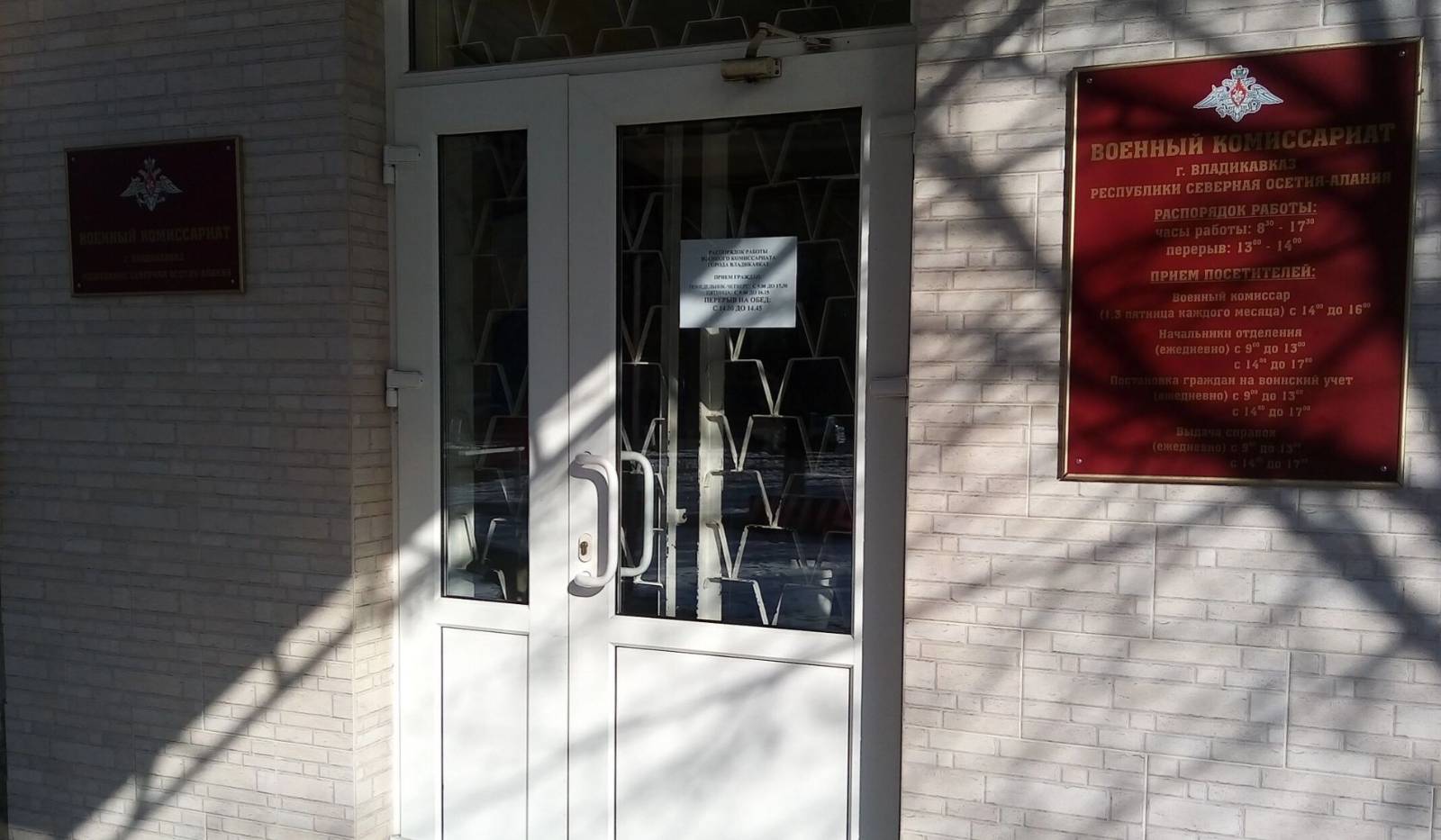
Khamzat Bakhaev was sentenced to 11 years in prison. His sentence expired in the spring of 2026. He served most of it in Kirovo-Chepetsk, in the Kirov Region, before being transferred in July 2024 to a prison colony in the village of Chernokozovo in Chechnya. According to Proekt, it is now impossible to establish whether Bakhaev actually served his sentence there.
-
Zaur Dadayev, Anzor Gubashev and Shadid Gubashev were sentenced to 20, 19 and 16 years in prison respectively. Had they served their sentences in full, Dadayev and the Gubashev brothers would have been due for release in 2035, 2034 and 2031. According to the authors’ estimates, Dadayev and Anzor Gubashev would not have been eligible for parole before 2028 and 2027 respectively. Proekt suggests that the three men may have signed formal contracts with the Defence Ministry, been released from their prison colonies and returned to Chechnya.
Boris Nemtsov was shot dead on 27 February 2015 on the Bolshoy Moskvoretsky Bridge, near the Kremlin. Five men arrested in the spring of that year stood trial: Zaur Dadayev, a former deputy commander of the Sever battalion, which was subordinate to the Chechen authorities; his relatives Anzor and Shadid Gubashev; and Temirlan Eskerkhanov and Khamzat Bakhaev. According to the evidence presented during the trial, their roles in preparing and carrying out the murder differed.
During the trial, it emerged that Eskerkhanov had spent nights at the group’s safe house and attended meetings before the murder. Investigators found a video of Nemtsov delivering a speech sharply criticising Vladimir Putin saved on his phone. Vadim Prokhorov, a lawyer representing the victim’s family, questioned whether there was sufficient evidence of Bakhaev’s guilt. Proekt quotes his statement in court:
“I believe it is necessary to add that the investigators failed to gather sufficient evidence to charge Khamzat Bakhaev under Article 105 of the Criminal Code [murder]. He may have been aware of the crime and may have been involved in some way, but sufficient evidence of this has not been presented. I therefore ask the jurors to take our position into account.”
As Proekt notes, neither the court nor the investigators established who had allegedly organised and commissioned the murder. The official version centred on the accusation against Ruslan Mukhudinov, a member of the Sever battalion, who was charged with organising the crime. He was placed on the wanted list, and the case against him was separated into a distinct set of proceedings.
Investigative reports cited by Proekt point to the possible involvement of a wider circle of people in preparing the murder, including senior security officials and individuals close to the Chechen leadership. Those named included commanders and officers of the Sever battalion, among them Ruslan Geremeyev, whom investigators were unable to question.
According to the authors of the investigation, those suspected of organising and commissioning the murder escaped accountability, or their role was not examined by Russian law enforcement agencies.