Drones attacked Nevinnomyssk Azot again in Stavropol Krai.
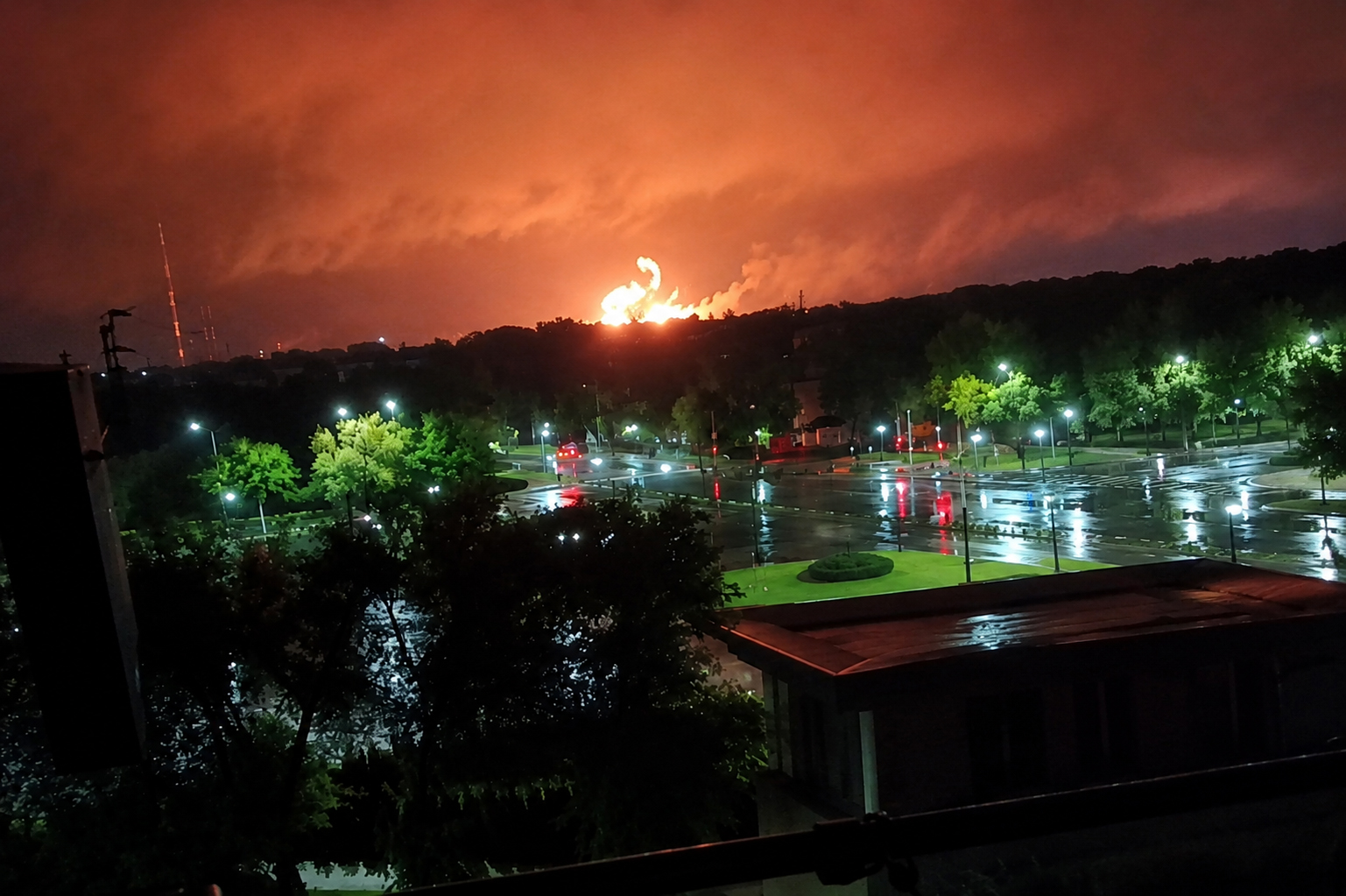
On May 16, unmanned aerial vehicles attacked the Nevinnomyssk Azot chemical plant in Stavropol Krai. A massive fire broke out at the facility.
Vladimir Vladimirov, the head of the region, confirmed the drone attack on Nevinnomyssk. He stated that air defense systems successfully repelled the attack, and no damage was caused to the ground. Official reports indicate there were no casualties.
A report from the Russian Ministry of Defense states that 138 drones were destroyed by air defense forces on the night of May 16. The aircraft were reportedly shot down over several regions: Belgorod, Bryansk, Voronezh, Kursk, Rostov, Oryol, Tula, Kaluga, Lipetsk, Ryazan, Smolensk, and Tver, as well as over the Krasnodar and Stavropol Krais, Crimea, the Moscow Region, and the waters of the Azov and Black Seas.
Nevinnomyssk Azot has been attacked previously: in January and March 2026, and in December and August 2025. This facility is one of the key chemical plants in the Stavropol Krai. The plant specializes in the production of components used in the manufacture of explosives, ammunition, and rocket fuel. The intense attention to this facility is due to its importance to Russia's defense industry.
According to investigative journalists, including Reuters, the plant supplies nitric and acetic acid to the Sverdlov plant in the Nizhny Novgorod region. It is used to produce explosives such as octogen and hexogen, which are used to fill artillery shells and missiles.