Yerevan Appeals to EEC Over Russian Restrictions on Armenian Goods
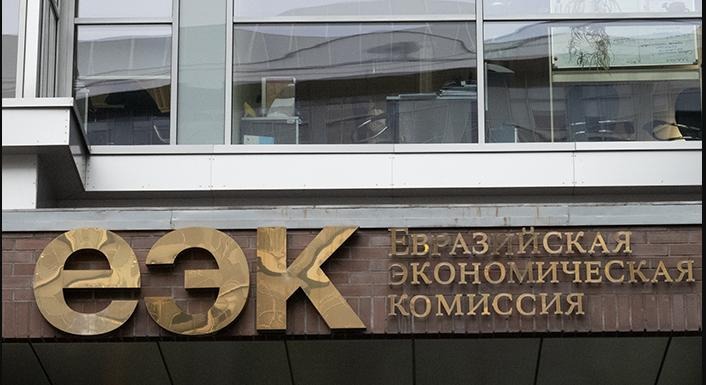
Yerevan has appealed to the Eurasian Economic Commission (EEC) to review restrictions imposed by Moscow on the supply of Armenian products to EAEU countries. This was announced by Armenian Minister of Economy Gevorg Papoyan.
Armenia is asking for the Russian measures to be recognized as a trade barrier. Papoyan emphasized that the issue concerns restrictions applied by one EAEU member state against another.
"Under EAEU regulations, if one country applies such measures against another, the latter may appeal to the EEC," the minister noted.
If the Commission deems the restrictions a trade barrier, they must be removed within one month.
An EEC meeting to address the issue is scheduled for October.
A new wave of Russian restrictions on Armenian exports began in May 2026. Moscow initially imposed restrictions on specific product categories; the list was subsequently expanded, and in June, it was extended to cover all goods from Armenia subject to phytosanitary and veterinary controls. The measures also affected the transit of such products through Russia to other EAEU countries.
The restrictions coincided with a period of deepening relations between Yerevan and the EU. On March 26, 2025, the Armenian parliament passed a law "On Initiating the Process of the Republic of Armenia's Accession to the European Union," laying the legal groundwork for the country's European integration, a course the authorities continued to pursue in 2026. At the same time, Yerevan maintained that it was not violating its EAEU obligations and was not currently considering withdrawing from the bloc. On June 4, 2026, European Commission President Ursula von der Leyen described the Russian restrictions as "economic coercion" and stated that Moscow was using economic ties to exert political pressure on Yerevan.
Following the imposition of the restrictions, the European Union announced its support for Armenian producers and prepared measures to expand access for Armenian goods to the European market. In September, the Council of the EU backed a temporary trade liberalization scheme covering approximately 80% of Armenian exports to the European Union.
The Russian restrictions also drew a sharp reaction in Yerevan. Pashinyan called them a "wrong move" and warned that such measures could turn Armenians against the EAEU. He later questioned the very principle of the bloc's operation, stating that if one country could unilaterally make such decisions regarding another, the EAEU needed to explain whether it actually existed at all.