ECHR Questions Evidence in Azerbaijani Journalist’s Treason Case
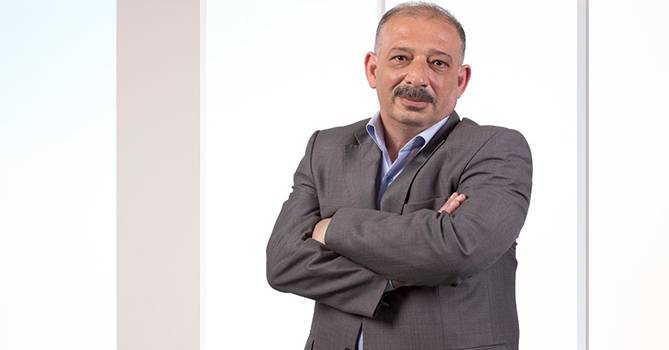
The European Court of Human Rights (ECHR) has ruled that the right to a fair trial was violated in the treason case of Rauf Mirkadyrov, a former columnist for the Russian-language Azerbaijani newspaper *Zerkalo*. The journalist stated that the Strasbourg court’s decision helped restore his reputation, though he lamented having to wait twelve and a half years after his arrest for this outcome.
"The ECHR found the trial on charges of high treason against me to be unfair. This joy is overshadowed by the fact that the court's decision came twelve years after my arrest," Mirkadyrov told *Kavkazsky Uzel*.
The Strasbourg court highlighted the insufficiency of the evidence presented against the journalist and the failure of Azerbaijani courts to properly scrutinize it. Audio recordings and transcripts of conversations proved to be fragmentary and unclear, and the courts failed to verify defense arguments that photographs of the alleged strategic sites were publicly available on Google Earth. Domestic courts also refused to question witnesses cited by the defense.
In December 2015, the Baku Court on Grave Crimes sentenced Mirkadyrov to six years in prison on charges of passing classified information to Armenian intelligence services. According to the prosecution, the journalist gathered information on Azerbaijan's strategic and military sites under the guise of participating in "people's diplomacy" initiatives. Mirkadyrov denied the charges. In March 2016, an appellate court commuted the actual prison sentence to a five-year suspended sentence and ordered his release. Mirkadyrov’s case attracted the attention of international human rights organizations immediately following his arrest in 2014. The Committee to Protect Journalists called on Azerbaijani authorities to drop the charges against him. In 2016, the International Federation for Human Rights and the World Organisation Against Torture termed his detention arbitrary.
Speaking to a correspondent, Mirkadyrov emphasized that the current ECHR ruling specifically concerns the trial on treason charges, rather than the legality of his initial arrest and pre-trial detention. The Strasbourg court had previously acknowledged violations of his rights regarding his time in custody.
"The ECHR pointed out that the transcript of the conversation used against me was so fragmentary and unclear that it could not reasonably be claimed—based on it—that I had passed on information capable of threatening Azerbaijan's security. Azerbaijani courts simply accepted the Ministry of National Security’s materials as established facts without independently examining the evidence," the journalist told *Kavkazsky Uzel*.
The ECHR ordered Azerbaijan to pay Mirkadyrov 3,600 euros in compensation for non-pecuniary damage. The court rejected claims for material damages and legal costs due to a lack of supporting documentation. However, the Strasbourg court does not overturn domestic convictions or issue acquittals in their place.
"That is precisely why, for me personally, the significance of this ruling is absolutely clear. The stigma of being a traitor has been lifted from my name," Mirkadyrov stated.
The journalist is 65 years old and lives in Switzerland, where he was granted political refugee status in 2017. He noted that awaiting the decision held particular importance for him due to his health condition. Mirkadyrov also expressed concern for the fate of others who have spent years awaiting rulings from international courts to secure recognition of violations of their rights. He emphasized that the protracted nature of these proceedings takes a particularly heavy toll on individuals suffering from serious illnesses.
"A person should not have to wait until the final hour of their life to clear their name. Justice must not merely prevail; it must arrive in time—while the person is still alive," the journalist said.
Mirkadyrov’s case is unfolding against a backdrop of ongoing pressure on independent journalism in Azerbaijan. In Reporters Without Borders’ 2026 Press Freedom Index, the country ranked 171st out of 180. According to the Committee to Protect Journalists, 24 journalists were imprisoned in Azerbaijan as of December 1, 2025.