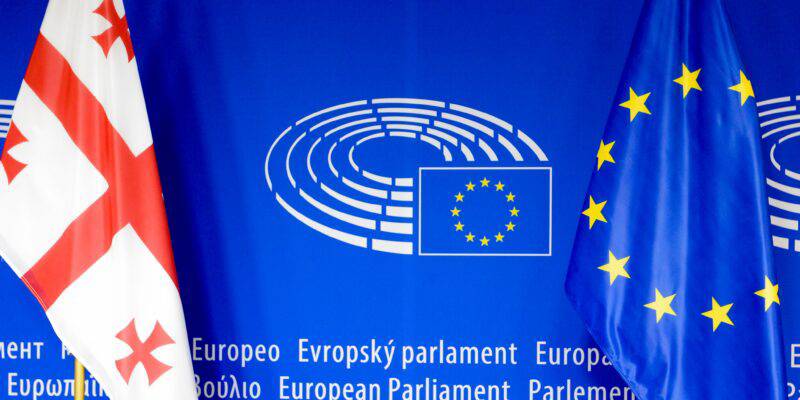
The European Parliament has demanded the release of political prisoners in Georgia and called for sanctions against the country’s leadership
On November 26, the European Parliament adopted a resolution demanding the immediate release of opposition politicians, journalists, and activists. The document also calls on the European Union to impose targeted sanctions—including asset freezes and travel bans—against Bidzina Ivanishvili, founder of the "Georgian Dream" party; Prime Minister Irakli Kobakhidze; and other members of the country’s leadership.
The resolution, titled "The Case of Paata Burchuladze and Political Prisoners Under the 'Georgian Dream' Regime," was approved with 441 votes in favor, 47 against, and 86 abstentions.
At the heart of the resolution is the case of opera singer and civic activist Paata Burchuladze, as well as opposition politicians Irakli Nadiradze and Paata Manjgaladze. In May 2026, all three were sentenced to seven years in prison in connection with events that took place in Tbilisi on October 4, 2025—a day marked by clashes during protests and an attempt to enter the Presidential Palace.
The European Parliament has demanded their "immediate and unconditional release," as well as the release of former President Mikheil Saakashvili, opposition politicians Nika Melia, Elene Khoshtaria, and Giorgi Baramidze, journalist Mzia Amaglobeli, and other individuals detained while participating in peaceful protests.
The document also specifically addresses the health condition of 71-year-old Burchuladze. Members of the European Parliament expressed concern regarding the conditions of his detention, including prolonged isolation, restricted contact with the outside world, and inadequate access to medical care. They demanded that he be provided with medical treatment, legal counsel, regular communication with his family, and unimpeded consular access.
The European Parliament also called for independent investigations into reports of excessive use of force, intimidation, and the mistreatment of protesters. It urged the Georgian authorities to cease the politically motivated criminal prosecution of cultural figures, opposition members, journalists, and activists.
Following the adoption of the resolution, the Georgian Foreign Ministry held a meeting with the European Union Ambassador to Tbilisi, Paweł Herczyński. First Deputy Foreign Minister Giorgi Zurabashvili described the document as yet another attempt to spread false information about the country and undermine Georgia’s relations with the EU.
The ministry stated that the Georgian side had once again asked European representatives to identify the specific individuals whom Brussels considers to be arbitrarily detained. According to the Foreign Ministry, Tbilisi has yet to receive such a list, despite previous requests. The ministry also reaffirmed Georgia’s commitment to the process of joining the European Union.
Shalva Papuashvili, Speaker of the Parliament of Georgia, linked the resolution to the events of October 4, 2025, when participants in an anti-government protest attempted to enter the Presidential Palace. He asserted that the European Parliament had, in effect, confirmed that Brussels supports such actions.
"As of today, this is a documented fact. And nothing can be changed now," Papuashvili wrote on social media.
On November 27, Tengiz Sharmanashvili, a member of parliament from the "Georgian Dream" party, also responded to the document. He rejected the assessments contained in the resolution and stated that any potential sanctions would not influence the authorities' decisions.
"Our response is that this is a fabricated lie. No sanctions will force us to abandon the defense of our national interests. If they haven't realized this by now, let them keep threatening us," Sharmanashvili told reporters.