“Conviction factory”: Southern Military Court leads Russia in terrorism cases
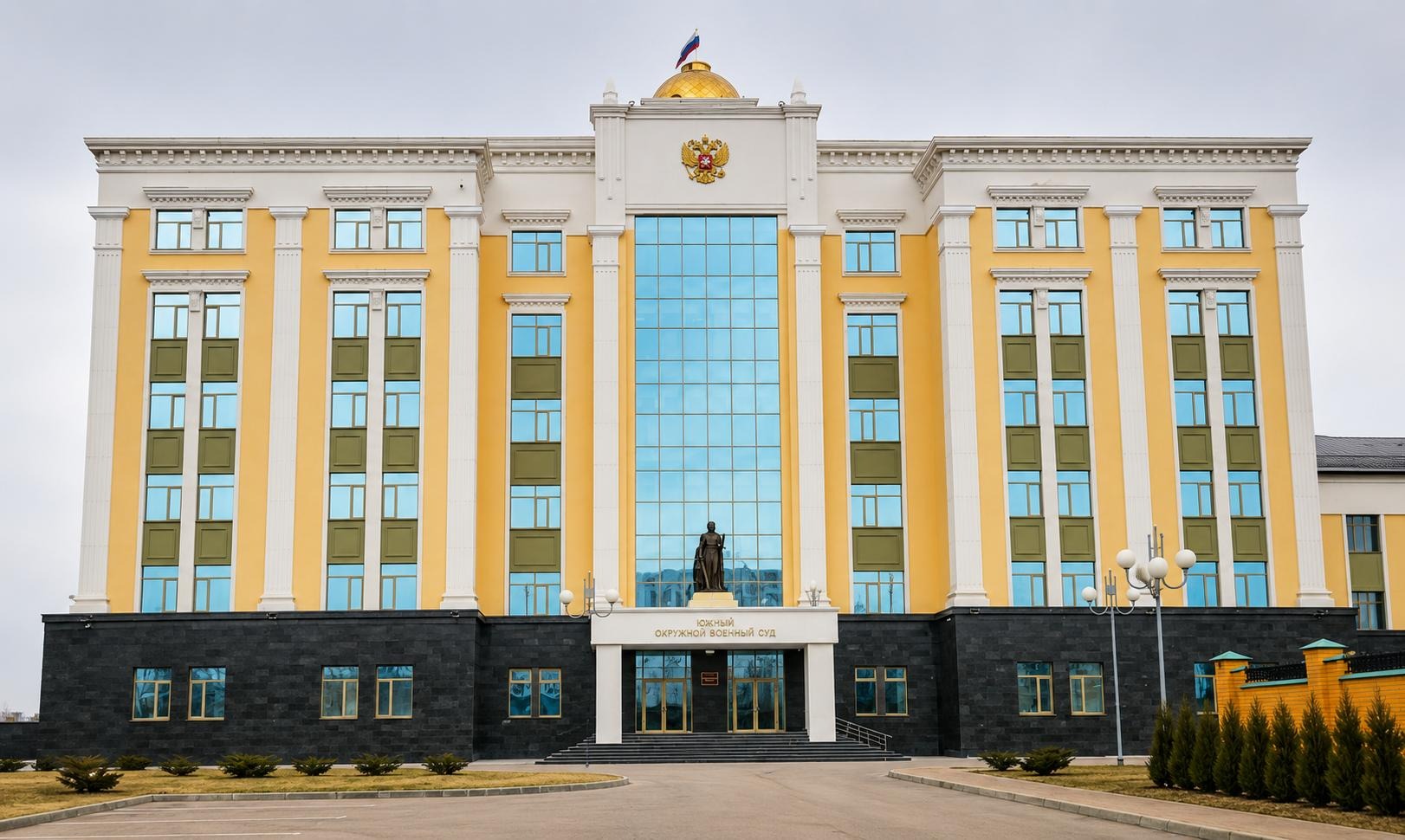
The Southern District Military Court in Rostov-on-Don issued 425 convictions under Russia's "terrorism" laws in the first half of 2026, accounting for more than a third of all such rulings nationwide, according to a study by the human rights project First Department and the independent Parubets Analytics research centre.
Russian courts convicted at least 1,234 people under terrorism-related laws during the first six months of the year, the study found.
The Southern District Military Court accounted for 37.1% of the 1,145 terrorism-related convictions recorded across Russia. It overtook the previous leader, the 2nd Western District Military Court, which issued 286 rulings. Another 156 convictions were handed down by the Central District Military Court and 121 by the 2nd Eastern District Military Court.
Together, the four courts accounted for 86.3% of all convictions under terrorism-related provisions.
Researchers attributed the Southern Military Court's leading position primarily to its handling of cases involving residents of Ukrainian territories occupied by Russia, including Donetsk, Luhansk, Kherson and Zaporizhzhia regions, the occupied part of Kharkiv region and Crimea, which Russia annexed in 2014.
At least 243 Ukrainian citizens were convicted by Russian courts under terrorism-related provisions during the first half of the year. They include Ukrainian servicemen and prisoners of war, as well as civilians whom Russian authorities accused of cooperating with or supporting Ukraine.
The Southern District Military Court was also among the most closed courts in Russia. Information about 73.6% of those convicted was concealed in its online case records. In March, the court hid information on 1,080 cases in a single day.
Nationwide, details of 795 of the 1,234 people convicted — 64.4% — were concealed in court records.
Russian courts issued 1,145 convictions under terrorism-related provisions between January and June, 58% more than during the same period in 2025. The number of people convicted rose by 38%, to 1,234. That amounts to an average of about 10 such convictions for every working day.
The number of convictions in just the first half of 2026 was also 24% higher than the total recorded for the whole of 2024.
More cases involve speech rather than violence
An increasing share of the cases are not directly related to the commission of terrorist attacks.
During the first half of the year, 487 people were convicted under the provision covering public calls for terrorism, its justification or propaganda. They accounted for 53.8% of defendants convicted under a single terrorism-related provision, up from 41.3% a year earlier.
At the same time, the proportion of people convicted specifically of carrying out a terrorist attack almost halved, falling from 38.3% to 20.6%.
The provision on justifying or promoting terrorism appeared in the charges against 540 people overall. Some 357 people — 29% of everyone convicted under terrorism-related provisions — were sentenced solely over statements, publications or comments, without allegations of violent acts.
According to the political prisoner support project Memorial, at least 427 of those convicted, or 35%, were involved in cases showing signs of political motivation. Researchers describe this as a conservative estimate because courts conceal a significant amount of information about the cases.
At the same time, the number of cases combining terrorism charges with other serious offences is growing. In 116 cases, terrorism-related charges were combined with treason, espionage or related offences, while another 113 defendants were also charged with extremism.
Cases are being processed faster
Despite the increase in the number of cases, their average duration has fallen. The median length of proceedings was 42 days, compared with 44 days in 2025.
The longest recorded case, however, was heard by the Southern District Military Court. Proceedings in a case involving participation in a terrorist organisation lasted 784 days, from May 2024 to June 2026.
Among convictions for which prison terms were known, the median sentence was 13 years.
The First Department project predicts that the number of convictions under terrorism-related provisions in 2026 will reach its highest level since the current Russian Criminal Code came into force.