Von der Leyen arrived in Armenia as part of a regional tour
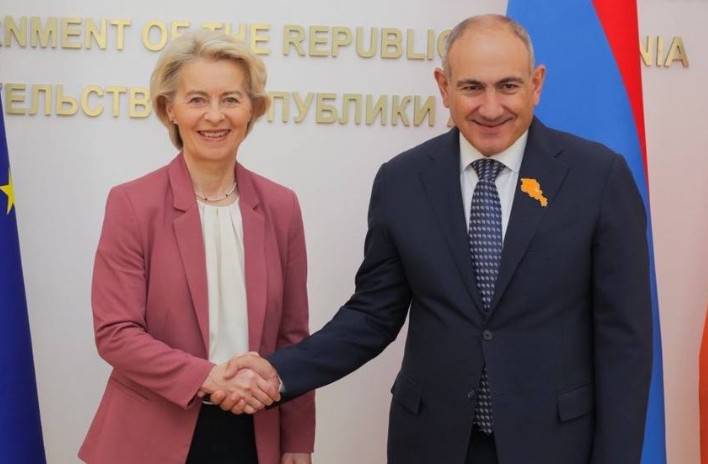
European Commission President Ursula von der Leyen arrived in Yerevan on July 2 for a working visit, according to Armenian media. The trip is part of the European Union's broader diplomatic activity in the South Caucasus.
In the Armenian capital, the head of the European Commission has already met with Prime Minister Nikol Pashinyan. Following the talks, the two sides will make statements and answer questions from the press.
The focus was expected to be on the future format of cooperation between Yerevan and Brussels.
Von der Leyen's visit is seen as a continuation of her regional tour and reflects the EU's desire to strengthen its presence in the South Caucasus amid the changing geopolitical situation.
Before her visit to Armenia, von der Leyen traveled to Baku, where she held a one-on-one meeting with Azerbaijani President Ilham Aliyev.
The European Commission previously outlined the main goals of its visits to the region. These include promoting the peace process between Yerevan and Baku following preliminary agreements on an agreement, developing transport and logistics links between Europe, the South Caucasus, and Central Asia, expanding economic cooperation, and supporting Armenia in the face of external economic pressure, including from Russia.
Several media outlets have offered their preliminary assessments of the visit to Yerevan.
Politico, for example, writes that the trip will focus on strengthening trade and other ties, as well as "helping counter Moscow's efforts to maintain influence in former Soviet republics." The publication notes that Brussels views the South Caucasus as a strategically important transport corridor between Europe and Asia.
The newspaper Hraparak, however, notes that following the European forum and Volodymyr Zelenskyy's visit, Russia imposed export restrictions. Against this backdrop, the publication writes, media outlets are speculating that the EC President's visit could be followed by retaliatory measures from Moscow.
"The European delegation's visit on July 1-2 will be a unique gesture of support for Nikol Pashinyan after the parliamentary elections. However, the consequences will be felt by the people, and especially by business representatives," the newspaper predicts.