Georgian Parliament Passes Law Banning Journalists from Filming Inside and Outside Courts
The Georgian Parliament, which is effectively completely controlled by the ruling party, has quickly passed a law introducing significant restrictions on media photography and videography in courts. The initiative was supported by 80 deputies.
The bill amends the organic law "On Courts of General Jurisdiction" and introduces a ban on filming not only in the courtroom, but also in the corridors and even the courtyard of the court. Now only the courts themselves or their authorized persons are allowed to broadcast court proceedings.
In addition, persons who have committed any manifestations of "disrespect for a judge," including "verbal or indecent actions related to the status of a judge," will be held accountable. The list of subjects falling under the definition of "illegal communication with a judge" has also been expanded.
Earlier, the initiative was harshly criticized by the Commissioner for Human Rights in Georgia, Levan Ioseliani. He called on the parliament not to rush to adopt the bill. The Ombudsman's office claimed that restricting media access to court proceedings "would seriously weaken public control over the administration of justice" and violate the principle of transparency.
Another innovation in the legislation concerned the law on freedom of expression. A number of amendments, also adopted in an accelerated manner, expanded the possibilities of prosecution for defamation. In particular, the definition of defamation was subject to change, from which the condition of causing damage was excluded. Now it is simply "a statement containing a materially false fact and defaming a person's name." Another significant change is the shift in the burden of proof to the accused. Thus, not the plaintiff, but the defendant will have to prove that the information they disseminated does not contain a materially false fact. It is noteworthy that the law will have retroactive effect for a period of up to 100 days.
During its time in power, Georgian Dream has introduced a number of controversial initiatives that the opposition and the West consider repressive. Among other things, the ruling party has banned direct and indirect funding of TV channels from abroad and introduced criminal liability for media outlets and NGOs that fail to report on their foreign sponsors.
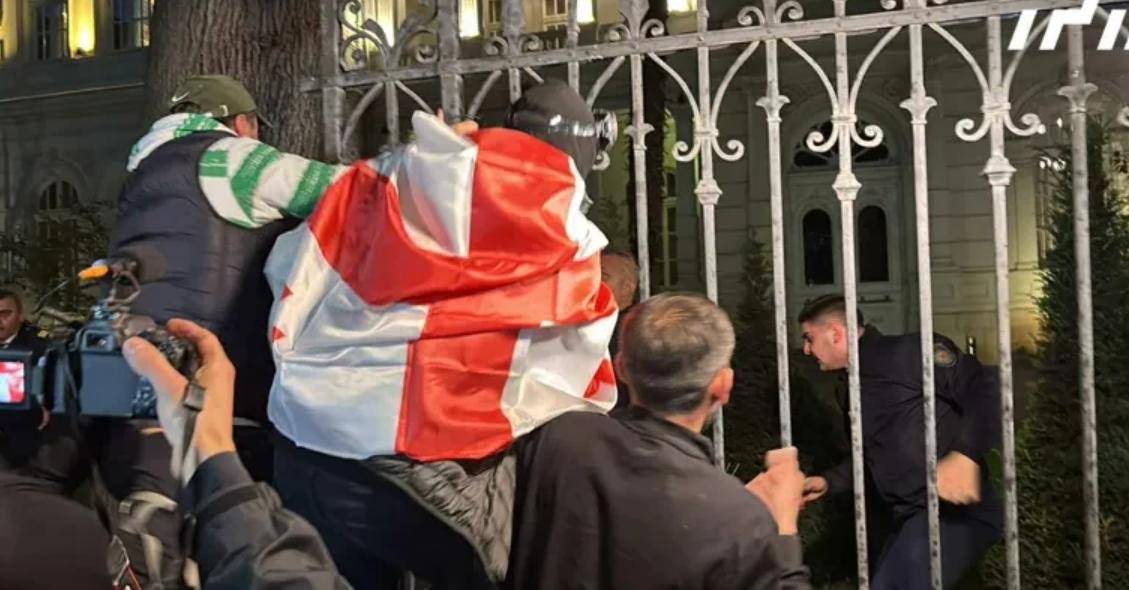
Recall that Georgia ranked 114th out of 180 countries in the 2024 World Press Freedom Index of the international human rights organization Reporters Without Borders. According to the RSF report, over 70 representatives of the independent press have been attacked while covering protests in Georgia, some of them repeatedly. There have been cases of beatings, the use of water cannons and tear gas, obstruction of work, insults and material damage, arrests, etc.
“Georgian Dream is a real nightmare for democracy and the media, which exposes the actions of this party to suppress freedom,” said Jeanne Cavelier, head of the Eastern Europe and Central Asia department at RSF.