Former Georgian Interior Ministry Official: Banned Substance Used to Disperse Rally at Central Election Commission in 2020
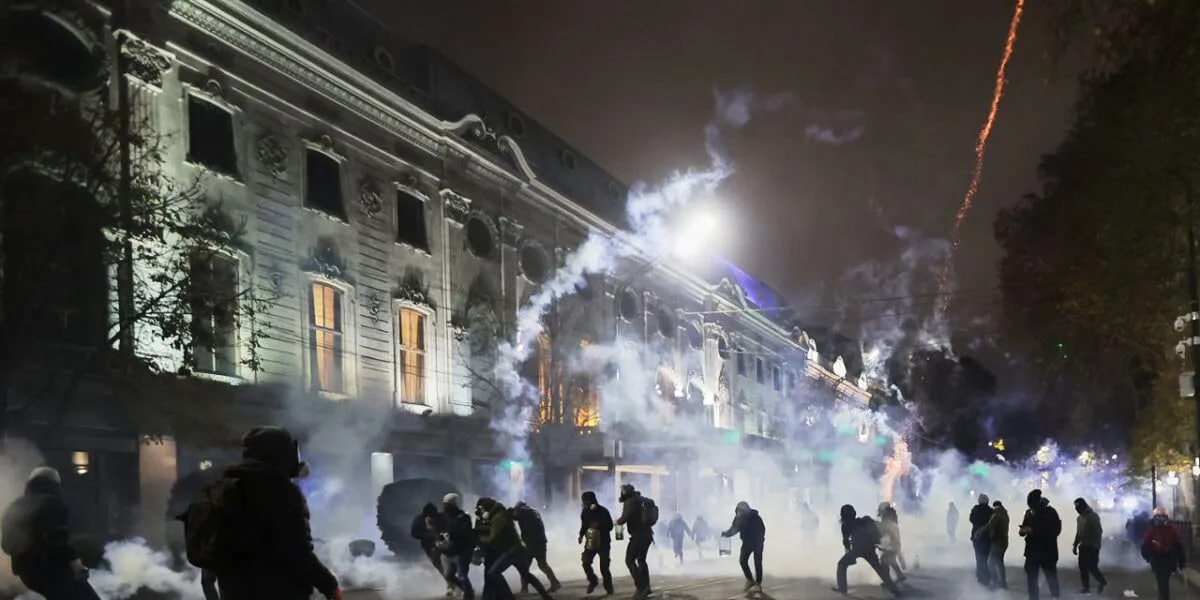
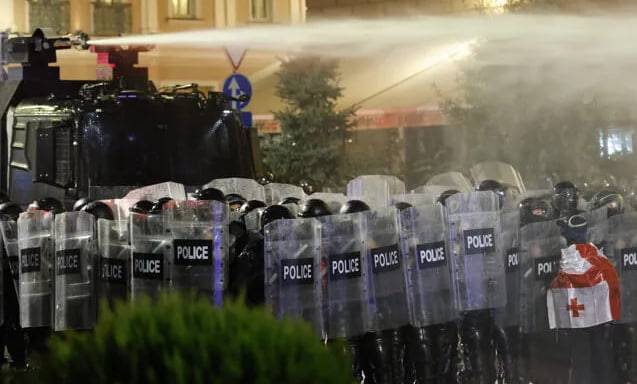
Former Georgian Interior Ministry official Lasha Shergelashvili, who served as the head of the Armaments Department of the Special Operations Directorate, said on Formula TV that a banned substance was used to suppress a protest outside the Central Election Commission in 2020. When asked if he had any suspicions, he replied that he "knew for sure that it was used" as he was there at the time.
He noted that he did not know the substance's composition, but expressed confidence that "the SGB is lying. They've hidden a lot." According to Shergelashvili, the Ministry of Interior always tested all substances to determine their reactions. As for the substance in question, a test conducted in 2009 or earlier found it "too toxic and was sealed." The former official explained that the use of this dangerous compound causes poisoning, vomiting, and other symptoms in humans.
"We suggested during testing that it was undesirable to use it. And, by the way, they immediately said that if this were the case, we wouldn't use it. That's why it was sealed," Shergelashvili shared.
Georgian Deputy Interior Minister Alexander Darakhvelidze responded to this statement, assuring that the former agency employee was spreading a number of unverified reports and that the State Security Service of Georgia had confirmed their falsity. He emphasized that when suppressing mass riots, violence, and attacks on government institutions, police use special means specified in the "law on police."
As a reminder, former Georgian Interior Minister Vakhtang Gomelauri previously stated that the chemical weapon known as "kamit" and other substances mentioned in the BBC investigation "were indeed purchased by the Ministry of Internal Affairs and used, but before 2012," that is, during the rule of the National Movement party. This claim was denied by Georgian Prime Minister Irakli Kobakhidze, and then by the current minister, Geka Geladze. According to Geladze, his predecessor implied that various substances were purchased in 2009, but not "kamit."
In response to the politicians' contradictory statements, 25 Georgian non-governmental organizations issued a joint statement demanding the publication of a list of the chemicals used by police against participants in pro-European protests. On December 6, the State Security Service officially identified the substance used by the Ministry of Internal Affairs to disperse the rallies. The agency claims that the substance in question is a chemical compound of the CS gas—chlorobenzylidene malononitrile—dissolved in propylene glycol. These substances are not prohibited, the State Security Service notes.
As a reminder, the British Broadcasting Corporation (BBC) published a report alleging that the Georgian authorities used the chemical weapon "Kamit" during the suppression of pro-European protests in Tbilisi in 2024. The investigation is based on testimonies from demonstrators protesting the government's decision to suspend the country's European integration process: they complained of "the water scalding," as well as shortness of breath, coughing, and vomiting that lasted for weeks. After speaking with chemical weapons experts, representatives of the Georgian special police forces, and medical professionals, the journalists concluded that the aforementioned substance was used.