AI-generated personas supported "Georgian Dream": researchers identify 230 suspicious Facebook accounts
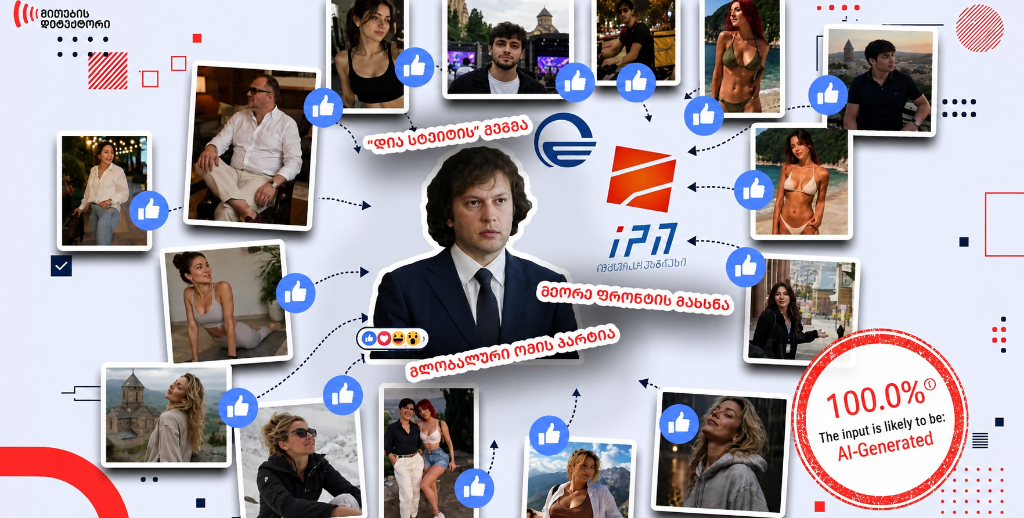
A network of 230 Facebook accounts featuring photos likely generated by neural networks has been discovered in Georgia. These accounts were used to create the appearance of widespread support for the ruling "Georgian Dream" party and its chairman, Irakli Kobakhidze. Researchers from the "Myth Detector" platform reached this conclusion.
The suspicious pages mimicked the profiles of ordinary Georgian citizens, featuring photos of people of various ages and appearances, along with details about their education and employment. Listed workplaces included banks, insurance companies, municipal services, and government agencies—details intended, the researchers believe, to make the pages appear more authentic.
However, analysis using the Hive Moderation service indicated a greater than 90% probability that the photos themselves were created by artificial intelligence; in some instances, the probability was 100%. Researchers also noted flaws characteristic of AI-generated imagery, such as distorted fingers and hands.
The accounts shared other common traits as well. Some pages used identical or nearly identical photos, and in several cases, even the names and surnames matched. Most profiles listed a move to Georgian cities within the same brief timeframe: July 20–24, 2026.
The most significant commonality lay in the specific causes these accounts supported.
Researchers analyzed reactions to posts by the TV channels Imedi and Rustavi 2, as well as the Interpressnews agency. Specifically, they examined engagement with statements made by Kobakhidze marking the 18th anniversary of the Russo-Georgian War. He spoke of rising "Russophobia" in Georgia, linked the events of 2008 to the so-called "deep state," and accused those protesting against Russian tourists of harboring anti-Russian sentiment.
It was precisely around such posts that the activity of suspicious pages was concentrated. They also reacted to reports regarding a "global war party," a "deep state plan," and attempts to open a "second front" in Georgia.
"Myth Detector" views this activity as a sign of coordinated inauthentic behavior—where multiple accounts act in concert to create the impression of genuine public support for specific political messages.
Researchers note that this is not the first such instance. In April, they identified 75 suspicious accounts that reacted en masse to *Rustavi 2* posts about drugs for treating Duchenne muscular dystrophy. At that time, 47 pages used various versions of the same AI-generated photograph. According to "Myth Detector," some of these accounts had previously participated in smear campaigns.
The new case involves 230 pages that were designed to appear as a multitude of different individuals but were simultaneously promoting the same political talking points.