Kobakhidze responds to EU ambassador's criticism by alleging double standards and support for the opposition
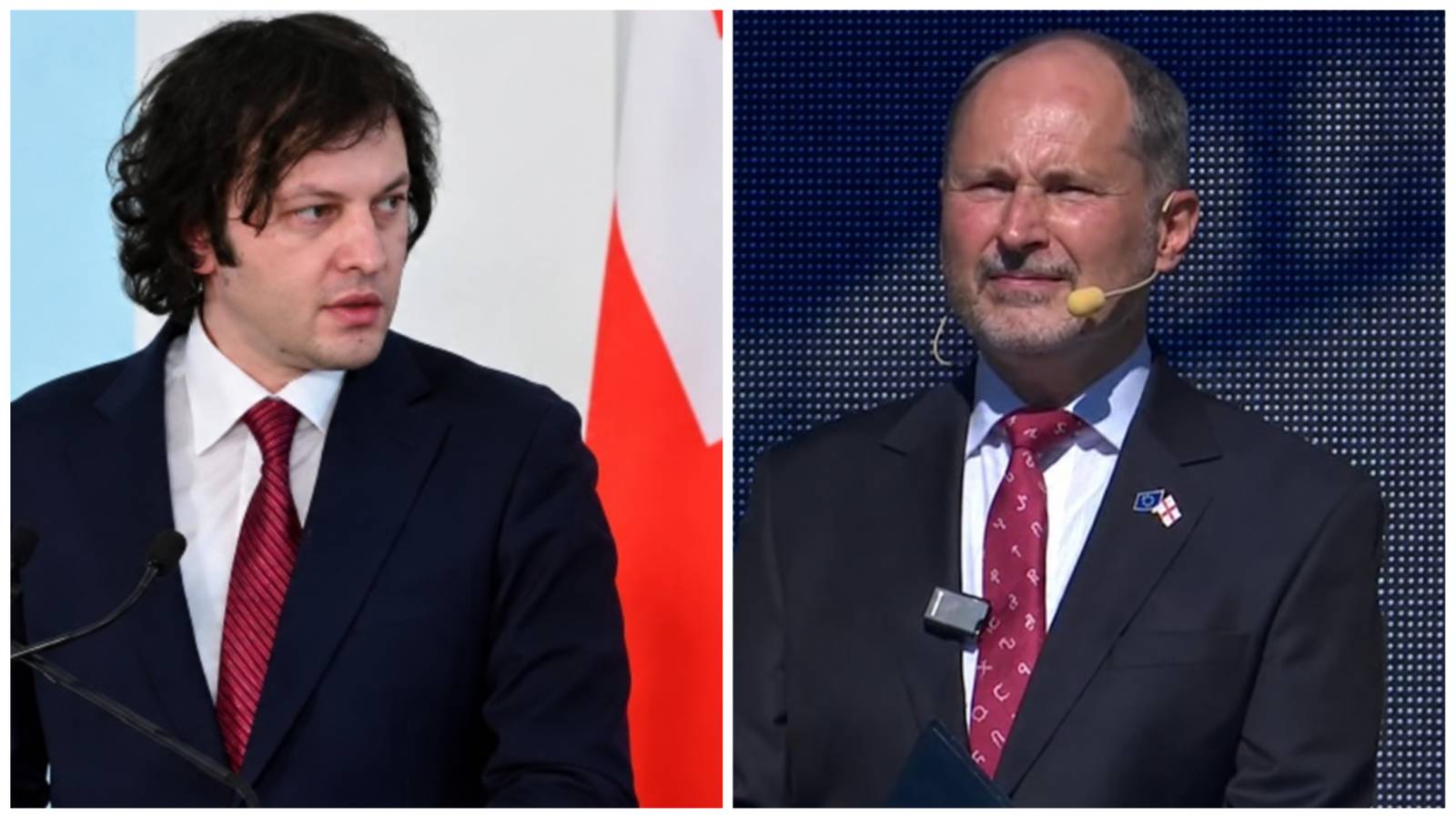
In response to criticism from EU Ambassador Paweł Herczyński, Georgian Prime Minister Irakli Kobakhidze accused the European bureaucracy of supporting the radical opposition and asserted that the Georgian authorities have a better understanding of the principles of democracy and human rights. Herczyński had previously reported a deterioration in the country's situation, attributing it to government actions and anti-European rhetoric.
"This man labels the outrages we have witnessed over the years on Rustaveli Avenue—repeated attempts to stage a revolution that were, unfortunately, openly supported by the European bureaucracy—as democracy and human rights," Kobakhidze stated, commenting on the diplomat's remarks.
According to the Prime Minister, since the Georgian Dream party came to power in 2012, the country has strengthened democracy, human rights, and the rule of law. He also accused Brussels of double standards, claiming that European officials seek to return to power a political force that Georgian authorities link to the former ruling party, the United National Movement.
"That is precisely what they call democracy and human rights. We have a better understanding of what democracy and human rights entail. Unfortunately, Europe has lost the proper perception and analysis of this. Georgia strictly adheres to these principles—to the concepts of the rule of law, democracy, and human rights.
Since 2012, one of our major achievements has been the establishment of democracy, human rights, and the rule of law." "Against this backdrop, it is regrettable that the European bureaucracy is mourning the very agents who once ran the country and distinguished themselves by trampling on the rule of law, democracy, and human rights," said Kobakhidze.
On October 10, Herczyński told reporters that the situation in Georgia had deteriorated since the publication of the European Commission’s previous enlargement report. The next report, he added, is expected in three weeks.
"Unfortunately, the statements made by the incoming European Commissioner for Enlargement, Marta Kos, are disappointing and personally deeply saddening to me. However, this is the result of the current government's consistent actions, the laws it has passed, and its anti-European rhetoric. Regrettably, these are the consequences," the EU ambassador stated.
These remarks were made during events marking Europe Day 2026, which were held in the Kakheti region for the first time this year. During the celebrations in Telavi, Herczyński addressed the guests in Georgian.
"I apologize for my imperfect Georgian, but out of respect, I still wish to address you in your beautiful language: the European Union is like Georgian polyphonic singing. Twenty-seven independent states form a strong unity, just as each individual voice creates a shared melody. We want the Georgian voice to ring out clearly within this European polyphony," the diplomat said.
Herczyński emphasized that EU-Georgia relations have been developing since the country regained its independence, and he assured that Brussels would continue to support Georgia's democratic and European future, despite the deterioration in political rhetoric.
"You do not need to choose between being Georgian and being European: you can be both—and indeed, you are both," the ambassador declared.