Lukashenko Urges Armenia Not to Rush Reorientation Toward EU Market
Belarusian President Alexander Lukashenko has urged Armenia not to rush into reorienting its trade toward the European Union. He suggested that Yerevan first assess the prospects of maintaining current export volumes.
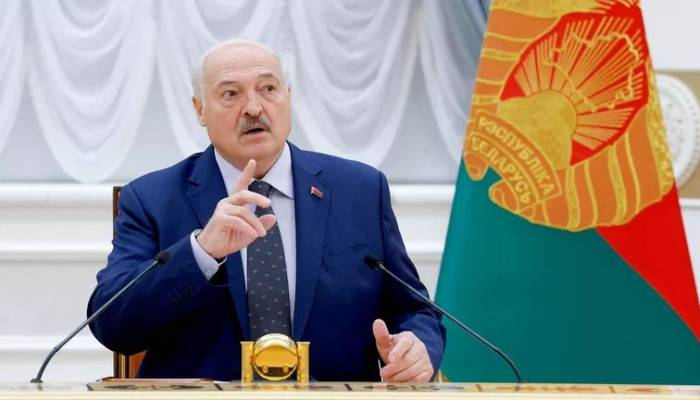
Lukashenko made these remarks during a meeting with the heads of government delegations participating in the Eurasian Intergovernmental Council session.
"If you’ve decided to head toward the European Union—well, what’s the rush? Clearly determine where your cognac will be taken, where your vegetables and fruit will go. In what volumes. Will you be able to replace what you currently sell to us?" he said.
He cited France as an example, noting that Armenian producers should understand the prospects for supplying the European market in advance.
"If you are convinced that France will buy your cognac—even though they have nowhere to put their own, they’ll buy yours—fine, go ahead. Why are you rushing? Why are you putting the cart before the horse?" the Belarusian president asked.
At the same meeting, Armenian Prime Minister Nikol Pashinyan stated that Yerevan intends to continue mutually beneficial cooperation within the EAEU. He advocated for removing existing obstacles to the export and transit of Armenian products.
Lukashenko had previously criticized Yerevan’s move toward closer ties with the European Union. In January 2025, he called it a "highly dangerous game" and urged: "Calm him [Pashinyan] down; he will destroy Armenia."
The Armenian prime minister responded at the time: "With all due respect to you, my polemic with Lukashenko is over." "I have nothing to argue with him about."
Relations between Minsk and Yerevan have remained tense since 2024, when Armenia recalled its ambassador to Belarus, Razmik Khumaryan, for consultations following statements by Lukashenko regarding the war in Karabakh. In September of this year, Armenian parliamentary speaker Ruben Rubinyan stated that the ambassador would remain in Yerevan until explanations or apologies were received from Minsk.
It is worth noting that, starting in late May, Russia began gradually restricting the import of a number of Armenian goods. Rosselkhoznadzor imposed restrictions on shipments of flowers, vegetables, fruits, and dried fruits, subsequently extending them to fish, fish products, and dairy goods. In September, Armenia lodged a complaint with the EAEU regarding Moscow's actions, stating that they violated the union's agreements and principles.
On September 24, the EU Council approved temporary trade measures for Armenia, providing for the reduction or elimination of tariffs on approximately 80% of Armenian exports to the European Union. These measures are set for a two-year period and are intended to expand access for Armenian products to the European market.