Headphones Instead of Medical Exams: A Solution from Grozny Students for Workers in Hazardous Industries
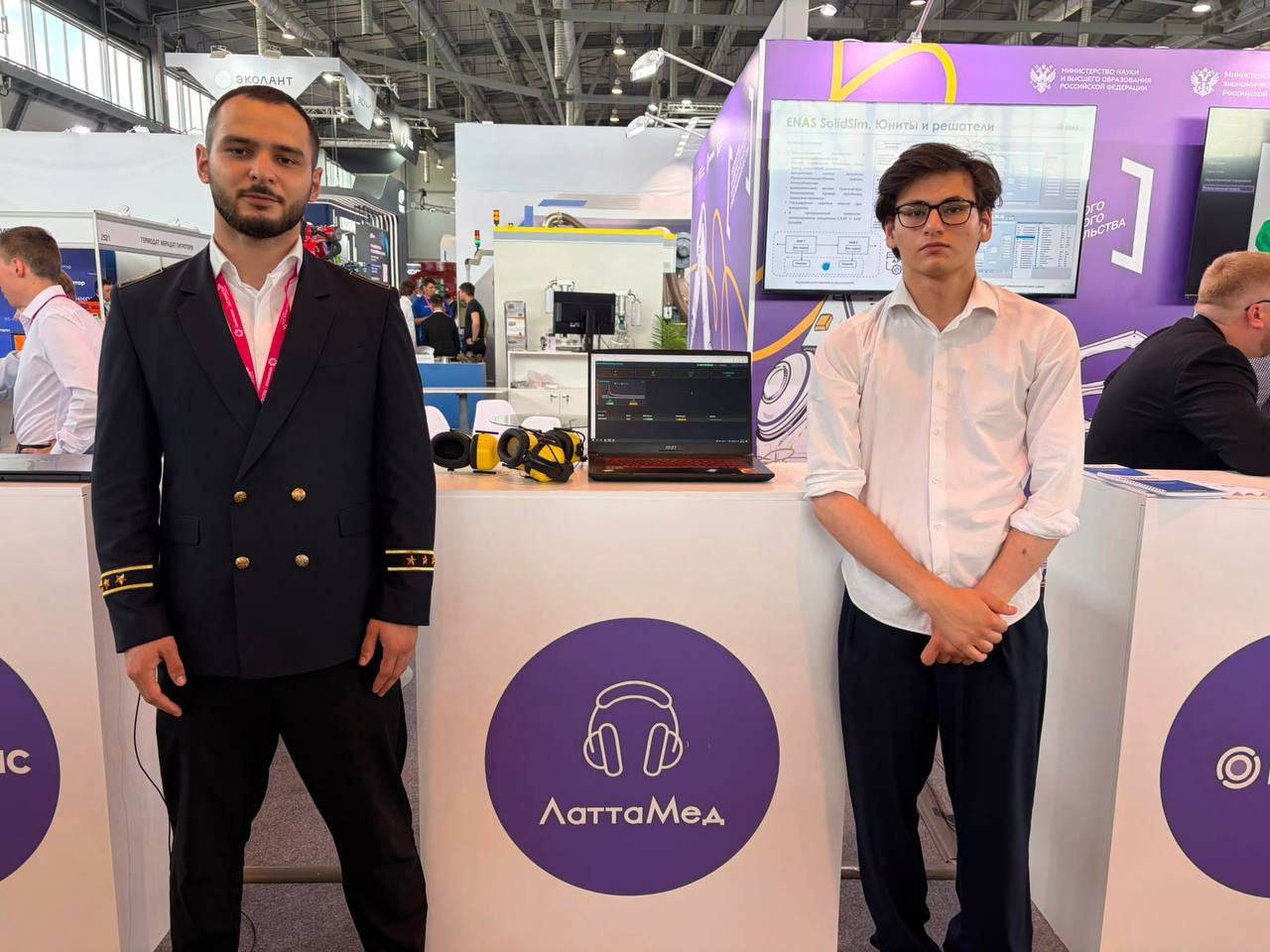
Students from the M.D. Millionshchikov Grozny State Oil Technical University unveiled "Lattamed"—a wearable biosensor designed to monitor the impact of toxic substances on industrial workers—at the Innoprom-2026 international industrial exhibition. The developers anticipate that the project's next phase will involve pilot trials in an industrial setting.
The device is integrated into headphones and, according to the project team, operates non-invasively by analyzing data from the ear canal. The biosensor enables real-time detection of exposure to volatile organic compounds and other potentially hazardous substances, displaying results directly during the work shift.
Why does this matter? Employees in the metallurgical, oil and gas, chemical, and paint and varnish industries frequently work in environments where they are exposed to potentially hazardous substances. Typically, their health is assessed during periodic medical examinations or after symptoms appear. Continuous monitoring during work offers an approach that could allow for the earlier detection of signs of hazardous exposure and a faster response to potential risks. If such technologies prove effective, they could serve as an additional tool for industrial safety and occupational health.
According to project leader Magomed Eldarov, participating in Innoprom provides an opportunity to present the innovation to the professional community and discuss prospects for initial pilot implementations with industrial companies.
The project team believes the technology could be in demand across the metallurgy, oil and gas, and paint and varnish sectors, as well as at drilling sites, where the risk of exposure to harmful substances remains high.
However, the development is currently at a stage where its capabilities have yet to be validated in real-world production environments. Implementing such solutions requires trials to assess measurement accuracy, operational reliability, and the system's practical effectiveness. It is precisely these kinds of evaluations that usually determine whether a university-developed innovation can make the leap from the laboratory to industrial application.
"Innoprom-2026" is taking place in Yekaterinburg from July 6 to 9, remaining one of the major international venues for showcasing industrial technologies. This year, the exhibition brought together representatives from nearly 90 countries, over a thousand companies, and more than 100,000 visitors. Indonesia served as the forum's partner country.
The results of pilot trials will determine whether "Lattamed" can successfully transition from the exhibition stand to industrial-scale production. These trials will serve as the ultimate test for the technology, which aims to secure a role in occupational safety systems at enterprises with high levels of occupational risk.