A new mine explosion has highlighted the continuing danger in the liberated territories of Azerbaijan

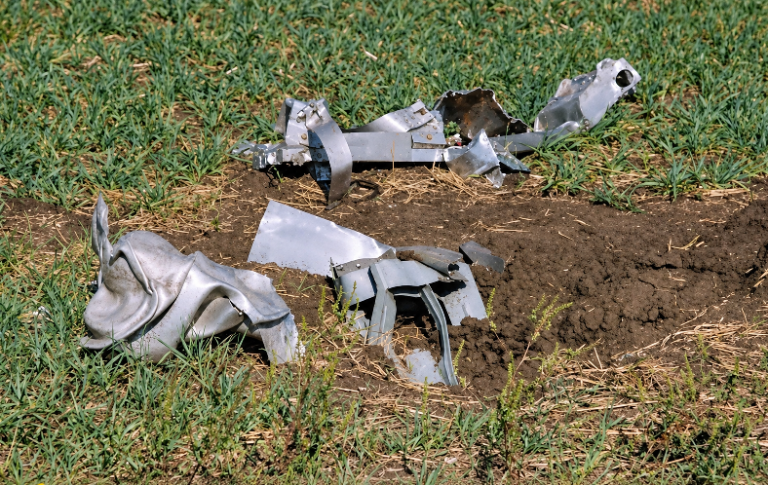
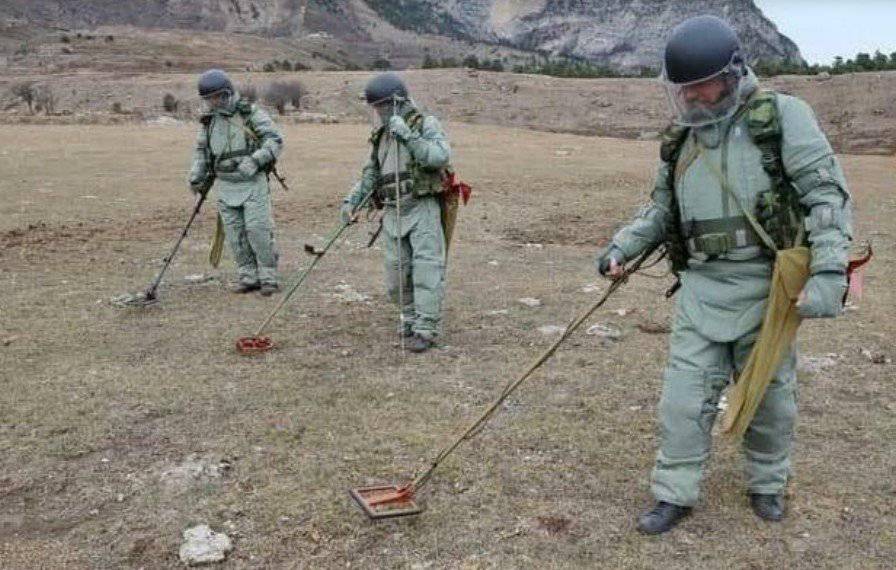
In the Khojavend region of Azerbaijan, Ahad Ahadov Sarvan oglu, born in 1985, an employee of a private company, was struck by an anti-personnel mine during humanitarian demining operations. He sustained shrapnel wounds to various parts of his body, including his left thigh. He was hospitalized at the Fizuli-Khojavend Central District Hospital and then transferred to a private clinic in Baku. According to doctors, his condition is satisfactory and there is no threat to his life.

This new incident has once again drawn attention to the continuing danger of mines in the liberated territories of Azerbaijan. Despite ongoing demining operations, such incidents continue, and the presence of mines in the areas under Baku's control remains one of the region's main humanitarian problems.

Following this latest incident, Azerbaijani Ombudsman Sabina Aliyeva called on residents to strictly observe safety measures and on international organizations to more actively support humanitarian demining programs. The Ombudsman's Office emphasized that mine contamination continues to pose a serious threat to human life even years after the end of active hostilities. It hinders the return of former internally displaced persons, complicates the reconstruction of settlements, and prevents people from safely returning to their normal lives. Residents of dangerous areas were once again reminded of simple but vital rules: travel only along officially designated routes, avoid touching suspicious objects, and exercise caution.

The humanitarian consequences of mine danger are also being highlighted beyond Azerbaijan. The short documentary "Step," dedicated to Hasanali Alizade, a mine victim, was included in the official program of the Dreamz Catcher International Film Festival in India.

The film tells not so much about the incident itself as about how a mine changes a person's life and the consequences that those who have experienced such tragedies have to live with. The film's creators hope to draw international attention to the humanitarian consequences of mine threats, which residents of the region continue to face even after the end of hostilities.
Последние новости
Pashinyan spoke in Armenian at the SCO summit; the Kremlin
Politics
Pashinyan spoke in Armenian at the SCO summit; the Kremlin "did not understand" why
6 September 2026

Armenian Prime Minister Nikol Pashinyan delivered a speech in Armenian at the expanded summit of the Shanghai Cooperation Organization (SCO) in Bishkek. The Kremlin described this as a "signal" regarding Armenia's sovereignty but admitted it "did not understand" why the statement could not have been made in Russian.

In Dagestan, the body of a drowned youth was found at a depth of 60 meters
Society
In Dagestan, the body of a drowned youth was found at a depth of 60 meters
6 September 2026

On September 6, rescuers discovered the body of a 20-year-old man who drowned on August 25 near the village of Shamilkala on the Irganay Reservoir in Dagestan. It is reported to be at a depth of approximately 60 meters. The body has not yet been recovered, as rescuers are awaiting additional equipment.

Rostov Region hit by drone attack: two high-rise buildings damaged, child injured
Politics
Rostov Region hit by drone attack: two high-rise buildings damaged, child injured
6 September 2026

On the night of September 6, Rostov Region, along with other Russian regions, was again attacked by Ukrainian drones. Specifically, a massive airstrike was reported on Rostov-on-Don. According to the Telegram channel Astra, drones circled over the city for over four hours, and gunfire and the sound of a helicopter were heard. Bataysk was also hit. The Telegram monitoring channels Supernova+ and Exilenova+ published photos and videos from eyewitnesses.

Expert Explains Why Moscow and Yerevan Take Incompatible Positions on a Referendum on Armenia’s EU Membership
Politics
Expert Explains Why Moscow and Yerevan Take Incompatible Positions on a Referendum on Armenia’s EU Membership
5 September 2026

The meeting between Vladimir Putin and Nikol Pashinyan in Bishkek, as expected, failed to resolve the central contradiction in relations between Moscow and Yerevan: whether Armenia is prepared to make a final choice between Eurasian and European integration. According to Sergey Markedonov, a leading researcher at MGIMO’s Institute for International Studies, Moscow and Yerevan hold fundamentally different positions on whether Armenia should hold a referendum that could determine the country’s future foreign policy course.