UN: Moscow Permits Kadyrov’s Repression of Chechens Abroad
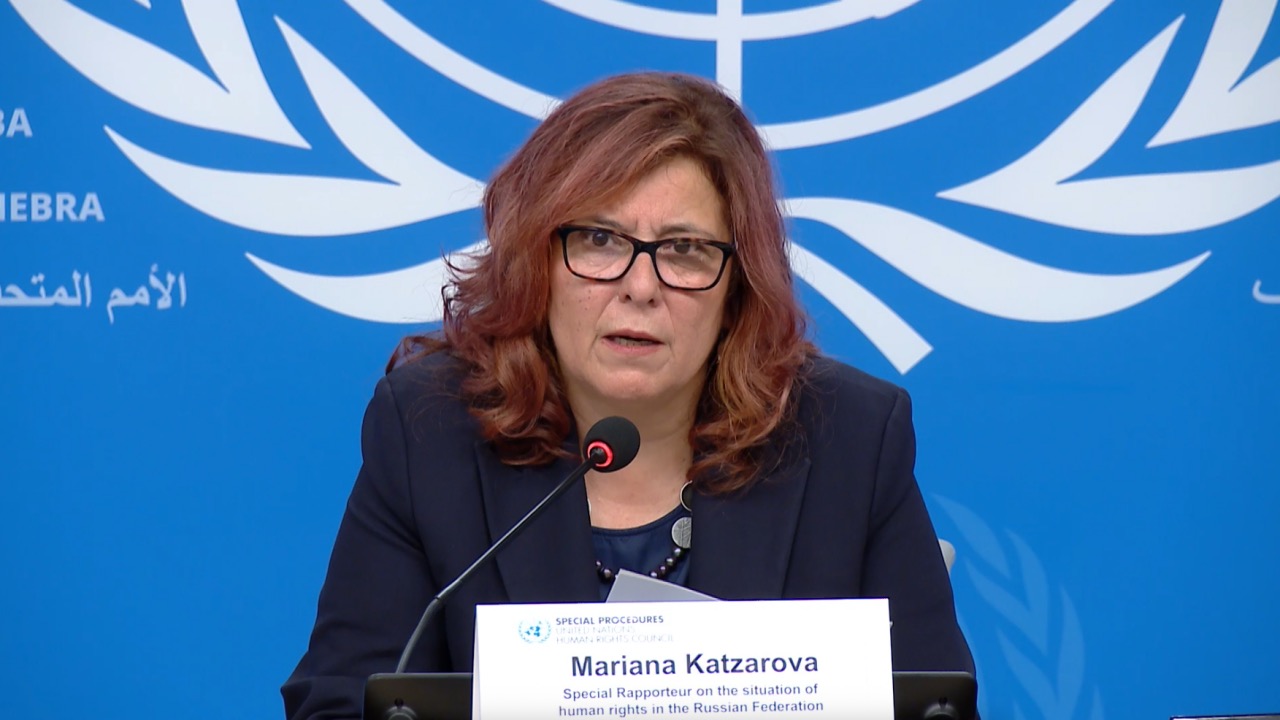
In a new report titled "Nowhere Safe: Exporting the Rule of Fear Beyond Borders — Transnational Repression by the Russian Federation," UN Special Rapporteur on the situation of human rights in Russia Mariana Katzarova examines the persecution of Chechens outside the country against the backdrop of a sharp rise in cases of transnational repression by Russian authorities.
The Special Rapporteur observes that since the start of the full-scale invasion of Ukraine in February 2022, the average annual number of documented cases has increased approximately eightfold compared to the 2014–2021 period.
At the same time, she assesses that Russian authorities have increasingly employed administrative and digital tools, as well as intermediaries, making it difficult to identify the direct perpetrators.
The report identifies the FSB, GRU, SVR, Investigative Committee, Prosecutor General’s Office, Ministry of Internal Affairs, Ministry of Foreign Affairs, Ministry of Justice, and Roskomnadzor among the Russian entities involved in transnational repression.
A separate section focuses on pressure exerted on critics of Ramzan Kadyrov, surveillance of the Chechen diaspora, the abduction of relatives, and the persecution of women attempting to escape forced marriages or domestic violence.
Kadyrov’s Critics Abroad
The report describes how Chechen authorities have spent the last two decades monitoring members of the diaspora and using relatives remaining in Russia to pressure those who oppose the republic's leadership. According to Katzarova, Russian authorities bear responsibility for this practice.
"A distinct and particularly brutal form of transnational repression is directed by the Chechen leadership against the Chechen diaspora, with the acquiescence of Russian federal authorities." "In contrast to the relatively small-scale and targeted transnational repression carried out by Russia prior to 2022, the activities of the Chechen authorities over the past two decades have targeted the diaspora as a whole—through surveillance, infiltration, and coercion via intermediaries targeting relatives remaining in the Russian Federation," the document states.
The text cites several murders and an attack on Tumso Abdurakhmanov as examples. The Special Rapporteur views these incidents collectively:
"The killings of Chechen government critics abroad—including Zelimkhan Khangoshvili in Berlin (2019), Umar Israilov in Vienna (2009), Imran Aliev in Lille, France (2020), and Mamikhan Umarov near Vienna (2020)—as well as the attack on Tumso Abdurakhmanov in Gävle, Sweden (2020), constitute a recognizable pattern of violence and intimidation."
The report also highlights a public statement made by Kadyrov regarding critics living outside Chechnya.
"The Head of Chechnya has openly threatened critics in exile, stating that 'the modern era and technology allow us to know everything, and we can find any one of you,'" the document notes.
Women attempting to leave Chechnya
Another group consists of women who have left Chechnya due to forced marriage or domestic violence. The document describes instances where, after leaving, they face pressure from relatives. "There is a documented pattern in which women fleeing forced marriage or domestic violence face persecution by family members—often abroad and frequently with the acquiescence or direct complicity of Chechen authorities, including through criminal charges aimed at securing the women's return to Chechnya," the report's author states.
According to Katsarova’s definition, actions by private individuals can also constitute transnational repression if they are directed or supported by the authorities or form part of a broader state policy of coercion.
The case of Selima Khadisova is cited as an example. She fled Chechnya following domestic violence but was detained in Bosnia and Herzegovina in September 2024 based on an Interpol Red Notice issued at the request of Russian authorities. She faced terrorism-related charges. Katsarova views this incident as evidence of the involvement of federal agencies.
In December 2024, Bosnia and Herzegovina refused to extradite Khadisova and granted her asylum.
Relatives as a tool of pressure
Another mechanism described in the report is the use of pressure against the relatives of individuals living abroad. Methods cited include threats, seizure of property, criminal prosecution, detention, abduction, and torture. Katsarova writes that relatives are used to force émigrés to remain silent or return to Russia.
One such incident involves the family of Tumso Abdurakhmanov. In December 2021, several of his relatives were abducted in Chechnya. Demands were made for them to secure an apology from the blogger to Kadyrov. The abducted individuals were released within a month.
Another case concerns the family of blogger Khasan Khalitov. In June 2024, his father and two brothers were arbitrarily detained and subsequently disappeared.
Zarema Musaeva and the Yangulbaev family
Among the most prominent cases cited in the report is that of Zarema Musaeva, the mother of exiled Chechen opposition activists Abubakar and Ibrahim Yangulbaev.
In January 2022, Musaeva was forcibly taken from Nizhny Novgorod to Chechnya and placed in custody. In a ruling dated May 28, 2024, the European Court of Human Rights determined that her detention was an act of retaliation for her sons' activities.
In December 2021, at least 37 relatives of the Yangulbaevs were arbitrarily detained in Chechnya. Most were released within three days, while the others remained in custody until February 2022 after publicly disavowing the brothers.
The case of Mansur Movlaev
The most recent example cited in the report dates to June 2026. Mansur Movlaev’s parents were abducted, and his brother was subjected to torture by Chechen authorities. At the time, Movlaev himself was fighting extradition from Kazakhstan. Katsarova links the actions taken against his family to an attempt to pressure him.