The Georgian opposition was inspired by the defeat of the "Dream" party's friends in Hungary
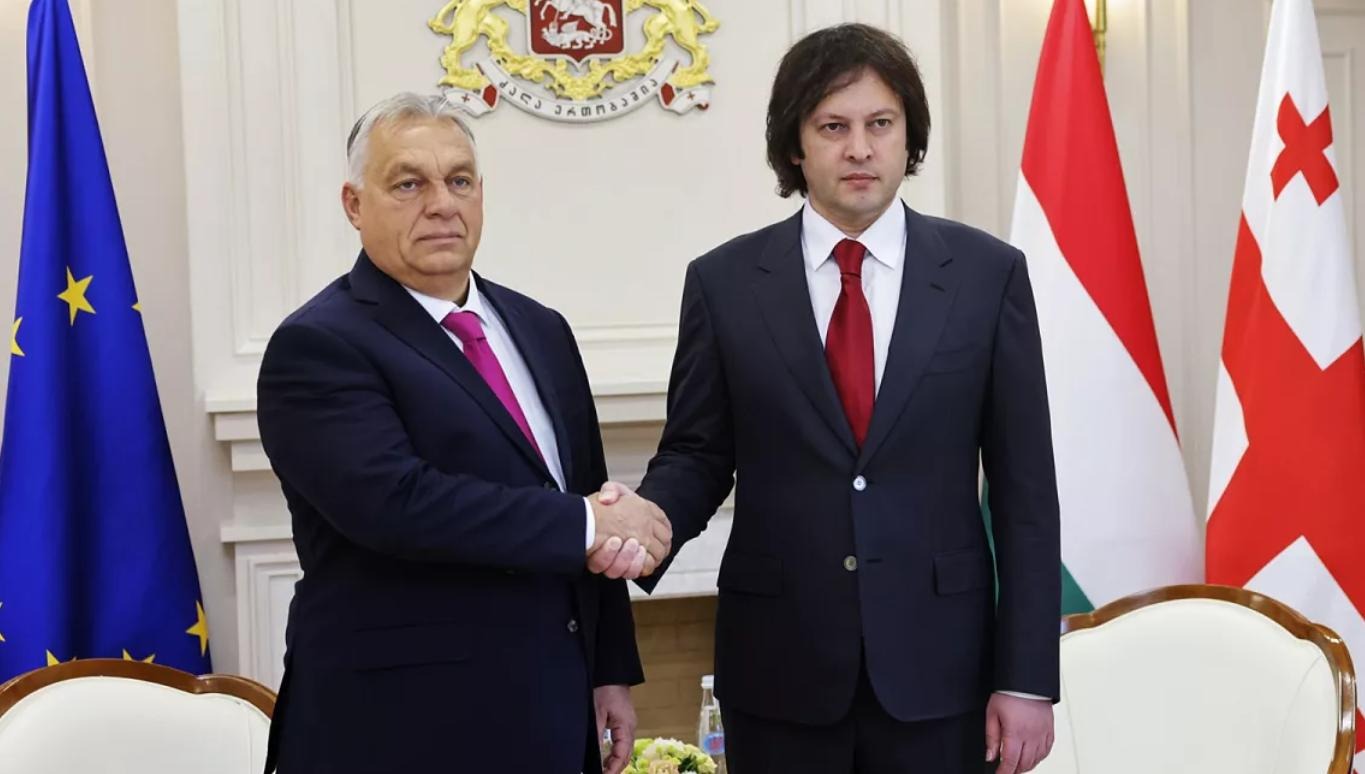
The Georgian opposition has seen the change of government in Hungary as a signal of change, while the ruling party hopes for a continuation of the policies of outgoing Prime Minister Viktor Orbán, known for his "pro-Russian" stance.
The victory of Péter Magyar and his Tisza party, and the defeat of Viktor Orbán and Fidesz, have sparked intense commentary from the pro-Western opposition in Georgia. While the ruling party emphasizes continuity with Tbilisi, opponents of the government see the Hungarian elections as a signal of change.
Grigol Gegelia, Foreign Policy Secretary of the "Strong Georgia - Lelo" party, was among the first to react, linking the outcome of the Hungarian elections to broader political processes in Europe.
"On behalf of Strong Georgia, I congratulate Péter Magyar, the entire Hungarian people, and the international community, who have waited 16 years for the Orbán regime to end and Hungary to return to the bosom of a free Europe. Yesterday proved that even authoritarian regimes collapse through elections. Yesterday, the Hungarian people triumphantly overthrew a regime that was far stronger, more talented, and more influential than the Kotsev [Georgian Dream] regime," Gegelia said.
According to him, this result should serve as an example of political mobilization and a lesson for the opposition.
"The main lesson is clear: fight, not boycott the elections! Democratic optimism instead of electoral nihilism! Return politics to the people and ensure its service to the people! This has been, is, and will be the core belief of Strong Georgia in our fight against the regime," he emphasized.
An opposition alliance of nine pro-Western parties also joined in the congratulations, as did Georgia's fifth president, Salome Zurabishvili, who called the Hungarian opposition's victory a symbol of pan-European processes.
"Péter Magyar, congratulations from all Georgians who prayed for the victory of democracy in Hungary! We believe in a strong Europe that will not succumb to Russian hybrid or direct aggression!" Zurabishvili wrote on social media, adding: "Dictators are leaving one after another! Some peacefully (they are well-mannered Europeans, after all), others by sword and war! But they are leaving! Nothing lasts forever in this world! This is the sign of Easter: after death and injustice comes life and a brighter day! Congratulations!"
Khatia Dekanoidze, a representative of the National Movement, also offered her assessment, emphasizing that the outcome of the Hungarian elections has a broader geopolitical context.
"Each autocrat is much weaker than the people combined." This is confirmed by what happened in Hungary yesterday. First and foremost, Russia lost a very significant foothold in the EU, just as Ivanishvili did. But most importantly, the Hungarian people defeated the autocrat. "Because there's a point beyond which people no longer believe propaganda. And if you can instill hope in people, it awakens and becomes the key to victory," the opposition figure said.
Former Prime Minister and leader of the opposition party "For Georgia" Giorgi Gakharia, who is currently in exile, commented on the election results, wishing "defeat for Russia and its proxy forces" everywhere, "wherever they operate globally."
At the same time, Georgian authorities reacted with cautious optimism to the statements of future Hungarian Prime Minister Péter Magyar, who confirmed his intention to continue and develop cooperation with Georgia after the change of government in Budapest. In particular, ruling party MP Levan Machavariani stated that Georgia expects not only to maintain but also to further develop the partnership at the same level as before. He particularly emphasized the contribution of the previous Hungarian government and congratulated the victorious Tisza party on its election results.
"We congratulate Mr. Magyar on his victory. This is the decision of the Hungarian people, and we, of course, respect it. Regarding Mr. Orbán, I can say that we are truly grateful to him and his government for the partnership they have provided to Georgia over many years. We hope that similar relations will continue under the new government.
We have heard Mr. Magyar's first comment. He also made a statement regarding Georgia, which is certainly welcome. We are optimistic that these relations will continue at the same level they were under Mr. Orbán," Machavariani said.
Péter Magyar himself previously stated that the change of power in Hungary does not mean a revision of foreign policy priorities. According to him, relations with other countries will be built pragmatically, regardless of how close they were under the previous government. He emphasized that Budapest is interested in improving dialogue where it was weak and maintaining partnerships where they have already been established.
"In general, I would note that the fact that Viktor Orbán's government had strong ties with a country in the Balkans or elsewhere does not mean Hungary will have worse relations with that same country.
And if Hungary had bad relations with any country, we will improve them, as it is in our common interest to work together, cooperate, and achieve success together," Péter Magyar stated.
He also added that he was open to personal contacts and visits, including a trip to Tbilisi, and specifically emphasized the principle of non-interference in the internal affairs of other states.