Pashinyan declared a "historic change" for the South Caucasus and a common threat to the independence of the region's countries.

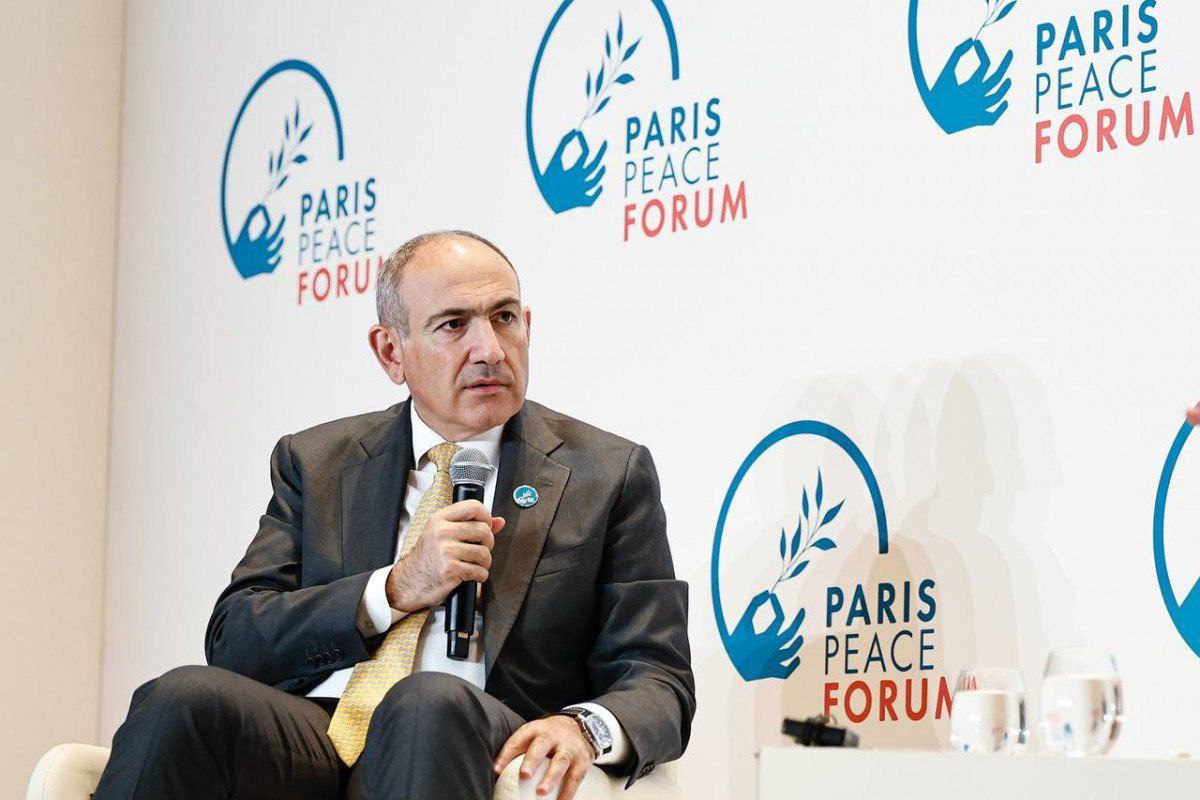
Armenian Prime Minister Nikol Pashinyan stated at the Paris Peace Forum that Yerevan and Ankara are close to establishing full diplomatic relations. He emphasized the absence of significant obstacles to opening the Armenian-Turkish border and developing comprehensive cooperation.

Pashinyan expressed confidence that in the near future, Armenia and Turkey will become "normal neighbors" with diplomatic ties, open borders, and developed economic and political interaction.

Furthermore, he noted that peace with Azerbaijan has become a reality and represents a "historic change" for the region, emphasizing the agreements to open regional communications based on mutual recognition of territorial integrity.

"We have a chance to build not only a peaceful but also a prosperous South Caucasus," the Prime Minister stated.

In this context, the Prime Minister emphasized that Yerevan and Baku have begun to understand the interconnected destinies of the countries of the South Caucasus. According to him, "after decades of hostility, it's becoming clear that our destinies are intertwined," and both countries "win by strengthening their independence and sovereignty."

Pashinyan also drew parallels between Azerbaijan, Armenia, and Georgia, identifying a common threat to independence.

"By the way, at the beginning of the 20th century, we gained independence together, within three days. In 1918, we gained independence, and then, a few years later, we simultaneously lost it – Azerbaijan, Armenia, and Georgia. In 1991, we gained independence simultaneously, together, and perhaps after some time, we realized that there might be a common threat to our independence. And we decided to focus on the agenda of developing our states, protecting our independence and sovereignty," the Armenian leader shared.
Последние новости
New car sales in Russia’s North Caucasus fall by 21%
Economy
New car sales in Russia’s North Caucasus fall by 21%
15 August 2026

New car sales across Russia’s North Caucasus fell by 21% in July compared with the same month last year. The sharpest decline was recorded in Dagestan, where the new-car market nearly halved over the year.

Queues at Verkhny Lars border crossing emerge amid rumours of a new mobilisation in Russia
Society
Queues at Verkhny Lars border crossing emerge amid rumours of a new mobilisation in Russia
15 August 2026

Queues remain at the Russian-Georgian border following temporary restrictions on traffic through the Verkhny Lars crossing. The situation has drawn additional attention amid rumours circulating in Russia about a possible new mobilisation, recalling the autumn of 2022, when large numbers of men eligible for military service left the country through the crossing. There is no official evidence linking the current restrictions to any mobilisation measures.

Less than a third of flood victims in Dagestan have received compensation
Society
Less than a third of flood victims in Dagestan have received compensation
15 August 2026

In Dagestan, 82,000 people have received compensation following the devastating spring floods — less than 30% of the residents who applied for assistance. In neighbouring Chechnya, authorities have reported paying out 726 million roubles to those affected.

Georgian opposition insists Russia orchestrated fuel supplies to Abkhazia
Politics
Georgian opposition insists Russia orchestrated fuel supplies to Abkhazia
15 August 2026

Fuel shipments from the Tbilisi-controlled part of Georgia to Abkhazia have sparked a new political conflict in the country. The opposition believes that Moscow and the ruling "Georgian Dream" party are behind the gasoline shipment. Authorities, however, insist that the fuel was supplied by private business and that the trade itself does not violate Georgian law.