First Muslim in U.S. Senate Opposes Military Aid to Azerbaijan
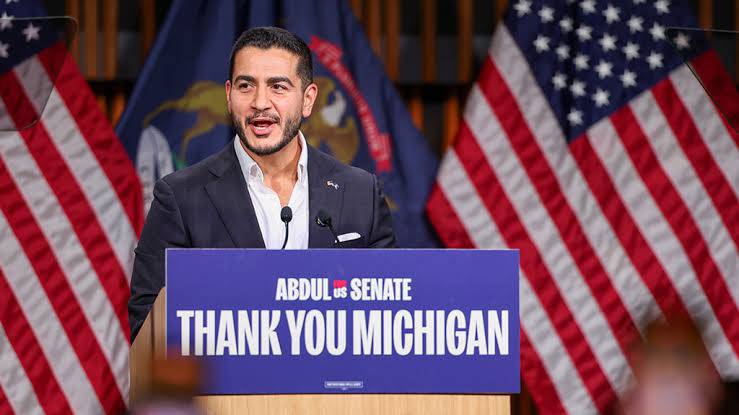
Abdul El-Sayed, who won the election for the U.S. Senate from the state of Michigan, has announced his intention to push for an end to U.S. military support for Azerbaijan and to advocate for the Armenian people’s right to "self-determination." During his election campaign, he secured the endorsement of the Armenian National Committee of America (ANCA).
The politician outlined his position regarding Azerbaijan in a statement published by the ANCA on October 1. In it, he criticized the military aid provided to Baku by the Donald Trump administration, labeling it a violation of international law.
"The Trump administration’s carte blanche for military aid to Azerbaijan, amid ongoing atrocities, is an egregious violation of international law. As the next senator from Michigan, I will stand for peace, dignity, security, and self-determination for the Armenian people—and for all people—as well as for international law," El-Sayed stated.
However, El-Sayed did not specify which "ongoing atrocities" he was referring to, nor did he provide evidence to support this claim. His statement also failed to explain which specific norms of international law would render U.S. military aid to Azerbaijan illegal.
Meanwhile, damage to cultural heritage has been documented on both sides of the conflict. Researchers from the Caucasus Heritage Watch project at Cornell University examined 109 Azerbaijani historical sites—including mosques, mausoleums, and cemeteries—located in territories that were under the control of the Armenian authorities of Nagorno-Karabakh during the period between the wars. According to their findings, 16 of these sites were destroyed, and another 39 sustained significant damage, primarily as a result of looting. Researchers have also documented the destruction of over a hundred Armenian historical monuments in Nakhichevan.
In a report on the 44-day war of 2020, Amnesty International determined that both Armenian and Azerbaijani armed forces carried out indiscriminate and disproportionate strikes on populated areas, resulting in the deaths and injuries of civilians. The organization classified such attacks as violations of international humanitarian law.
It is also not entirely clear what the senator specifically means by the "self-determination" of the Armenian people—a cause he intends to "advocate for." His phrasing implies that Armenia is not yet an independent state and that the question of its sovereignty remains open. It is possible that such statements are driven more by domestic political and electoral considerations: during the election campaign, it was important for the senator to secure the support of Armenian voters, including Armenian-Americans.
In the same address, Abdul El-Sayed thanked the ANCA for its support and described Michigan’s Armenian community as an important part of the state. The organization, for its part, framed his victory as an opportunity to retain an advocate for the Armenian agenda in the Senate following the departure of Senator Gary Peters, who did not seek re-election.
The ANCA works to promote the interests of the Armenian community within American politics. The organization’s priorities include limiting military aid to Azerbaijan, enforcing Section 907 of the Freedom Support Act, supporting Armenia, and protecting the rights of Armenians who have left Nagorno-Karabakh. Ahead of the congressional elections, the committee endorsed 64 candidates for the Senate and the House of Representatives. El-Sayed defeated Republican Mike Rogers in the November 3 election. He will become the first Muslim in the history of the U.S. Senate and will succeed Gary Peters, who has represented Michigan in the upper chamber of Congress since 2015.